Buyer-first futures comparison · reviewed July 25, 2026
Apex Trader Funding vs Elite Trader Funding Buyer’s Scorecard
Compare the same account size and evaluation type. The decision is the complete route to an eligible payout: purchase price, resets or rebilling, activation, loss-limit math, funded rules, platform fit, and trust history. Product names only identify the plans.
| Decision point | Apex Trader Funding | Elite Trader Funding |
|---|---|---|
| Matched product | 50K EOD | 50K EOD |
| Current attempt cost | $49 promo Standard + PA activation, or $119 promo no-activation | $347 per 30-day renewal |
| Funded activation | Separate on Standard; $0 on no-activation route | $47 once + $87/month, or $177 one-time |
| Profit target | $3,000 | $3,000 |
| Drawdown / daily loss | $2,000 EOD / $1,000 DLL | $2,000 EOD / $1,100 DLL |
| Minimum days to pass | None | 5 |
| First payout gate | 5 qualifying days; 50% consistency and safety net | 8 active trade days; max $2,000 first-cycle withdrawal |
Advanced checks before paying
- Model your normal losing streak against the actual daily and maximum-loss calculation, not the nominal account balance.
- Add evaluation, reset, rebill, activation, data, platform and withdrawal fees to get the real attempt cost.
- Check qualifying days, consistency, buffers, payout caps, number of payouts and any move-to-live rules.
- Confirm the contracting entity, country eligibility, platform, recent support record and a small first payout before scaling purchases.
Figures are tied to the products named in each row and were reviewed against linked official sources. Promotions and rules can change; recheck checkout before purchasing.

Elite Trader Funding and Apex Trader Funding both target futures traders who want simulated funding programs, but they feel different once you look past the headline account sizes and discounts. Apex is easier to compare when you are focused on a current EOD or intraday evaluation because its help center lays out account parameters, drawdown type, payout requirements, and platform access in a fairly structured way. Elite Trader Funding has a wider mix of plan types, supported platforms, and account paths, including Direct To Funded accounts that skip the evaluation step.
The practical answer is not “which firm is better?” It is “which rule set gives your trading style fewer ways to make an avoidable mistake?” A scalper who wants a clearly documented intraday trailing framework may read Apex differently from a swing trader looking at Elite’s DTF rules. A trader who already uses TradingView, Tradovate, Rithmic, or a less common Rithmic-compatible platform may care more about platform support than headline payout language.
This comparison uses the firms’ official product selectors and rule pages. The 50K EOD price snapshot below was checked July 25, 2026; compare the complete cost through funded activation, not the discounted evaluation price alone.
Elite Trader Funding vs Apex Trader Funding at a glance
| Comparison point | Elite Trader Funding | Apex Trader Funding |
|---|---|---|
| Main market focus | U.S. futures instruments only, according to Elite’s instrument page | Futures evaluation and Performance Account programs |
| Evaluation style | Multiple plan types, including 1 Step, EOD, Static, Diamond Hands, Fast Track, and Direct To Funded routes depending on current availability | Current official docs describe EOD Drawdown and Intraday Trailing Drawdown evaluations |
| Direct funded option | DTF lets traders start in Elite Sim-Funded without an evaluation, with EOD or Static drawdown depending on account type | Not treated as the comparable core path in the reviewed Apex sources |
| Platform angle | Tradovate, NinjaTrader, TradingView, Rithmic, R Trader, ATAS, Bookmap, EdgeProX, eSignal, Finamark, Investor/RT, MotiveWave, Quantower, and Sierra Chart appear in Elite’s platform documentation | Apex Tradovate accounts can be accessed through NinjaTrader, Tradovate, and TradingView, while Apex also supports Rithmic account setup |
| Payout risk topics | Audit review, KYC, weekly trading requirement, drawdown, position limits, and the 20% profit loss-limit rule matter | Qualifying trading days, minimum daily profit, safety net, 50% consistency, and six-payout cap matter for intraday PA payouts |
| Best fit | Traders who want plan variety, platform choice, or a DTF route | Traders who want a tightly documented EOD or intraday evaluation path |
If you are still learning how prop firm rules work, read BestProps’ guide to prop firm drawdown rules before selecting either firm. Drawdown design often matters more than account size.
Apex Trader Funding rules that shape the comparison
Apex’s current EOD Evaluation article describes an end-of-day drawdown model with no intraday trailing drawdown, a fixed Daily Loss Limit during the session, fixed position sizing, no minimum trading days, and 7 calendar days to activate the Performance Account after passing. The same source lists 25K, 50K, 100K, and 150K account sizes with profit targets of $1,500, $3,000, $6,000, and $9,000, respectively. It also lists EOD max drawdown values of $1,000, $2,000, $3,000, and $4,000, daily loss limits of $500, $1,000, $1,500, and $2,000, and max contracts of 4, 6, 8, and 12.
That makes Apex’s EOD route interesting for traders who dislike real-time trailing drawdown but still want a daily risk guardrail. The official page says hitting the Daily Loss Limit pauses trading for the rest of the session rather than failing the evaluation, while touching the EOD threshold fails it. That distinction matters for traders who take several attempts during a session and want to avoid confusing a daily pause with an account-ending event.
Apex’s Intraday Trailing Drawdown Evaluation article presents the same 25K through 150K account sizes and the same target, drawdown, max contract, and 30-day access table, but the risk model is different. Intraday drawdown follows the account’s peak balance in real time, includes unrealized profit, never moves downward, and fails the evaluation if the balance touches or falls below the trailing threshold. The official article also says there is no Daily Loss Limit in this evaluation.
That is a better fit only if you understand how intraday trailing risk behaves. A trader can be directionally right, watch unrealized profit raise the threshold, and then fail on a pullback if risk is too large. New traders should compare that with static drawdown vs trailing drawdown before choosing.
Elite Trader Funding rules that shape the comparison
Elite Trader Funding’s official support pages emphasize platform breadth and plan variety. Its platform page lists Tradovate, NinjaTrader, TradingView, Rithmic, R Trader, ATAS, Bookmap, EdgeProX, eSignal, Finamark, Investor/RT, MotiveWave, Quantower, and Sierra Chart. The same page notes that platform subscription costs are the trader’s responsibility and that Rithmic data feed accounts may carry an additional monthly connection cost for new accounts beginning January 28, 2026.
Elite also states that its tradable market is U.S. futures only. Forex markets, equities, and options are not supported on the ETF platform, according to the official instrument page. That is important because some prop firm shoppers use “funded account” broadly and accidentally compare futures firms with forex or CFD firms.
The biggest structural difference is Direct To Funded. Elite’s DTF article says DTF skips the evaluation and starts the trader in an Elite Sim-Funded account. The same article describes EOD or Static drawdown options, overnight and weekend holding, a one-time fee with no monthly subscription for DTF, up to 5 active DTF accounts per trader, and up to 2 resets per DTF account.
Elite’s DTF payout rules are detailed enough that traders should read the official page before buying. It describes Active Trading Day requirements by DTF size, safety-net mechanics, payout cycles, withdrawal minimums, audit review, KYC and Rise onboarding, and a weekly trading requirement. The same page says approved traders can keep up to 100% of simulation profits up to $25,000, but it also says trade performance is closely assessed and that Elite may transition traders to LIVE ELITE at its discretion.
Elite Trader Funding vs Apex Trader Funding for platforms
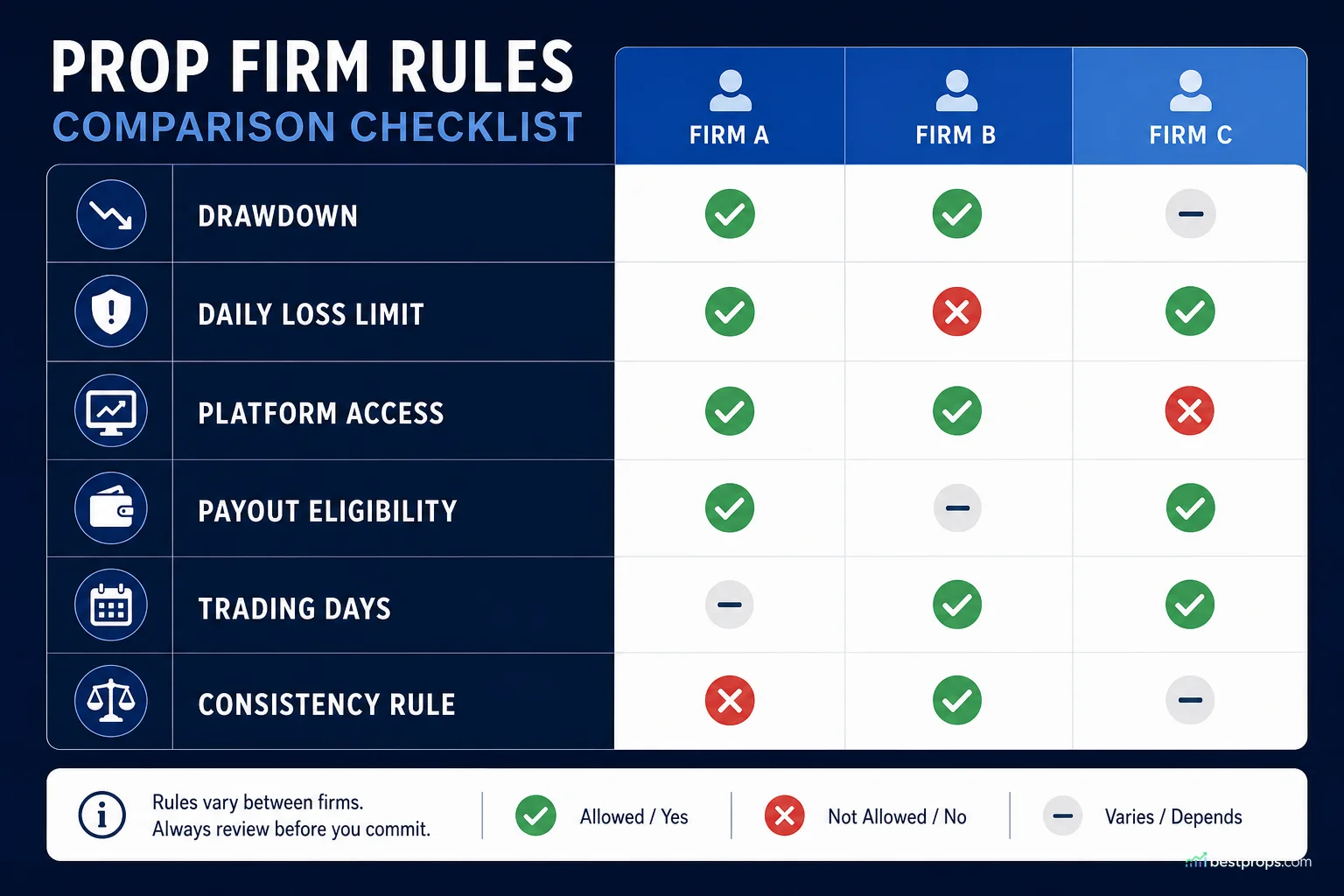
Platform fit is one of the easiest ways to narrow this comparison.
Elite looks stronger if your setup depends on a specific platform beyond the most common futures stack. Its official platform page names several Rithmic-compatible platforms, including ATAS, Bookmap, EdgeProX, eSignal, Finamark, Investor/RT, MotiveWave, Quantower, and Sierra Chart, alongside Tradovate, NinjaTrader, TradingView, and Rithmic.
Apex is still broad enough for many futures traders. Its Tradovate FAQ says Tradovate accounts can be accessed through NinjaTrader Desktop, NinjaTrader Mobile App, Tradovate Web, Tradovate Desktop, Tradovate Mobile, TradingView Web, TradingView Desktop, and TradingView Mobile. Apex also has Rithmic setup documentation. For many day traders, that is enough.
The difference is whether you need maximum platform variety or just reliable access to the main futures trading interfaces. If you already trade from a specific Rithmic-connected platform, verify that the exact data feed and account type you want are supported before purchase.
Elite Trader Funding vs Apex Trader Funding for payouts
Payout comparison is where unsupported claims become risky. Do not rely on social posts, payout screenshots, or old affiliate reviews for eligibility rules. Use official payout pages and your dashboard.
Apex’s intraday Performance Account payout page says approved payouts have a 100% payout split and that each intraday PA must complete at least 5 trading days that meet the required minimum daily profit. It also lists a $500 minimum payout request, a 50% consistency requirement, a safety net requirement, and a maximum of 6 payouts per Performance Account. The same article says that after submitting a payout request, traders may continue trading, but they should trade as if the requested funds have already been removed from the balance because falling below the required threshold can deny the request automatically.
Elite’s payout audit FAQ says Elite monitors trading activity for compliance, requires KYC before payout, and expects sustained trading activity and reasonable profit distribution. It also says traders must satisfy a weekly trading requirement and that failing to execute a trade for a week can close the account and void payouts. Elite’s DTF article describes twice-weekly Elite Sim payout processing on Mondays and Wednesdays, daily Live Elite payouts, payout cycles, and minimum withdrawal rules, but those details depend on plan type and purchase date.
If payout speed is your deciding factor, compare these official rules with BestProps’ guide to the best prop firm for fast payout preference. A faster request window is not useful if your trading style struggles with consistency, safety net, weekly activity, or audit rules.
Reputation and complaints
Comparison search results for these firms include forums and user-review pages because traders are not only asking about features. They are also trying to understand payout disputes, account closures, support response times, and rule-change risk. Treat those sources carefully. Trustpilot and Reddit can show what traders say they experienced, but they do not prove that every individual claim is complete, current, or accurate.
As of June 6, 2026, Apex Trader Funding’s Trustpilot profile showed a four-point-three score from 19,511 reviews. Trustpilot’s visible rating distribution showed 83% 5-star reviews and 9% 1-star reviews, while Trustpilot’s AI-generated summary noted generally positive comments about the newer system and account-status visibility alongside negative themes around payout processing time, ticket handling, and concern about newer payout and closure rules.
As of June 6, 2026, Elite Trader Funding’s Trustpilot profile showed a three-point-eight score from 1,088 reviews. Trustpilot’s visible rating distribution showed 62% 5-star reviews and 24% 1-star reviews, while Trustpilot’s AI-generated summary described positive comments about support and payouts alongside negative comments about denied payouts, hidden-rule concerns, and account closures.
Those review aggregates should not replace official rule checks. Instead, use them as a checklist for what to verify before buying. For Apex, confirm payout eligibility, drawdown type, payout caps, account closure rules, and support process. For Elite, confirm weekly trading requirements, audit triggers, Live Elite transition language, payout request timing, and what happens if an account is selected for review.
Elite Trader Funding vs Apex Trader Funding for trading style
| Trading style | Better fit to investigate first | Why |
|---|---|---|
| Intraday scalper who wants a current, explicit trailing model | Apex Intraday Evaluation | Official docs explain peak-balance trailing, no Daily Loss Limit, and 30-day evaluation access |
| Day trader who prefers a daily pause over real-time trailing | Apex EOD Evaluation | EOD docs separate DLL pauses from EOD threshold failure |
| Trader who needs broad Rithmic-compatible platform choice | Elite Trader Funding | Official platform page lists more named third-party platforms |
| Trader who wants to skip a classic evaluation | Elite DTF | Official DTF docs describe starting in Elite Sim-Funded |
| Trader who holds overnight or weekends | Elite DTF is worth reviewing | Elite’s DTF page says swing trading is allowed, with risk caveats |
| Trader who wants the simplest documented route | Apex EOD or Apex Intraday may be easier to audit | The current Apex help center pages make the core account parameters easy to compare |
This is also where Apex’s existing BestProps comparison can help. If you are considering Apex broadly, compare this article with Topstep vs Apex Trader Funding for Futures Traders to see how Apex rules look against another futures-first firm.
Fees and pricing need fresh verification
Elite’s official Elite account fees page lists activation fee options for Elite Sim-Funded accounts. It says traders can use an $87 monthly plan, and it lists one-time activation fees by account size and plan type, including $177 for 75K and below across 1 Step, EOD, and Static accounts; $247 for 100K to 150K 1 Step; $257 for 100K to 150K EOD; $177 for 100K to 150K Static; $307 for 100K to 150K Diamond Hands; and $277 for 250K and above 1 Step. It also notes that Fast Track evaluations are not eligible for one-time activation and that professional traders may owe a separate professional trader fee.
Those are activation details, not a full checkout comparison for every purchase path. The current evaluation purchase price, sale code, add-on, reset, subscription, platform, data-feed, and professional status costs should be checked at checkout before publication. Verified checkout snapshot: On July 25, Elite’s live selector showed its 50K EOD evaluation at $347 per 30-day renewal, plus funded activation as low as $47 once/$87 monthly or $177 one-time.
Apex pricing also requires a current checkout check. Apex’s public pages often include promotions and countdown-style discount messages, but promotional pricing is volatile. Verified checkout snapshot: On July 25, Apex’s live selector showed a 50K EOD Standard evaluation at $49 promotional ($490 reference) plus PA activation, or $119 promotional ($1,190 reference) with no activation fee.
Risk rules that can surprise traders
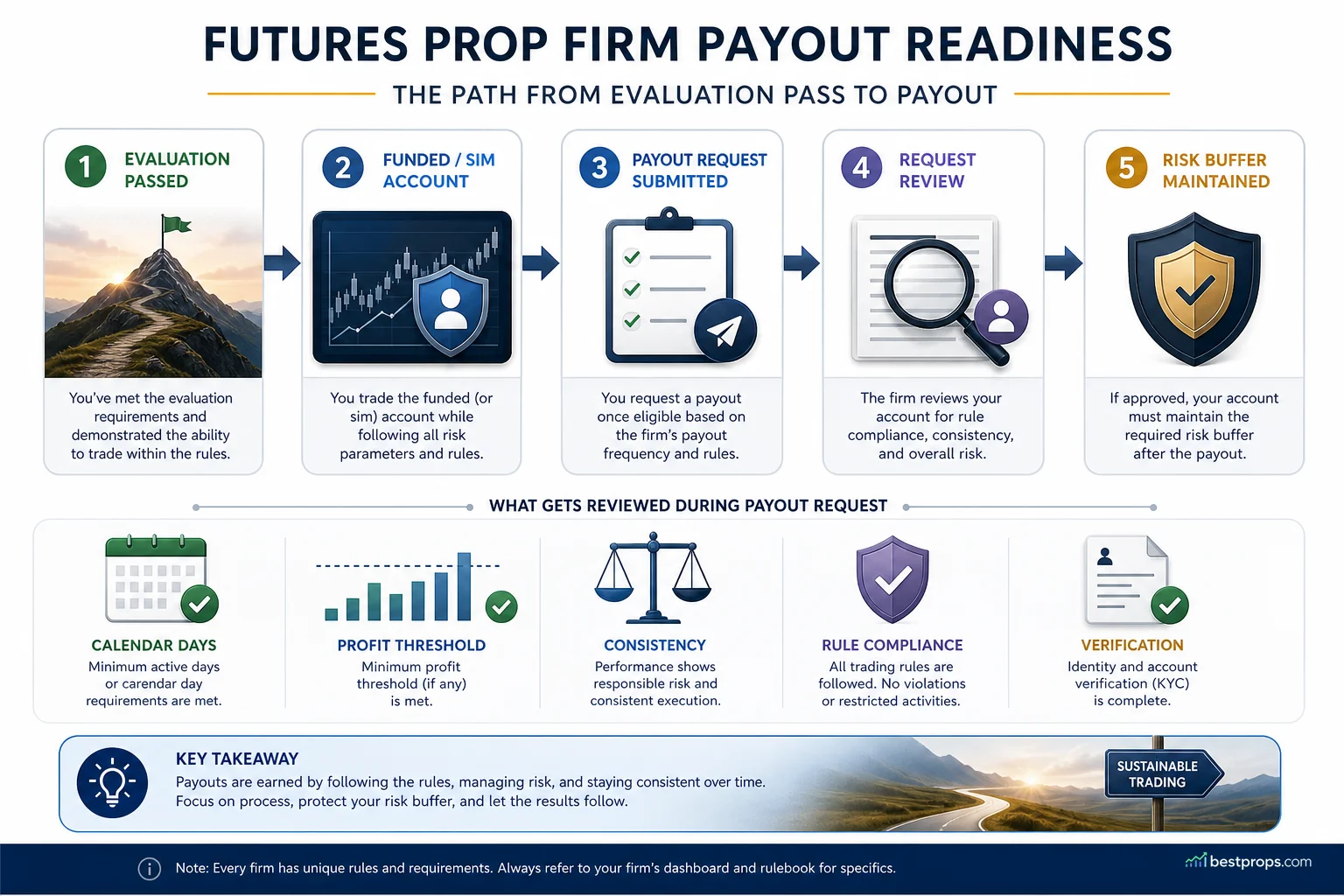
The headline account size is usually less important than the rule that closes the account or blocks a payout.
For Apex, the drawdown model is central. EOD drawdown is calculated once per day at market close and enforced in the next session. Intraday trailing drawdown follows peak balance in real time. Apex’s payout rules then add safety net, qualifying day, minimum payout, maximum payout, and consistency requirements.
For Elite, the audit layer deserves close attention. The loss-limit rule page says that after a trader reaches 20% profit in an Elite Sim-Funded account, losing more than 35% of total accumulated profit from that point can trigger removal from the Elite Sim program. The page says this is assessed during payout requests and routine risk audits, and that triggering it can disqualify the trader from LIVE Elite eligibility. Elite’s payout audit FAQ also warns about position limits, max drawdown, market close flattening where applicable, weekly trading requirements, and KYC.
For broader background, BestProps’ article on hidden consistency rules that cause prop firm payout denials is a useful companion because many payout problems come from misunderstanding rule mechanics rather than from a firm refusing a valid request.
Rule gotchas to model before buying
The most important comparison work happens before checkout. Model the rule against a realistic trading day, not an ideal one.
For Apex intraday trailing drawdown, remember that the official rule says the peak balance includes unrealized gains. A simple example: a 50K intraday evaluation has a $2,000 max intraday drawdown and a $3,000 profit target. If the account moves from $50,000 to a $51,500 intraday peak while a position is open, the trailing threshold can move up with that peak. If the same trade then reverses before the profit is realized, the trader has less room than the starting balance alone would suggest. The risk is not just losing money. The risk is giving back open profit after that open profit has already tightened the threshold.
For Elite’s loss-limit rule, do not read the 35% number as a normal account drawdown limit. Elite describes it as a rule that activates after a trader reaches 20% profit in an Elite Sim-Funded account. From that point, losing more than 35% of total accumulated profit can trigger removal from Elite Sim and disqualify Live Elite eligibility. The practical lesson is that a trader who grows an account quickly still has to protect accumulated profit during payout reviews and routine audits.
For Elite DTF, the $25,000 total cap per DTF account is not a small detail. The DTF page says that after reaching the total payout cap, trading stops, the account is revoked, and the trader is transferred to the LIVE ELITE Program. That makes DTF a different product from a normal evaluation path, not a direct apples-to-apples match with Apex’s EOD or intraday evaluation pages.
Which prop firm should you choose?
Choose Apex Trader Funding first if you want a straightforward EOD or intraday futures evaluation with account parameters that are easy to read before purchase. Apex is also a reasonable first stop if you already use Tradovate, NinjaTrader, TradingView, or Rithmic and do not need a less common platform.
Choose Elite Trader Funding first if platform choice, DTF access, or plan variety is more important than a single clean evaluation table. Elite may fit traders who want a broader platform menu, want to investigate Direct To Funded, or care about DTF swing trading rules. The tradeoff is that you must read plan-specific rules carefully because Elite’s rule set changes by account type.
Do not choose either firm based only on an account size, discount, or payout split. Match the firm to your risk behavior. If you frequently scale too large intraday, trailing drawdown can punish you quickly. If you take large one-day gains and then give too much back, payout consistency and loss-limit rules can become the bigger risk. If you sometimes forget to trade for a week, Elite’s weekly activity rule is not a small detail.
Page-one comparison check · US desktop results reviewed August 6, 2026
What to verify before choosing Apex Trader Funding or Elite Trader Funding
Decision summary: The headline account size and profit split do not identify the better fit on their own. Compare the complete cost, loss calculation, first-payout path, platform route, and restrictions for two specific programs before paying.
| Decision point | How to compare it |
|---|---|
| Strategy restrictions | Check news, weekend holding, copy trading, automated systems, scalping, HFT, hedging, and account-sharing rules for both the evaluation and funded stage. |
| Simulated versus live status | Read the agreement for each stage and distinguish a simulated funded account from any later live-capital route; the word funded does not settle that question. |
Promotions and program rules can change independently. Use this page to narrow the choice, then confirm every decision-critical term in each firm’s current official program document, checkout, and trader agreement. Screenshots or saved copies help if a rule changes after purchase.
FAQ
Is Elite Trader Funding better than Apex Trader Funding?
Neither firm is automatically better. Apex is easier to evaluate if you want a current EOD or intraday evaluation with clearly listed account parameters. Elite is more attractive if you want broader platform support, plan variety, or a Direct To Funded route. Your trading style should decide.
Does Apex Trader Funding have a Daily Loss Limit?
Apex’s current EOD Evaluation article lists a fixed Daily Loss Limit during the session. Its Intraday Trailing Drawdown Evaluation article says there is no Daily Loss Limit for that evaluation type because the risk control is the real-time intraday trailing threshold.
Does Elite Trader Funding allow forex or stock trading?
Elite’s official instrument page says trading is limited to U.S. futures instruments. It says forex markets are not supported and that equities and options are not permitted on the ETF platform.
Which firm has better platform support?
Elite appears broader on the official platform page because it lists several Rithmic-compatible platforms beyond Tradovate, NinjaTrader, TradingView, and Rithmic. Apex still supports common futures workflows through Tradovate, NinjaTrader, TradingView, and Rithmic documentation.
Can Elite Trader Funding traders skip the evaluation?
Elite’s Direct To Funded documentation says DTF lets traders skip the evaluation and start in an Elite Sim-Funded account. The rules, drawdown type, payout cycles, resets, and purchase terms vary by DTF size and should be checked on the official page before buying.
How do Apex payouts work?
Apex’s intraday PA payout page says approved payouts use a 100% split, require 5 qualifying trading days, include a $500 minimum payout request, apply a 50% consistency rule, and cap each Performance Account at 6 payouts. EOD and other account types may have their own rules, so confirm the exact account type.
What should I verify before publishing or buying?
Verify current Apex checkout pricing, current Elite checkout pricing, any sale codes, data-feed costs, platform fees, reset rules, account type availability, payout schedule by plan, and restricted-country eligibility. Those details can change faster than a comparison article.
Conclusion
The best Elite Trader Funding vs Apex Trader Funding choice is the one whose rule set you can follow on your worst trading day. Apex is the cleaner first read for current EOD and intraday evaluation rules. Elite is the stronger first read for platform variety, Direct To Funded, and plan flexibility. Before buying either account, verify the exact checkout price and read the official account-type rules from start to finish.
Educational disclaimer: BestProps publishes educational content about prop firms and trading rules. This article is not financial advice, investment advice, legal advice, tax advice, or a recommendation to buy any prop firm account. Trading futures and participating in simulated funding programs involve risk, fees, restrictions, and rule-based payout eligibility. Always verify current terms directly with the firm before purchasing.
Verified checkout snapshots:
- On July 25, Apex’s live selector showed a 50K EOD Standard evaluation at $49 promotional ($490 reference) plus PA activation, or $119 promotional ($1,190 reference) with no activation fee: Confirm current Apex checkout pricing, discounts, resets, data-feed costs, and account availability before publication.
- On July 25, Elite’s live selector showed its 50K EOD evaluation at $347 per 30-day renewal, plus funded activation as low as $47 once/$87 monthly or $177 one-time: Confirm current Elite checkout pricing, DTF purchase pricing, add-ons, resets, data-feed costs, and account availability before publication.
Research and disclosure
How this comparison was reviewed
- Basis
- Document-based comparison of official product pages, trading objectives, and help-center material cited in this page.
- Scope
- Apex Trader Funding and Elite Trader Funding programs and the exact account comparisons stated on this page. Other firms and changing checkout promotions are outside this comparison.
- Limitations
- BestProps did not purchase an account or perform first-hand trading, support, identity-check, or payout testing for this comparison. Recheck current terms before purchase.
- Commercial state
- BestProps currently has no active affiliate or sponsor relationship with Apex Trader Funding, Elite Trader Funding, or any firm named on this page. Any future relationship will be disclosed next to affected links and in this record.