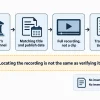
Key takeaways
No named firm reviewed here can be verified as offering real-capital accounts.
Read the full summary
No named firm reviewed here can be verified as offering real-capital accounts. As checked July 25, 2026, FundedNext USA’s terms define its Funded Stage as simulated, For Traders states that all customer accounts are demo accounts using virtual money, and Falcon Funded labels a program stage “Live account” while disclosing that platform trading uses virtual funds in simulation. TradeLocker Hub and third-party directories are discovery tools, not independent verification. A genuine live funded account executes orders in real markets using firm-controlled capital, unlike evaluation, simulated funded, and instant-funded accounts, while payouts alone do not prove trades were live. Treat every program as simulated or unclear unless current official agreements explicitly identify execution routing, account ownership, migration rules, whether all or selected trades are copied or hedged, and whether migration is guaranteed or discretionary. Also verify static or trailing drawdown, daily-loss calculations, payout conditions, strategy and holding restrictions, supported markets and platforms, geographic eligibility, rule-change protections, and whether the firm can reduce allocation or return an account to simulation.
Finding prop firms with live funded accounts is harder than the search term suggests. In prop trading, words such as funded, live, and instant funding do not necessarily mean that a trader’s orders are being executed in a real market with the firm’s capital.
Many programs use simulated accounts throughout the evaluation and reward stages. Others may copy selected trades, hedge their exposure, or move only certain traders to live execution after an internal risk review. A firm can also pay performance rewards without placing the trader in a brokerage account holding real money.
As of July 25, 2026, the current official pages reviewed for the named firms do not support a definitive list of verified live-capital accounts. FundedNext USA and For Traders describe simulation or demo trading, while Falcon Funded’s “Live account” label appears alongside a disclosure that platform trading uses virtual funds in simulation. This guide therefore explains how to identify and verify a genuinely live funded trading account before paying a fee or changing your strategy.
Important: Prop-firm account models, eligibility rules, fees, drawdowns, and payout conditions can change. Confirm every material term in the firm’s current official agreement. This article is general information, not individualized financial advice or a promise of trading results.
What Is a Live Funded Prop Trading Account?
A strict definition of a live funded account is an account in which trading decisions result in orders being executed in real markets using capital controlled or allocated by the prop firm. The firm, rather than the trader, normally bears the market exposure within the limits of its agreement.
That definition is different from several account types commonly described as funded:
- Evaluation account: A trader must satisfy objectives and risk limits before becoming eligible for another program stage. The evaluation label alone does not establish that orders are live.
- Simulated funded account: The trader operates with virtual capital after qualifying and may receive rewards calculated from simulated performance.
- Instant-funded account: The trader skips or shortens a traditional evaluation. “Instant” describes access, not whether orders reach a live market.
- Live funded account: Orders are actually executed with real capital, subject to the firm’s risk controls and brokerage arrangements.
These models are not automatically better or worse than one another. They create different execution, counterparty, and operational considerations. The problem arises when marketing terminology prevents traders from knowing which model they are buying.
Which Prop Firms Offer Live Funded Accounts?
The current official sources reviewed here do not support classifying any named candidate as a confirmed real-capital firm. That is not proof that no such programs exist. It means a firm should not be labeled “verified live” without documentation addressing execution, account ownership, and the route to real capital.
FundedNext Live Prop Accounts
FundedNext USA’s terms, last updated May 5, 2026, define its Funded Stage as an account intended exclusively for simulated trading. The terms also state that the services do not execute real market orders on behalf of users. Readers therefore should not treat “funded” as proof of placement into a real-capital account. Any separate live-execution program would need its own current controlling document.
For Traders Live Prop Accounts
For Traders’ terms describe the service as a virtual trading education program. The site further states that there is no live capital or margin risk and that all customer accounts are demo accounts using virtual money. Traders should verify whether any separately documented live-capital route exists instead of treating instant funding as synonymous with real funding.
Falcon Funded Live Prop Accounts
Falcon Funded’s current homepage uses “Live account” as a program-stage label. The same page discloses that trading on the platform uses virtual funds in simulation and does not involve trading with real financial instruments. On that evidence, the label does not establish real-capital execution.
Live Prop Account Directories and Platform Listings
TradeLocker Hub presents broker and prop-firm lists intended to help users compare providers. A platform or directory listing can help with discovery, but it does not independently verify that a listed firm deploys capital behind each trader.
How to Verify Live Funded Prop Accounts
A credible verification process should go beyond a homepage, review site, or support-chat screenshot. Look for consistent answers across the firm’s legal agreement, program rules, FAQs, and direct written responses.

- Find an explicit execution statement. Look for language saying whether orders are simulated, copied, hedged, routed to a broker, or executed directly in a live market.
- Identify the account owner. Establish whether the account belongs to the trader, the firm, a brokerage partner, or a technology provider. Do not infer ownership from the trading-platform interface.
- Check when migration occurs. Determine whether moving to live capital is automatic after passing, discretionary, performance-based, or available only to selected traders.
- Ask whether all trades are executed. A firm may use internal risk controls to copy only part of a trader’s activity. That is different from giving every successful participant a dedicated live account.
- Request the controlling document. Marketing pages can be simplified. The current trader agreement should control questions about account type, rewards, rule breaches, and termination.
- Record the verification date. Save the relevant terms and note when they were checked. Prop-firm programs can change without older reviews being updated.
If the documentation only says “live account” or “funded trader” without describing execution, classify the program as unclear, not confirmed.
How Prop Traders Move to Live Capital Accounts
A possible progression begins with an evaluation, followed by a simulated funded stage. The firm can then review factors such as risk concentration, position sizing, trading frequency, strategy characteristics, and account history. Selected activity may subsequently be copied or migrated to real-market execution.
This pathway is not universal. A firm may keep traders in simulation, allocate live capital at its discretion, or return an account to simulation as its risk needs change. Passing an evaluation therefore does not, by itself, prove that a trader will manage real capital.
Traders should ask what happens during migration. Does the platform change? Are the same drawdown rules retained? Can positions remain open overnight? Do execution conditions differ? Can the firm reduce allocation or stop copying trades? Answers should come from current official documents rather than assumptions based on account labels.
Prop Account Programs Mistaken for Live Funding
Challenge Funded Prop Accounts
Passing a challenge often unlocks a funded or reward-stage account. That transition may be commercially meaningful, but it does not demonstrate that the new balance consists of deployable capital. Check the agreement for terms such as “simulated,” “virtual,” “demo,” or “notional.”
Instant Funded Prop Accounts
Instant funding normally refers to receiving an account without completing a conventional multi-stage evaluation. It says nothing conclusive about how orders are executed. An instant-funded account can still be simulated.
Live Account Payout Evidence
A successful withdrawal shows that a participant received money under a program’s rules. It does not prove that the underlying profits came from live-market trades. A simulated-performance business can calculate and pay rewards from company revenue or another source.
Broker-Like Prop Trading Platforms
A familiar trading platform, price feed, or account dashboard does not establish a brokerage relationship or real execution. Trading software can support both simulated and live trading.
How to Compare Live Prop Firm Accounts
Live-capital status is only one part of due diligence. Before joining any program, compare the rules that determine whether your approach can operate within the account.

- Drawdown method: Establish whether losses are measured from the starting balance, current balance, equity, or a moving high-water mark. See our guide to static vs trailing drawdown.
- Daily loss calculation: Check reset times, time zones, open-position treatment, commissions, and whether floating losses count.
- Payout conditions: Review minimum trading periods, eligibility checks, reward calculations, and circumstances that can delay or deny a request. Learn more about prop firm payout rules.
- Strategy restrictions: Verify policies covering news trading, overnight positions, weekend holding, automation, copy trading, high-frequency activity, and account coordination.
- Markets and platform: Confirm that the instruments and order types you use are available under the specific program, not merely elsewhere on the firm’s website.
- Geographic eligibility: Check the current country restrictions and contracting entity. Do not assume that website access means a program is available in your jurisdiction.
- Rule changes: Determine whether existing accounts are protected when terms change and how the firm communicates updates.
What Reddit Traders Say About Live Prop Accounts
A public r/Forex discussion reflects community interest in what happens after traders reach a “live” stage. Community conversations can reveal the questions traders care about, including account longevity, withdrawals, restrictions, and risk management.
However, Reddit comments are qualitative audience evidence, not verification of a firm’s execution model. Posters may use “live” to mean funded-stage access rather than real-capital trading, and personal payout reports cannot establish how orders were handled. Use community feedback to generate due-diligence questions, then verify the answers against primary documents.
Checklist to Verify Live Funded Prop Accounts
- Does the agreement explicitly distinguish simulated and live execution?
- Is migration to real capital guaranteed, discretionary, or unavailable?
- Who owns and controls the brokerage account?
- Are all orders routed, or can the firm selectively copy exposure?
- Do rules change after migration?
- Can the firm return the trader to simulation?
- Are current location restrictions stated clearly?
- Have you saved the terms and the date you checked them?
The most reliable approach is to treat every account as simulated or unclear until current primary-source documents establish otherwise. A precise label is more useful than a long “best firms” ranking built from promotional language.
Live Funded Prop Account FAQs
Does a Funded Account Contain Real Money?
Not necessarily. “Funded” may describe a program stage or notional balance. Check whether the agreement explicitly confirms real-market execution.
Does a Payout Prove an Account Was Live?
No. Firms can pay rewards based on simulated performance. A payout does not reveal how the underlying orders were executed.
Is Instant Funding the Same as Live Funding?
No. Instant funding describes how quickly a trader reaches an account stage. The account may still use virtual capital.
Can a Prop Firm Move Only Selected Traders Live?
That is a possible operating model, but it must be verified for each firm. Migration may be discretionary and may not apply to every trader who passes an evaluation.