Key takeaways
ICT’s first video in a three-part Real Money Real Results series reviews a claimed live brokerage account funded with $25,000 and traded from January 14 through January 31, 2022, ending with a reported $5,564 gain or roughly 22%, but presents the month as a behavioral exercise rather than a realistic first-year return benchmark.
Read the full summary
ICT’s first video in a three-part Real Money Real Results series reviews a claimed live brokerage account funded with $25,000 and traded from January 14 through January 31, 2022, ending with a reported $5,564 gain or roughly 22%, but presents the month as a behavioral exercise rather than a realistic first-year return benchmark. ICT says much of the activity deliberately staged student-requested scenarios involving drawdown, overtrading, losing streaks, recovery without excessive leverage, revenge trading and returning to a defined setup after abandoning rules. He generally used one contract, with two-contract positions representing reversals, and emphasizes reducing trade frequency, waiting for the chosen setup and stopping once discipline is lost, even after a losing final trade. The transcript does not independently authenticate the account, statement, orders, fills, fees or proposed downloadable transaction PDF, and one self-presented month containing staged behavior cannot establish reproducible performance or typical beginner expectations.
How we researched this article
BestProps used document-based research from primary firm sources, checked September 25, 2026. The complete source list, scope, limitations, and commercial-state record appear near the end of this article.
In “Real Money Real Results – First Year Trading Expectations”, ICT reviews what he describes as the January 2022 activity in a live brokerage account. Although the title concerns first-year expectations, the central lesson is not that a new trader should expect a particular return. ICT uses the account history to illustrate impatience, drawdown, overtrading and the need to stop after losing control of a trading plan.
The presentation is the first installment of a three-video series. ICT repeatedly characterizes the discussion as his opinion, not a guarantee that every student will obtain the same result. That qualification matters because the account exercise includes deliberately created trading scenarios rather than an untouched record of how a typical beginner naturally trades.
What ICT Says About First Year Trading Expectations
At 0:21, ICT says the recording is meant to address questions about what is realistic or possible for his students. He then sets the account statement range to January 1–31, 2022 and walks through the month day by day.
ICT describes the account as live and says it was funded with $25,000. He identifies January 14 as its first trading day at 4:17. These are claims presented within the video and captions; the transcript alone cannot independently authenticate the account, statement, orders or fills.
He also says a downloadable PDF would be linked below the video so viewers could examine individual transactions. The transcript does not establish whether that file remains available or independently verifies its contents.
How ICT Uses Real Money to Show Trading Problems
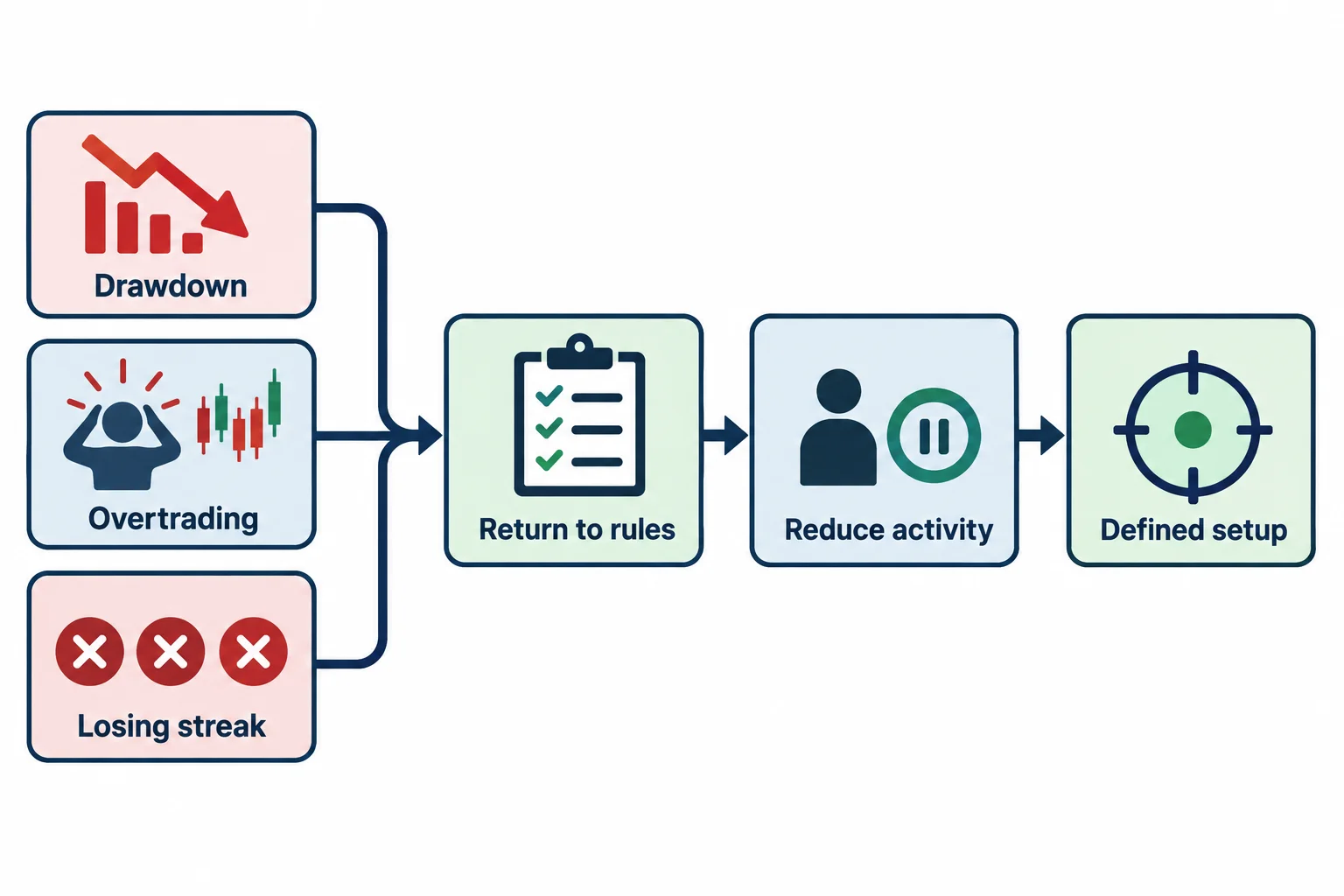
A particularly important disclosure appears around 3:00. ICT says much of the activity was designed to create scenarios requested by students, including:
- responding to a drawdown;
- correcting overtrading;
- handling a losing streak;
- avoiding excessive leverage while attempting to recover; and
- returning to a defined setup after abandoning trading rules.
He says he generally used one contract and that instances showing two contracts represented reversal trades. Because some behavior was intentionally staged, the final monthly figure should not be treated as evidence of the return a first-year trader is likely to produce.
First Trade Impatience and Losses
Beginning at 5:02, ICT frames the initial trade as an example of a beginner rushing to enter a live position. In his interpretation, impatience can lead a trader to accept a poor entry and hold a loss longer than the trader’s own system would ordinarily allow.
The broader educational point is that moving from study or simulation to live execution can change behavior. A written rule has limited value if urgency causes it to be discarded as soon as money is at risk.
Trading Through Drawdown Without Revenge
At approximately 6:46, ICT describes the impulse to “fix” a drawdown. His proposed response is to return to the rules that were abandoned, take the selected setup and avoid doing more than necessary.
This is a process-oriented lesson rather than proof that any particular setup will recover losses. Returning to rules may limit undisciplined decisions, but it cannot ensure that the next trade wins or that a drawdown will be recovered.
How Winning Trades Disrupt the Process
ICT argues at 8:03 that problems do not arise only after losses. A winning streak may encourage second-guessing, overconfidence or an urge to correct a perceived mistake immediately.
He says the rapid sequence shown in this part of the account was intended to mimic revenge trading: repeatedly entering after a loss rather than continuing to follow a controlled plan. ICT’s clearest risk-control message follows at 8:51: once focus on the rules is lost, stop trading, even if the final trade is a loser.
How ICT Explains the January Trading Result
Near the end, ICT subtracts the stated $25,000 starting balance from the stated ending balance and reports a gain of $5,564. He then calculates a return of roughly 22% for January at 9:26.
That is ICT’s calculation based on figures shown or described in the recording. Captions do not reveal all statement details, unseen chart conditions, exact fills, fees or independently verified performance. More importantly, a single self-presented month (especially one containing intentionally staged behavior) does not establish a normal first-year expectation.
What First Year Trading Expectations Really Mean
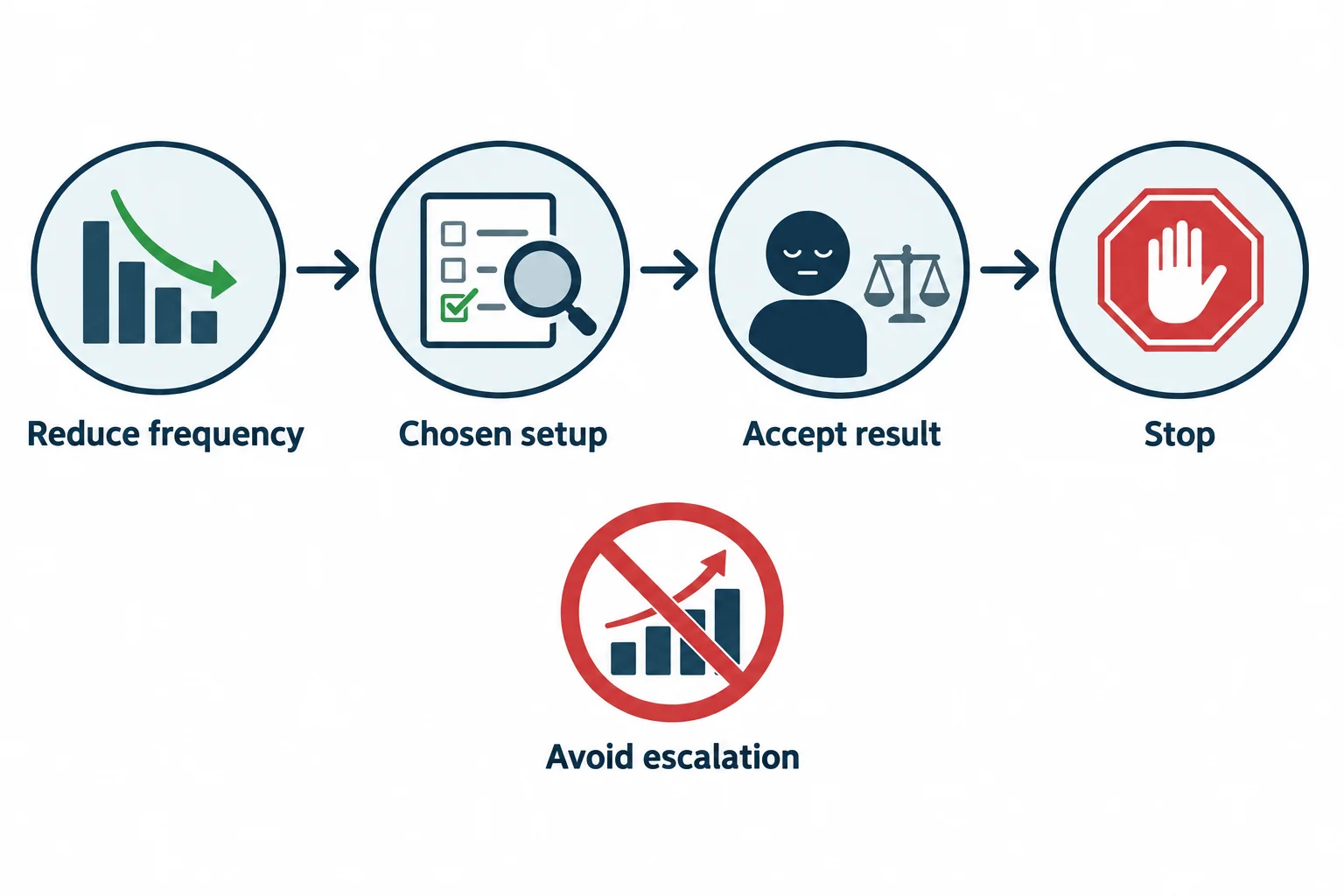
The most supportable takeaway from this installment is behavioral. ICT portrays early trading as a period in which impatience, attempts to force recovery and increased activity after emotional disruption can undermine a plan. His corrective framework is simple: reduce frequency, wait for the chosen setup, take the result and stop rather than escalating.
For educational review, it is useful to separate that process lesson from the reported percentage. The video supplies one narrated account example, not a statistical sample or tested forecast for new traders. Nothing in the transcript establishes that another trader could reproduce the reported month.
This commentary is educational and summarizes ICT’s stated interpretations. It is not investment advice or a promise of performance.