Key takeaways
ICT uses a live Nasdaq futures session to show how family and pet interruptions can undermine execution despite a written plan, targeting 14,720 after an initial morning move above overnight highs, a lunch-hour wait, and another long opportunity.
Read the full summary
ICT uses a live Nasdaq futures session to show how family and pet interruptions can undermine execution despite a written plan, targeting 14,720 after an initial morning move above overnight highs, a lunch-hour wait, and another long opportunity. He expected price to move below the open and sweep the 14,430 to 14,420 lows in an opening Initial Judas decline before reversing higher, so he avoided entering before the nine thirty equity open or chasing an advance. Using TD Ameritrade annotations, he documented the plan in advance, but children and dogs disrupted his focus, causing him to miss the intended entry, buy later, place and adjust a stop, and ultimately close because he could not concentrate. The transcript does not independently verify fills, prices, position size, or financial results, making the central lesson environmental rather than performance based, since written preparation can reduce ambiguity but cannot eliminate noise, stress, or interruptions.
How we researched this article
BestProps used document-based research from primary firm sources, checked September 25, 2026. The complete source list, scope, limitations, and commercial-state record appear near the end of this article.
In “Trading With Family Distractions”, ICT uses a live Nasdaq futures session to show how real-life interruptions can collide with an otherwise defined trading plan. The recording is useful less for a specific setup than for the way it documents the gap between preparation and execution when attention is under pressure.
The transcript is an automatic transcription of the original audio, so the account below follows the speaker’s own descriptions and timestamps rather than treating the recording as independently verified market data.
ICT Trading Plans Before Family Distractions
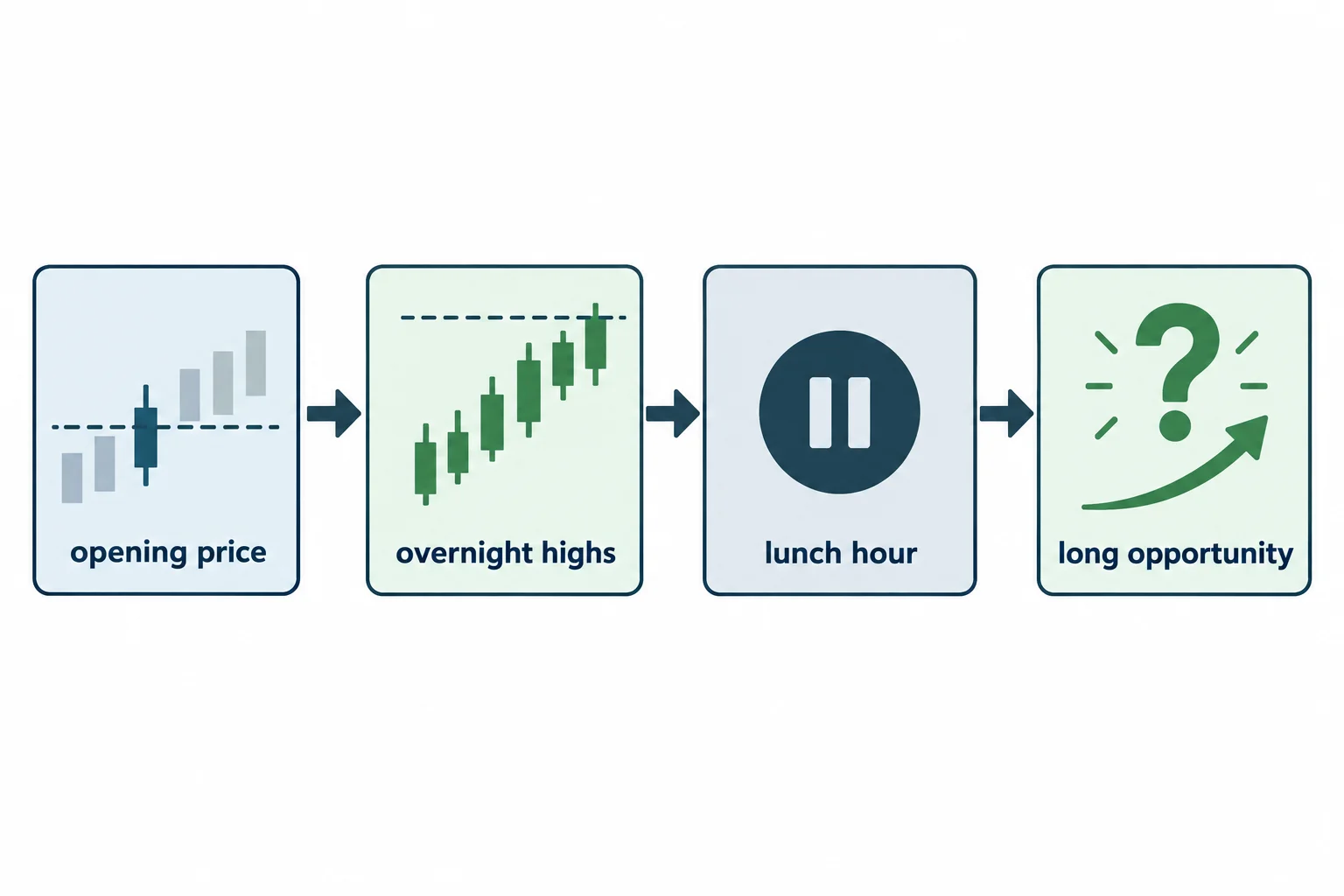
ICT begins by framing the session as a “national lampoon” edition of futures trading. He says he is using a live account rather than a paper account, and explains that he wants to show what can happen even to an experienced trader when market conditions become difficult (0:06).
He says he was concentrating on Nasdaq and had given his mentorship group a target of 14,720. His stated plan was to look for an initial morning move, take out the overnight highs, wait through the lunch hour, and then look for another long opportunity aimed at 14,720 (1:31).
He also describes a more specific intraday path: he was watching the area below 14,430 and expected a move below the opening price. He says he would use the TD Ameritrade annotation tool to write out his thinking so viewers could see that the plan was formed before the action rather than reconstructed afterward (2:28).
Why ICT Waited Before Trading the Live Open
ICT says he wanted to wait for the 9:30 equity-market opening because entering too early could mean getting caught on the wrong side of initial volatility, stopped out, or pulled into more drawdown than he was willing to absorb (2:52).
For a bullish view, he describes wanting to see an “initial Judas”: a sharp decline near the opening that would induce sellers before the move higher. He says he was watching the lows around 14,430–14,420 and wanted to see whether price would sweep below them before considering a long position (5:50).
He emphasizes that he did not want to chase price while it was already moving up. The point was to wait for the opening sequence he had in mind, not to force a trade simply because he had a directional opinion (5:46).
How Family Distractions Changed ICT Trading
The recording becomes a case study in competing demands. ICT explains that his children thought it was Sunday and came into the office, while his dogs got involved as well. He turned the music up to try to concentrate, but the noise and family activity continued to intrude (0:46).
He says the situation had already taken him out of his comfort zone. Even though he had a plan and had written down his expectations, he was trading while distracted and aware that the conditions were not ideal (7:06).
How ICT Trading Unfolded During the Live Open
ICT says that at the time of the recording, price was trading at 14,720, which he describes as the low end of the objective he had in mind. When the opening arrived, he says price dove lower and the family disruption continued, with the dogs getting into the office and moving around his feet (7:48).
He states that he missed his intended entry, then describes buying at a later point and placing a stop. He also says he was trying to get his wife to help wrangle the dogs while continuing to talk through what he was seeing on the chart (9:29).
The transcript records him saying that he eventually closed the trade because he could not focus. He points back to the entry, exit, time-and-sales executions, stop adjustments, and limit orders as part of the real-world sequence he wanted to show (10:29).
Those are the speaker’s descriptions of what occurred. The transcript does not independently establish the exact fills, prices, position size, or financial result, so those details should not be treated as verified performance.
ICT Trading Lessons for Managing Family Distractions
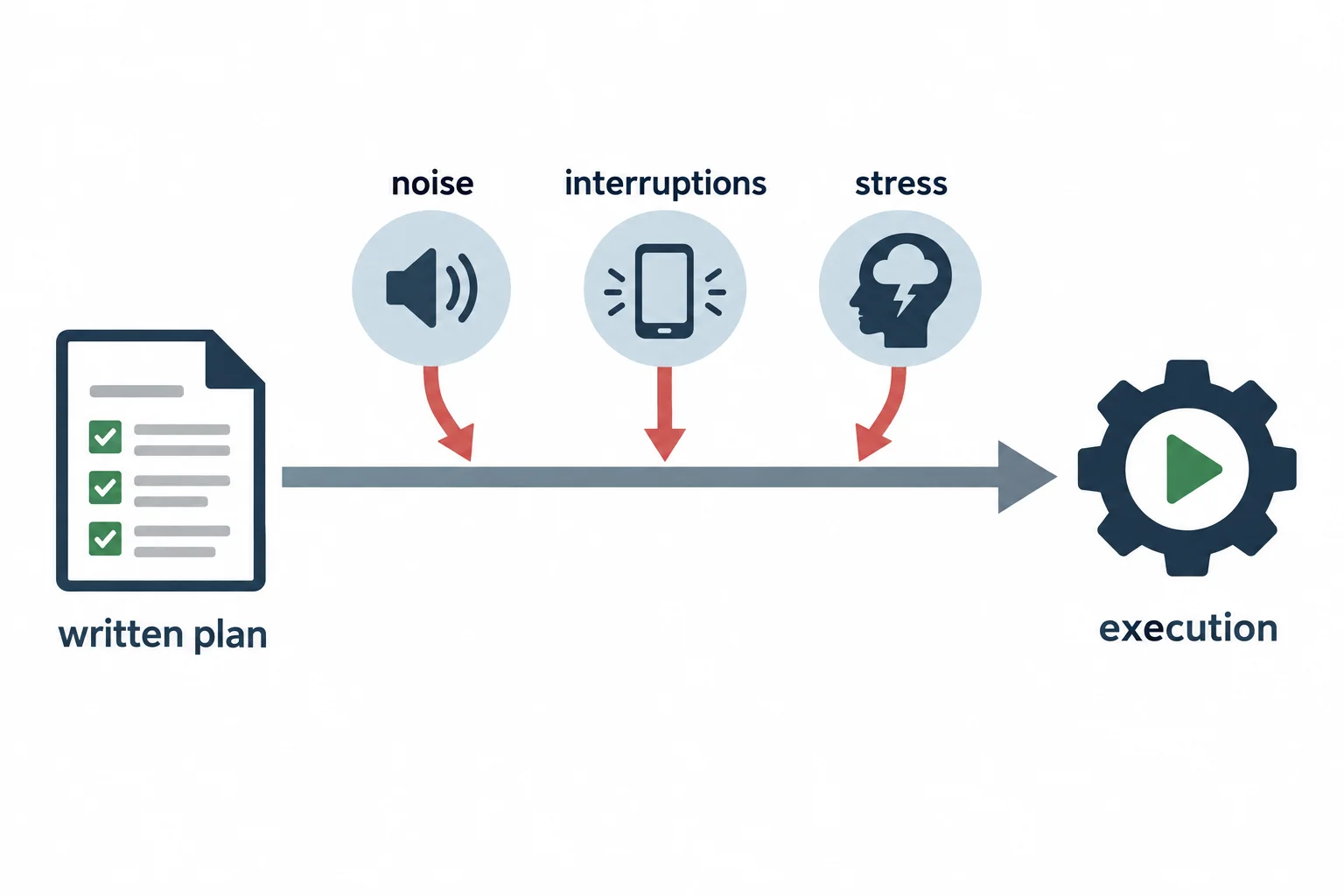
The useful lesson is not that distractions are an excuse for poor execution. It is that a trader can have a clear plan, a defined market view, and the experience to explain both, and still have the quality of execution affected by the conditions in the room.
ICT’s recording makes that point concrete: he had written down what he expected, he knew why he was waiting for the opening, and he understood the sequence he wanted to see. The interruption did not change the plan, but it changed his ability to carry it out calmly.
For traders working from home, the session is a reminder to treat the trading setup as part of the process. A written plan can reduce ambiguity, but it cannot by itself remove noise, interruptions, or stress. Those factors still need to be managed before and during the session.
As ICT puts it near the end, “real world things happen like that,” and the value of the recording is that it shows the complication rather than presenting a frictionless version of trading (11:01).
Watch the ICT Live Trading Session
Watch the full original video on YouTube: Trading With Family Distractions.