Key takeaways
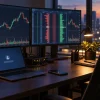
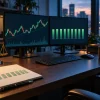
ICT’s My Main Trading Real Estate workspace uses two separated groups of four monitors, with one group combining currencies, bonds, and interest rates around the US dollar, British pound, and euro, while the other tracks S&P, Nasdaq, and Dow futures plus short-term intraday order-flow charts.
Read the full summary
ICT’s My Main Trading Real Estate workspace uses two separated groups of four monitors, with one group combining currencies, bonds, and interest rates around the US dollar, British pound, and euro, while the other tracks S&P, Nasdaq, and Dow futures plus short-term intraday order-flow charts. ICT places the index currently receiving attention on the primary monitor and compares its market structure and delivery of price with the other two indices, rearranging layouts when focus changes. A central display serves as the main viewing screen, one laptop handles order entry, another handles social media and alerts, and a portable tablet is used for YouTube and forum comments. A moon-shaped soft light reduces discomfort from eye sensitivity following a 2009 accident. The practical takeaway is to group related markets, prioritize the active instrument, separate execution from research, and isolate communications, not that eight monitors improve trading results.
How we researched this article
BestProps used document-based research from primary firm sources, checked September 25, 2026. The complete source list, scope, limitations, and commercial-state record appear near the end of this article.
In My Main Trading Real Estate, ICT gives a brief tour of his multi-screen workspace and explains how each group of devices supports a different task. The video is primarily about organization: which markets he monitors together, where he focuses his attention, and which devices he uses for order entry and communication.
Why ICT Uses Two Trading Workspace Monitor Groups
ICT begins by addressing the visible gap between two sets of four monitors. He also identifies the object in the center as a small moon-shaped soft light rather than a conventional light bulb. At 0:13, he says the light is not a bulb but a moon, and at 0:40, he explains he uses soft lighting because his eyes are sensitive following an accident in 2009.
The separation between the screens reflects their different roles. One group is used to study currencies alongside bonds and interest-rate markets, while the other is dedicated to equity-index futures.
How ICT’s Trading Workspace Tracks Currencies and Rates
At 0:48, ICT describes one monitor group as the hardware he uses for currencies and for overlaying information from the bond market. He says he considers bonds and interest rates in relation to the US dollar, British pound, and euro.
The short explanation does not define the overlays, name particular bond contracts, or show how this comparison leads to a trade. It therefore supports only a general conclusion: ICT organizes related currency and interest-rate information in one section of the workspace so he can observe them together.
ICT Trading Workspace Layout for Equity Index Futures
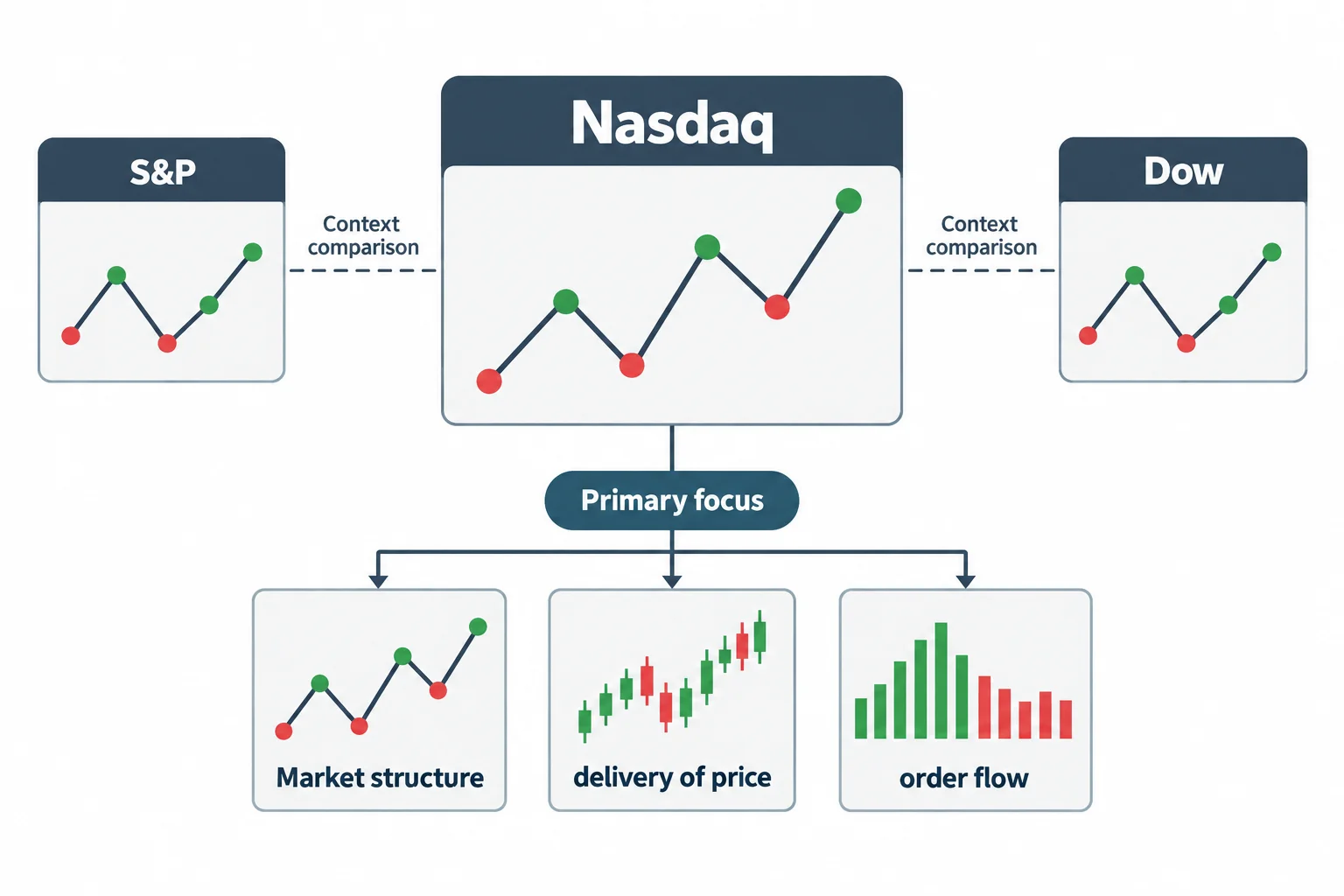
The second monitor group displays futures markets. Beginning around 1:02, ICT identifies layouts for the S&P, Nasdaq, and Dow. He also mentions a matrix of small, short-term intraday charts used to monitor what he calls order flow.
Despite the number of screens, ICT emphasizes that he is not constantly turning from one distant chart to another. He says he normally sits in the central chair and concentrates predominantly on the relevant monitor group. When focusing on Nasdaq, his main view is the Nasdaq layout.
How ICT Compares Related Indices
At 1:50, ICT explains that he compares market structure and what he calls the “delivery of price” across the major indices. If he is considering Nasdaq, he observes the S&P and Dow alongside it to provide context for what he anticipates in Nasdaq.
If his focus changes to the S&P, he rearranges the layouts so the S&P occupies his principal viewing position and Nasdaq moves to the secondary position. This suggests that the setup is adaptable: the instrument receiving the most attention is placed on the primary monitor rather than being assigned a permanently fixed screen.
“Delivery of price” is ICT’s terminology in this passage. The brief tour does not provide a formal definition or enough detail to convert it into a standalone trading rule.
ICT Trading Workspace for Order Entry and Devices
ICT separates observation from execution. At approximately 2:14, he says the central display functions as his main monitor, while a laptop is used to enter orders.
Another laptop is reserved for social media and alerts. He also mentions a tablet that he carries around the house, generally for activities such as posting comments on YouTube or his forum. The transcript ends while he is describing this use.
What ICT’s Main Trading Workspace Tour Reveals
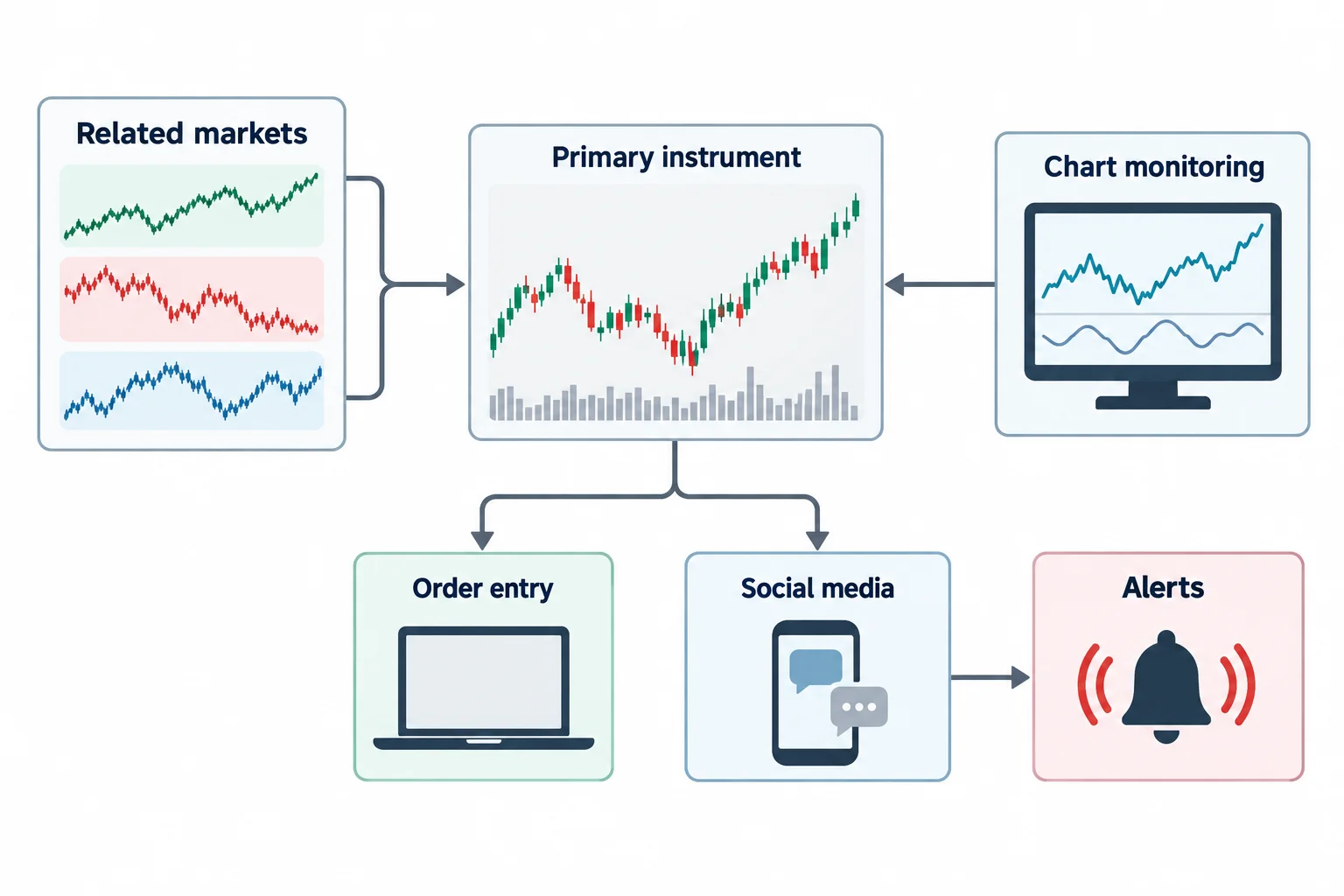
The clearest educational takeaway is not that traders require eight monitors. Instead, the video illustrates a method of assigning distinct functions to different devices:
- Group related markets together for contextual comparison.
- Give the currently traded or studied instrument the primary viewing position.
- Keep order entry separate from research and chart monitoring.
- Place social media and general alerts on a secondary device to reduce interference with the main workspace.
These are general workflow observations derived from ICT’s description, not evidence that the equipment or layout produces better trading results. The captions do not document an executed trade, visible chart prices, fills, or a subsequent outcome.
Primary source: ICT, My Main Trading Real Estate, uploaded April 3, 2022. This summary is educational commentary and not investment advice.