How we researched this article
BestProps used document-based research from primary firm sources, checked September 25, 2026. The complete source list, scope, limitations, and commercial-state record appear near the end of this article.
In My View on Gurus Turn Reviewer & Why I Prefer Forex, ICT discusses two related subjects: how viewers might assess trading educators and why he personally favors spot foreign exchange over futures and some other markets. The presentation is primarily an opinion piece, followed by a risk-sizing illustration. It should not be treated as verified evidence of trading performance.
Judge educators by substantive, testable teaching
ICT opens by acknowledging that reviews of educators and service providers can be useful. His objection is to channels that largely attack other personalities while offering little educational material of their own. At 4:04, he begins contrasting education with personality-driven review content. He argues that viewers should ask what an educator actually teaches and whether those ideas can be examined on historical and unfolding charts.
This is ICT’s standard for evaluation, not independent proof that his own methods work. He makes numerous claims about his experience, analytical accuracy and students’ results, but the transcript supplies no audited records, account statements or controlled tests with which to verify them. It also cannot show whether forecasts made elsewhere were selective, complete or profitable after costs.
A useful general lesson can nevertheless be separated from the promotional claims: criticism is not a substitute for a defined method. When reviewing any educator, a learner can ask:
- Does the educator state the setup and invalidation conditions before the outcome?
- Are losing cases and ambiguous conditions discussed alongside favorable examples?
- Can the concept be written as rules that another person could test?
- Are education, market commentary and trade signals clearly distinguished?
- Does the educator acknowledge uncertainty rather than imply perfect accuracy?
ICT expressly says he does not claim 100% accuracy and describes his work as price-action education rather than a signal service. Around 14:59, he contrasts showing a brokerage login with publicly stating a market expectation and later checking what occurred. Neither form of evidence is conclusive by itself: account images can lack context, while selected forecasts can be affected by hindsight and selection bias.
Focus on a small market universe
ICT says he mainly follows the US Dollar Index, EUR/USD and GBP/USD, occasionally discussing markets such as the E-mini S&P, bonds or AUD/USD. At 8:48, he recommends concentrating on one market, or perhaps two, rather than attempting to trade many currency pairs.
That is a study-process suggestion rather than a demonstrated edge. Narrow focus may make journaling and pattern recognition more manageable, but it does not eliminate market risk or establish that a particular analysis method is predictive.
Why ICT says he prefers forex
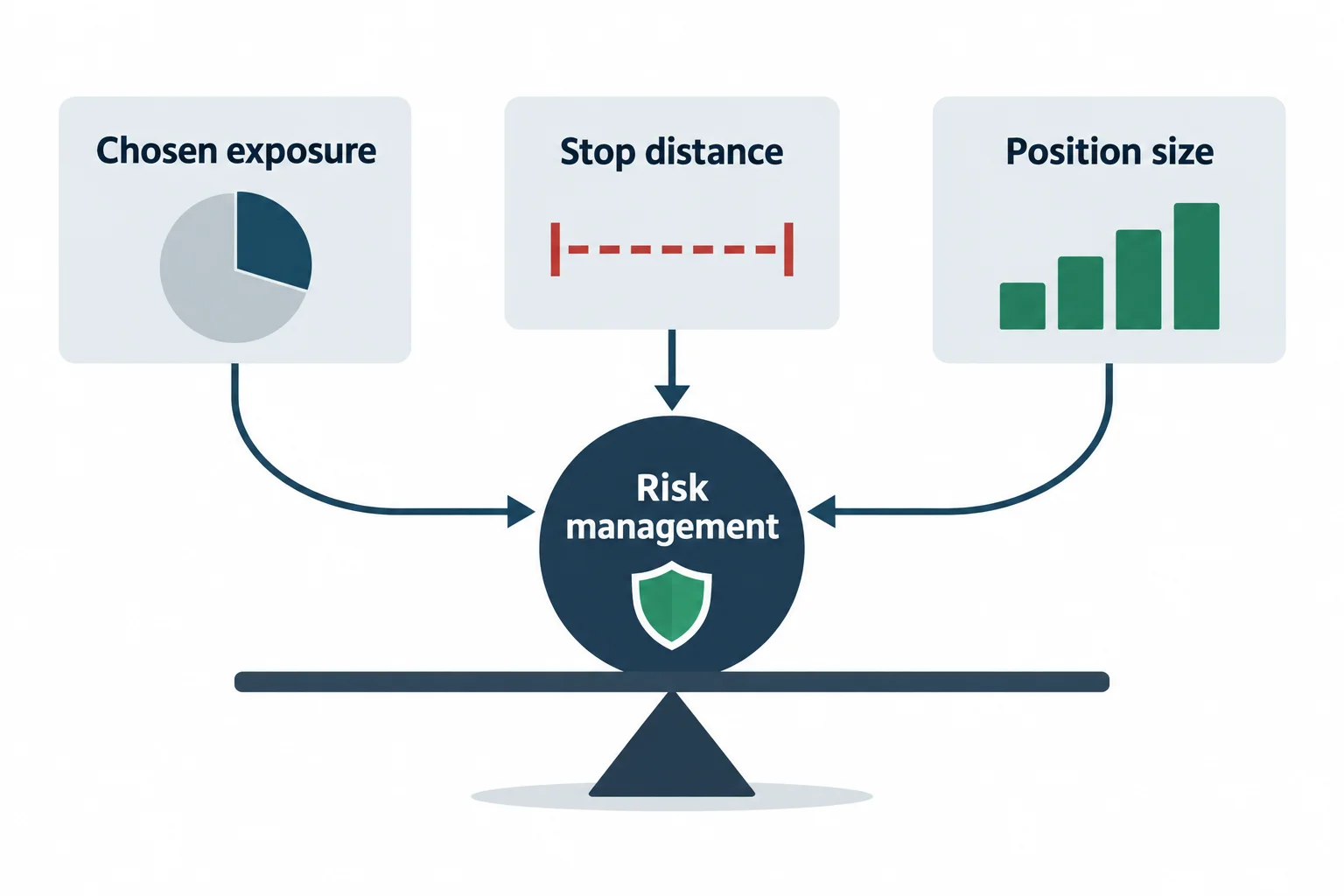
ICT gives his central answer at 20:06: he believes forex allows a trader to “form fit” risk management. By this he means position size can be adjusted in relatively small increments so that the monetary exposure can be matched more closely to account equity and a chosen stop distance.
Later, he compares spot EUR/USD with a euro futures contract and says their broad price movements reflect the same underlying currency relationship, while the trading vehicles differ. Beginning around 39:04, he argues that futures contracts impose larger fixed contract values and margin requirements, whereas forex position sizing can accommodate smaller balances.
The exact margin, minimum deposit and contract figures quoted in this 2020 upload are time-sensitive and should not be relied upon today without checking current broker and exchange documentation. The broader comparison is that products can differ in contract size, expiration, execution structure, financing, spreads, commissions and counterparty arrangements. Smaller sizing can reduce the cash amount placed at risk, but it does not make forex intrinsically safe or profitable.
Practice before risking money
At 24:03, ICT proposes progressing from paper study to a demo account. He says this lets a learner observe whether a setup repeats, practice waiting and experience failed formations without losing money. He also emphasizes that no model is perfectly accurate and that mistakes caused by timing, impulsiveness or inattention remain possible.
He later describes the psychological change that can occur when moving from simulation to live funds. His point is that even a small monetary loss may feel more significant than an identical simulated loss. This is a plausible educational observation, but the transcript provides no study establishing a particular account size, training period or readiness threshold. Demo execution also cannot reproduce every feature of live trading, including emotional pressure, slippage and transaction costs.
The hypothetical risk example
Near 59:17, ICT introduces a hypothetical EUR/USD example using what he calls an “optimal trade entry,” a 15-pip stop and a $300 assumed balance. He calculates a possible loss of about $3 and a favorable outcome of roughly $13.72. These figures are an illustration presented over a chart, not a documented trade fill. The captions do not establish the visible entry, target or market prices, and they do not account comprehensively for real-world costs.
ICT then discusses a hypothetical 4.5% return and extrapolates it to larger balances. That arithmetic must not be confused with an expected return. Repeating a favorable percentage consistently would require future trades to behave as assumed, while losses, spreads, slippage, financing and behavioral errors could materially change the result. No profitability conclusion follows from one selected chart example.
Asset-class fit rather than universal superiority
Although ICT strongly criticizes indicator-based retail methods, he also says traders need not choose forex simply because he prefers it. At 30:44, he says learners may apply price-action study to futures or stocks if those markets better suit them. His broader message is that a trading model, time horizon and asset class should fit the individual’s temperament and constraints.
The most defensible takeaway is therefore procedural: examine educators’ claims critically, convert concepts into testable rules, include failures in the review and distinguish flexible position sizing from profitability. ICT presents forex as his preferred vehicle because of its sizing flexibility—not as a risk-free market. All trading involves the possibility of loss, and this video does not establish that ICT’s methods produce a repeatable trading edge.
Educational illustration
Watch the source
Primary source: My View on Gurus Turn Reviewer & Why I Prefer Forex. The upload is dated 2020-10-26. Captions are automatic and may contain errors.