How we researched this article
BestProps used document-based research from primary firm sources, checked September 25, 2026. The complete source list, scope, limitations, and commercial-state record appear near the end of this article.
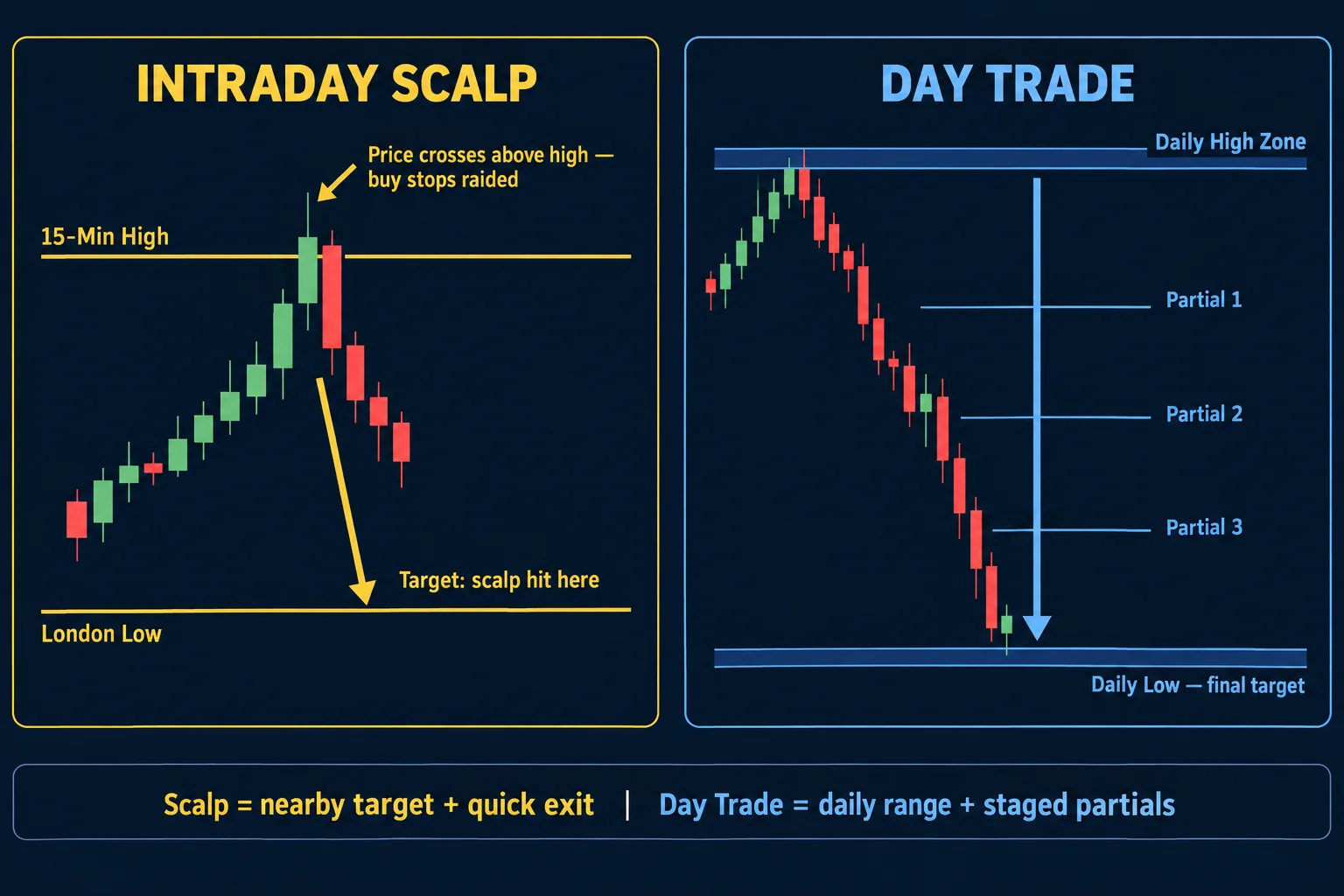
What separates an intraday scalp from a day trade? In Forex Trading – What Is The Difference Between Scalps & Day Trades?, ICT answers that question by narrating two different EUR/USD trade ideas around an ECB monetary-policy announcement. His central distinction is the scope of the objective: the scalp targets a nearby intraday liquidity level, while the day trade seeks a larger movement across more of the daily range.
The recording is a case study in ICT’s terminology and market interpretation, not proof that the method has a repeatable edge. Because the transcript does not show the chart, independently verified prices, account records, or order fills, the discussion below is limited to what ICT says he was watching and doing.
The short-term intraday scalp
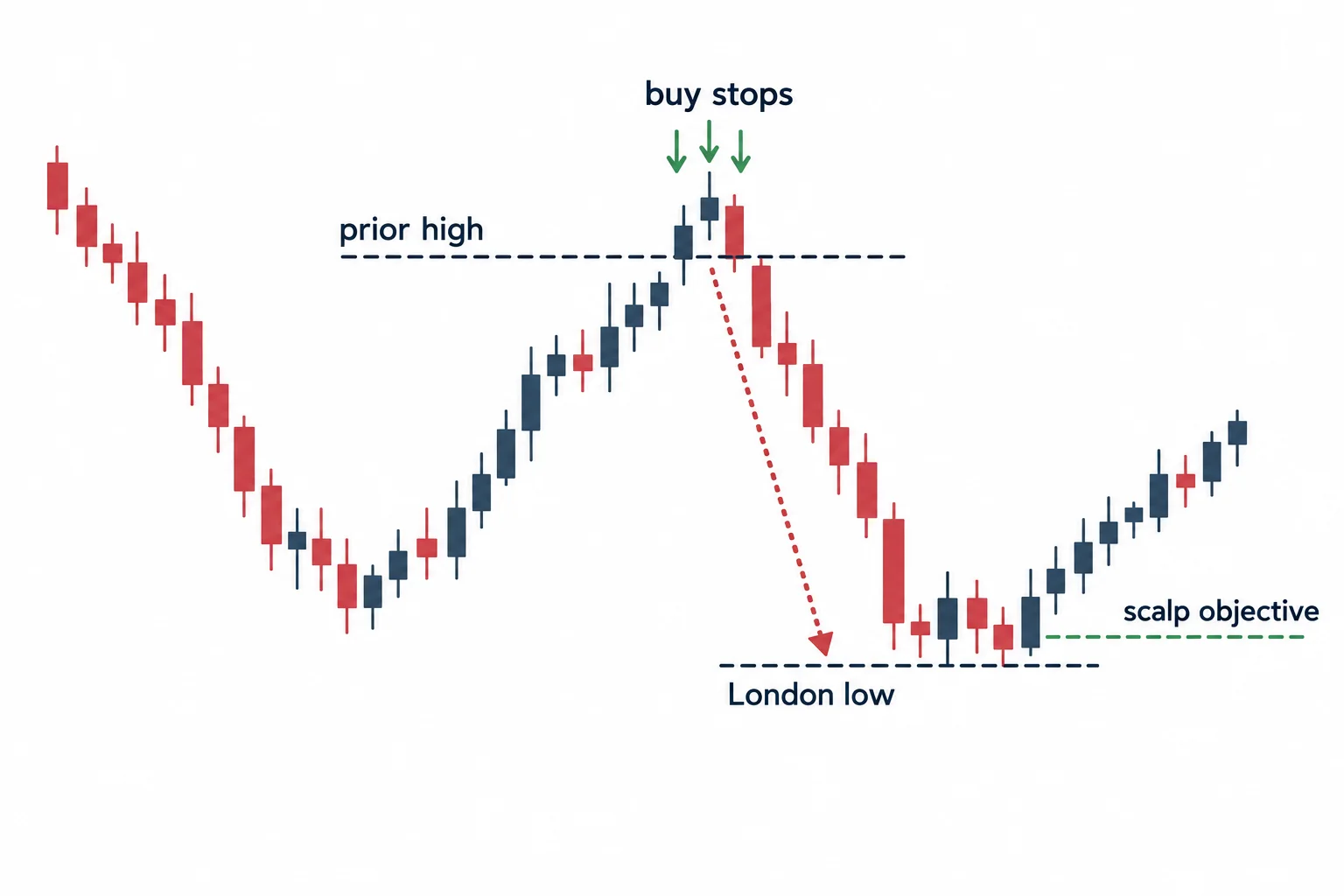
ICT begins by noting the scheduled ECB news and says he is viewing EUR/USD on 15-minute and five-minute charts. At 0:53, he outlines a short-term plan: wait for price to move above a 15-minute high and then look for a decline beneath a low formed earlier that morning.
He interprets the area above the 15-minute high as a pool of buy stops left by traders who had sold during a short-lived London-session decline. In ICT’s framework, a move above that high would “raid” those stops and provide the location for his proposed short. This is his interpretation of liquidity behavior; the transcript does not establish who held positions or why orders were placed there.
After saying he entered short, ICT identifies the London low as the immediate target and explicitly labels the idea a scalp at 2:11–2:18. He then says he removed most of the position after price moved below that low. His stated reason for taking the majority off was that another ECB event later in the morning could produce volatility against the position.
Within this example, the scalp has several defining features:
- It is based on a nearby high and low within the trading session.
- Its objective is a relatively short move to an adjacent liquidity level.
- Most of the position is reduced once that specific short-term objective is reached.
- The broader daily high-to-low movement is not required for the scalp thesis to be completed.
The broader day-trade objective
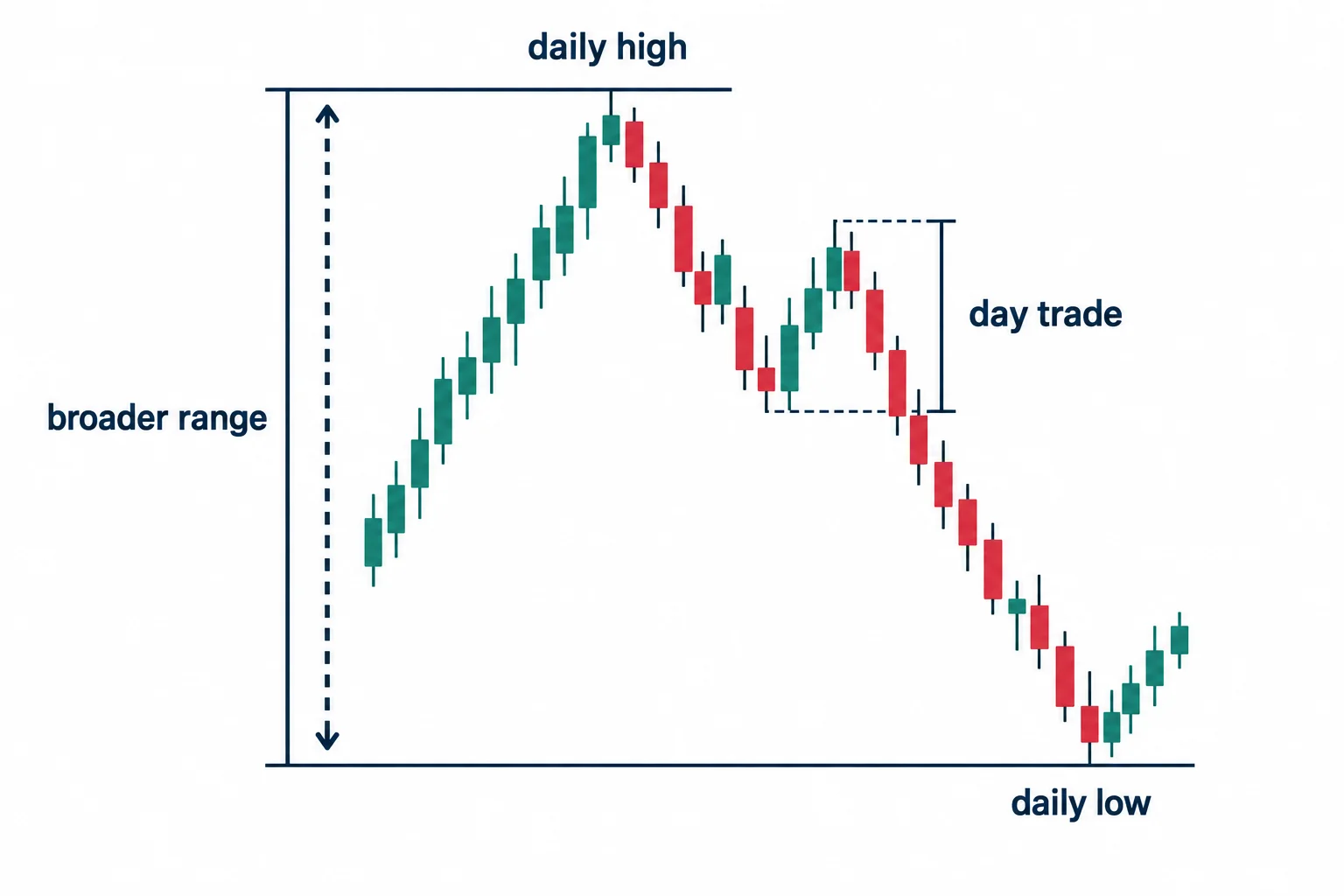
ICT contrasts that limited objective with a second trade intended to capture more of the daily range. At 2:58, he says he is willing to let the remaining scalp position stop out because his next plan is to sell nearer the daily high and seek a move toward the daily low.
The important difference is therefore not simply how many minutes the position remains open. In this lesson, both ideas are intraday, but the day trade is organized around a larger range and more distant objectives. ICT waits for price to rise toward a previously marked red level, then describes entering short with an initial objective at the lower low used for the earlier scalp and an additional, lower blue level as an ideal target.
At 6:07, he interprets the rally as removing earlier short sellers and attracting breakout buyers. He then looks for a fast decline and wide candles as confirmation that the move is developing in the anticipated direction. Later, he reports taking partial profits below a short-term low and managing the remainder toward lower levels rather than demanding that the most ambitious target be reached.
How ICT describes trade management
Both examples use partial exits, but the management serves different objectives. The scalp is substantially reduced at the first nearby low. The day trade is managed across several lows, with an ideal lower target treated as a best-case scenario rather than a requirement.
At 9:23, ICT emphasizes planning for a best-case move while responding to the levels price reaches in the moment. He says he takes additional partials and lowers his stop. Near the end, he reports that no materially lower low formed after the depicted daily-range low. These are narrated claims about the session; the transcript alone cannot verify the exact executions or financial result.
Liquidity is the organizing concept
ICT frames both setups as movement from one concentration of liquidity to another. He rejects trend lines, supply-and-demand zones, harmonic patterns, order blocks, and his “optimal trade entry” concept as the basis for these particular examples. Instead, he says he is focusing on highs and lows where stop orders may be resting.
He also characterizes this approach as resembling how interbank traders operate. That characterization should be understood as ICT’s own market interpretation. The video does not provide independent evidence about bank dealing practices or demonstrate that the trades represent institutional execution.
Practical distinction from this lesson
A concise reading of ICT’s answer is:
- Intraday scalp: a narrowly defined attempt to capture a move between nearby session liquidity points, followed by a quick reduction in exposure.
- Day trade: an intraday position built around a broader directional expectation for the daily range, usually involving more distant targets and staged exits.
This distinction is specific to the way ICT presents the two ideas in this video. Traders and brokers may use “scalp” and “day trade” differently, and duration alone does not fully distinguish them here. The more meaningful differences are the expected range, target distance, and management plan.
This article is educational commentary on ICT’s presentation, not investment advice. Trading around major economic announcements can involve rapid price changes, and no outcome or profitability is guaranteed.