Key takeaways
ICT organizes a handwritten trading journal around weekly expectations, key levels, potential setups, major calendar events called big rocks, decision filters, stand-aside conditions, wellness and focus, plus a separate private section for psychological and personal concerns.
Read the full summary
ICT organizes a handwritten trading journal around weekly expectations, key levels, potential setups, major calendar events called big rocks, decision filters, stand-aside conditions, wellness and focus, plus a separate private section for psychological and personal concerns. Around 2 minutes 53 seconds he begins an example entry with a small doodle, then records what he expects, what would justify participation, and what would make him change his view or stay out while avoiding too many moving parts. The leather-bound format and preferred pen are personal choices rather than requirements, and a notebook, digital document, or spreadsheet can serve the same purpose if used consistently. The transcript does not identify exact instruments, levels, brands, trade results, or a complete template, so no specific setup can be reconstructed, and ICT presents journaling as preparation and reflection rather than proof of a trading edge.
How we researched this article
BestProps used document-based research from primary firm sources, checked September 25, 2026. The complete source list, scope, limitations, and commercial-state record appear near the end of this article.
In What Journals I Use & An Example Entry, ICT gives a brief look at how he organizes handwritten journals around trading preparation, personal reflection and weekly focus. The presentation is not a complete journal template, and some personal material is intentionally kept private. Instead, it outlines the main categories he records and explains why the journal’s physical format matters to him.
Why ICT Uses a Physical Trade Journal
At 0:30, ICT shows a leather-bound journal with textured paper. He emphasizes that traders do not need an elaborate or expensive notebook. His preference reflects the personal value he places on his records: he views recordings and journal entries as intimate documents and wants to preserve them in a format that feels distinctive rather than disposable.
The practical lesson is not that a particular leather journal is necessary. It is that the journal should be inviting enough to use consistently. A plain notebook, digital document or spreadsheet could serve the same recordkeeping purpose if it supports an honest and repeatable routine.
How ICT Separates Trade and Personal Journal Notes
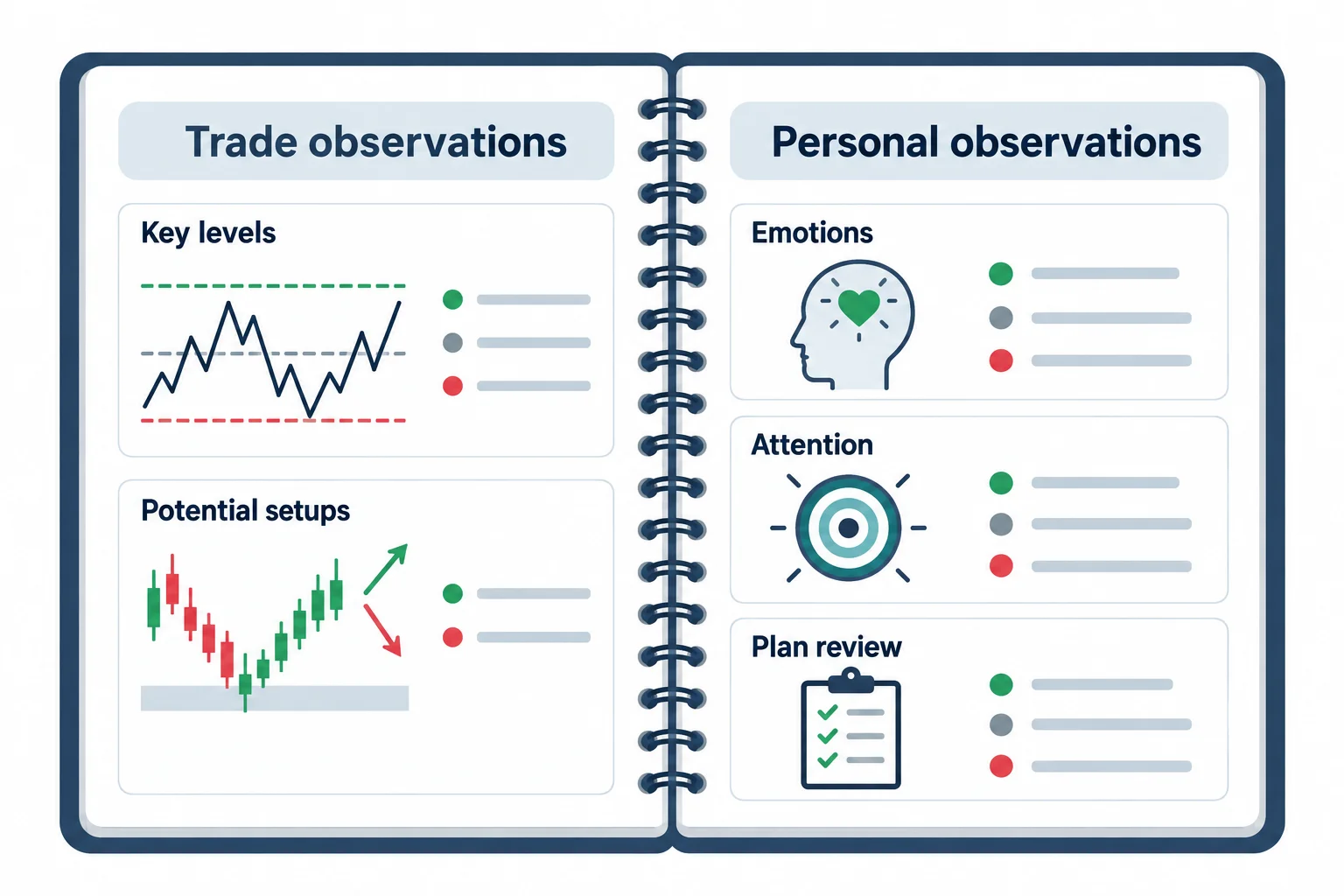
ICT describes dividing an entry into two broad areas at 1:21:
- Trade-related observations: Key levels, potential setups and other conditions he is monitoring.
- Psychological and personal observations: Concerns, emotional issues or circumstances that could affect his attention and decisions.
This separation is useful because a trading record can document more than a market thesis. It can also capture the decision-maker’s condition when that thesis was formed. In general educational terms, noting fatigue, distraction, impatience or outside pressure may help a person review whether behavior followed the written plan. The video does not present evidence that journaling by itself improves trading performance.
ICT does not expose the private section of his journal. That limitation is deliberate, and viewers should not treat the visible example as a complete reproduction of his process.
What ICT Includes in an Example Journal Entry
The example begins around 2:53. ICT says he commonly adds a small doodle, often in the lower-right corner, before writing his notes. This appears to be a longstanding personal habit rather than a trading technique.
From 3:35, he identifies several components of the entry:
- Expectations for the coming week.
- Specific ideas or conditions he plans to watch.
- A private section covering matters currently on his mind.
- Wellness and focus items he wants to address during the day or week.
- A weekly calendar of “big rocks,” meaning events he expects to have greater impact.
- Filters used when considering trade decisions.
- Conditions that would keep him from participating or cause him to move to the sidelines.
The transcript does not reveal the precise market levels, instruments or full wording visible on the pages. Because the source is an automatically transcribed video and the chart or handwriting cannot be verified from the transcript alone, no exact trade setup or result can be reconstructed.
ICT Trade Journal Structure Based on the Example
A viewer could adapt the supported categories into a simple preparation page without copying ICT’s private material:
- Weekly expectations: Write what you currently expect, while treating it as a hypothesis rather than a certainty.
- Conditions to monitor: List relevant levels, setups or events in terms you can review later.
- Major calendar items: Note the week’s “big rocks” and when they occur.
- Decision filters: Define what must be present before participation is considered.
- Invalidation or stand-aside conditions: Record what would change your view or keep you out.
- Wellness and focus: Briefly document personal factors that might influence execution.
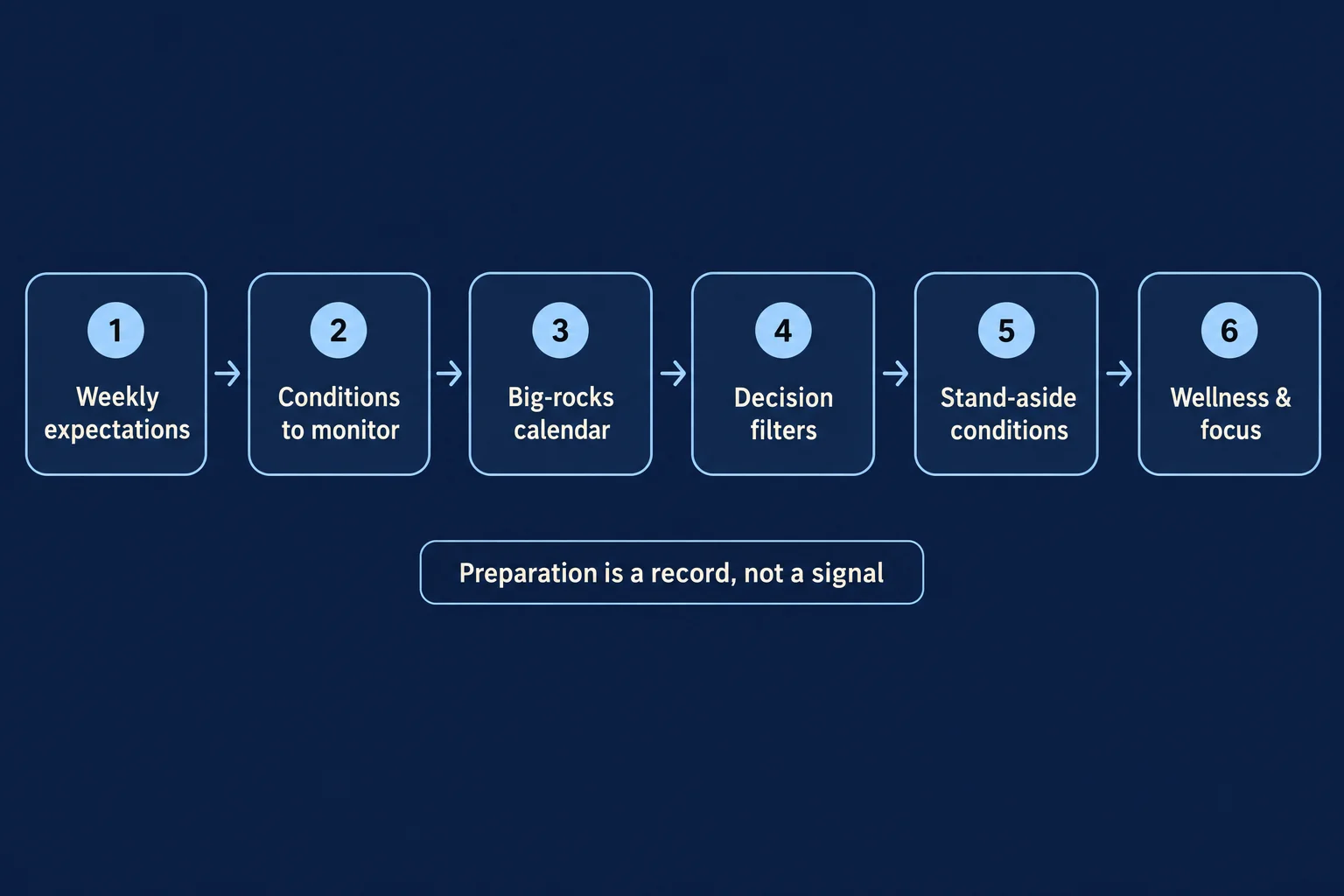
The final category is particularly important to the structure ICT describes: the journal includes reasons not to act, not only reasons to seek a trade. At 4:20, he explains that he records expectations and filters while trying to avoid too many moving parts. He also writes down what would make him refrain from engaging or change his mind and step aside.
Other ICT Trade Journal Habits
ICT briefly says that he also journals his dreams and has done so since his teenage years, but he distinguishes that habit from trading. He also discusses his pen and paper preference, saying the ink works well with the journal paper. The automated transcript does not reliably identify a pen or journal brand, so no specific product can be confirmed from this source.
Overall, the video presents journaling as a personalized preparation and reflection practice. ICT’s example combines market expectations, scheduled events, participation filters and personal awareness in one handwritten record. It should be understood as his own stated process, not as proof of a trading edge or a promise of improved results.
Watch the original ICT journaling video
This article draws on an automatic transcript of the full original YouTube audio of What Journals I Use & An Example Entry. The transcript captures ICT’s spoken narration; it does not independently transcribe the handwriting visible in his journal, and it does not verify the pens, paper brands, levels or trade decisions he references in passing. The recording itself remains the primary source.
Watch the original lesson on YouTube
The full video (~5 minutes) shows ICT paging through the journal and naming the categories summarized above; the audio alone omits the visible page content.
Primary source and further reading
- ICT, “What Journals I Use & An Example Entry” — original video (primary source, timestamped above)
- Inner Circle Trader official YouTube channel — original lectures on journaling, IPDA and price action concepts referenced here
- Bullet Journal — general background on structured handwritten journaling methods (not specific to ICT)