Key takeaways
Treat profit targets below 8% per phase only as an informal low-target benchmark, not proof of an easier prop-firm evaluation, and compare forex/CFD, futures, multi-step, and instant-access models separately.
Read the full summary
Treat profit targets below 8% per phase only as an informal low-target benchmark, not proof of an easier prop-firm evaluation, and compare forex/CFD, futures, multi-step, and instant-access models separately. Normalize futures targets as dollar target ÷ nominal account size × 100, so a hypothetical $3,000 target on $50,000 equals 6%, then calculate target-to-drawdown ratio as profit target ÷ maximum drawdown. A hypothetical 6% target with 3% drawdown scores 2.0, while an 8% target with 8% drawdown scores 1.0, meaning the lower target demands twice as much profit per percentage point of loss allowance. Record every phase, daily and overall loss limits, static versus trailing drawdown, balance versus equity calculations, intraday versus end-of-day thresholds, minimum trading or profitable days, consistency and position rules, news and overnight restrictions, recurring fees, resets, renewals, post-pass charges, and funded-stage withdrawal conditions. Verify the exact plan, account size, rules, costs, agreement, and last-checked date in official documents immediately before purchase and again before each new stage because provider terms can change.
How we researched this article
BestProps used document-based research from primary firm sources, checked September 12, 2026. The complete source list, scope, limitations, and commercial-state record appear near the end of this article.
Searching for prop firms with the lowest profit target sounds straightforward: find the smallest percentage and choose that evaluation. In practice, the headline target tells only part of the story. A low target can be paired with a restrictive trailing drawdown, a consistency rule, minimum trading days, recurring charges, or separate requirements before withdrawals become available.
The search results also mix forex/CFD evaluations, futures programs, instant-funding products, and multi-step challenges. Those models are not directly comparable. The most useful approach is to separate them, normalize every target against account size, and then assess how much loss allowance and operational flexibility the trader receives.
Verification note: Prop-firm programs and rules change frequently. This guide explains how to identify current low-target offers without presenting unverified firm-specific terms as permanent facts. Confirm every target, drawdown rule, fee, and payout condition in the provider’s official documentation before purchasing an evaluation.
What Makes a Prop Firm Profit Target Low?
Several comparison pages in the current search results use a target below 8% per evaluation phase as an informal definition of “low.” That is a market convention rather than an industry-wide standard. It should not be treated as a formal threshold or proof that a challenge is easier.
For one current provider-specific example, Alpha Capital Group’s official Alpha Pro 6% rules, checked August 24, 2026, list a 6% phase-one profit target for the $25K Alpha Pro 6% evaluation. This bounded example does not establish another plan’s current target, drawdown, fees, or eligibility rules.
The account model matters as much as the percentage. For example, the following structures create different workloads:
| Account model | How the profit target is expressed |
|---|---|
| A one-step evaluation | with one profit target. |
| A two-step evaluation | with separate targets in each phase. |
| A futures evaluation | that states its target as a dollar amount. |
| An instant-access model | with no conventional evaluation target but other performance or withdrawal conditions. |
When comparing multi-step programs, consider the complete path rather than only the first phase. A 6% first phase followed by another requirement is not equivalent to a one-step 6% target. Likewise, an instant-funding product should not automatically be ranked above evaluations simply because it lacks a conventional challenge target.
Compare Prop Firm Profit Targets for Forex CFDs and Futures
Forex and CFD Profit Target Evaluations
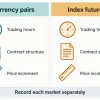
Forex/CFD firms commonly express targets and drawdowns as percentages of the nominal account size. This makes basic normalization relatively simple, but the rules behind those percentages can differ substantially. Check whether maximum loss is calculated from the initial balance, current balance, or equity, and whether limits reset or change after a phase is completed.
For each forex/CFD plan, record:
- The target for every evaluation phase.
- Daily and overall loss limits.
- Whether drawdown is static, balance-based, or equity-based.
- Minimum profitable or trading-day requirements.
- Any consistency, lot-size, or risk-distribution rules.
- Restrictions affecting news, overnight, or weekend trading.
- The complete cost rather than only an advertised entry price.
Futures Profit Target Evaluations
Futures programs often display a nominal account size and a dollar-denominated profit target. Convert that amount into a percentage for comparison, but do not assume the nominal account size represents available loss capacity or deployable cash.
The calculation is:
Profit target percentage = dollar target ÷ nominal account size × 100
If a hypothetical $50,000 evaluation has a $3,000 target, the normalized target is 6%. This is only a mathematical example, not a claim about a particular provider or an industry standard.
Futures traders should then investigate how the drawdown moves. An intraday trailing threshold may behave very differently from an end-of-day trailing threshold or a static limit. Also verify whether a subscription renews, whether another charge applies after passing, and whether consistency conditions affect evaluation completion or later withdrawal eligibility.
Compare the Profit Target With Drawdown
A more informative comparison divides the profit target by the maximum drawdown allowance:

Target-to-drawdown ratio = profit target ÷ maximum drawdown
Suppose Plan A has a hypothetical 6% target and a 3% maximum drawdown. Its ratio is 2.0. Plan B has an 8% target and an 8% maximum drawdown, producing a ratio of 1.0. Although Plan A has the lower headline target, it requires twice as much target profit for each percentage point of stated loss allowance.
| Illustrative plan | Profit target | Maximum drawdown | Target-to-drawdown ratio |
|---|---|---|---|
| Plan A | 6% | 3% | 2.0 |
| Plan B | 8% | 8% | 1.0 |
This ratio is a screening tool, not a complete measure of difficulty. It can become misleading when one plan uses static drawdown and another uses a trailing calculation. Daily loss limits and open-position equity rules can also constrain a strategy before the overall drawdown is reached.
Why the Lowest Profit Target May Not Be Easiest
How Trailing Drawdown Affects the Profit Target
A trailing threshold may rise as the account reaches new highs. Depending on its calculation method, unrealized gains may affect the threshold, or it may update only at a specified time. Two plans with the same target and maximum loss figure can therefore expose a trader to different practical constraints.
How Consistency Rules Change the Profit Target
Some programs limit how much of total profit may come from a single day or otherwise evaluate the distribution of returns. A trader who reaches the headline target could still need additional trading activity if the result does not satisfy the applicable formula. The exact calculation must be checked in the current rules.
How Minimum Days Affect Profit Target Completion
A low target does not necessarily allow immediate completion. Minimum trading days or profitable-day requirements can extend an evaluation even after the target has been reached. Verify what qualifies as a trading day and whether the requirement applies in each stage.
How Fees Change the Prop Firm Offer
Compare the likely total cost of pursuing a plan, including recurring evaluation charges and any additional account-related fees disclosed by the provider. Avoid assuming that the cheapest initial promotion is the lowest-cost route. Time spent in an evaluation and the possibility of resets or renewals may matter more than the first payment.
Prop Firm Target Passing and Withdrawal Eligibility
Evaluation targets determine whether a trader advances under the stated rules. They do not, by themselves, describe later withdrawal conditions. Review the funded-stage or simulated-funded agreement separately, paying attention to any subsequent thresholds, eligible-day requirements, consistency calculations, or account-balance conditions.
How to Compare Current Low Profit Target Offers
Because comparison and firm-owned pages can become outdated, use them for discovery rather than final verification. A repeatable review process is easier to audit than a permanent ranking.

- Choose one market category. Compare forex/CFD evaluations with similar evaluations and futures programs with similar futures programs.
- Choose one account size. Use the same nominal size where possible, or convert dollar targets and loss limits into percentages.
- Record every phase. Include all targets in a multi-step path rather than highlighting only the lowest phase.
- Classify the drawdown. Note whether it is static or trailing and whether calculations use balance, equity, intraday highs, or end-of-day values.
- Calculate the target-to-drawdown ratio. Use the same basis for both figures and flag plans that cannot be compared cleanly.
- List operational constraints. Capture daily loss rules, minimum days, consistency formulas, position restrictions, and time limits.
- Calculate potential total cost. Include disclosed recurring or post-evaluation charges instead of relying on promotional pricing.
- Verify with official documents. Check the plan page, FAQ, rulebook, and agreement immediately before purchase, then save the verification date.
A useful shortlist contains more than a firm name. It should identify the exact plan, account size, evaluation type, target for each phase, drawdown method, important constraints, cost structure, and last-checked date.
Which Prop Firm Profit Target Fits Your Trading?
There is no universally best or easiest prop firm based on target percentage alone. Traders can narrow the field by identifying the constraints their existing process is designed to handle.
- For traders prioritizing loss-room clarity: Start by investigating plans with clearly documented static drawdown mechanics rather than sorting exclusively by target.
- For futures traders: Compare the dollar target with the actual drawdown allowance and determine exactly when a trailing threshold moves.
- For traders who prefer staged objectives: Review the combined burden of every phase and whether rules change between stages.
- For traders sensitive to recurring costs: Consider how minimum-day rules and evaluation duration could affect total expense.
- For traders considering instant access: Compare funded-stage risk and withdrawal rules instead of treating the absence of an evaluation target as a free pass.
The right comparison begins with a documented strategy and realistic risk limits. A challenge should not cause a trader to increase position size merely to reach a deadline or advertised target. Prop trading involves financial risk, and no target structure guarantees that an evaluation will be passed or that withdrawals will be available.
Prop Firm Profit Target FAQs
Is a Profit Target Below 8% Considered Low?
Some comparison sites use below 8% per phase as an informal benchmark. It is not universal, and a lower target may be offset by tighter drawdown or additional conditions.
Does Instant Funding Have a Profit Target?
Instant-access products may not use a conventional evaluation target, but they can have other performance, risk, or withdrawal requirements. Review the exact plan documents rather than grouping them with one-step challenges.
Is the Lowest Profit Target the Most Important Factor?
No. Drawdown mechanics, daily limits, consistency rules, evaluation steps, minimum days, costs, and later-stage conditions can all be equally important.
How Often Should Prop Firm Rules Be Checked?
Check them immediately before purchasing and again before trading under a new stage. Commercial terms can change without third-party comparison pages updating at the same time.
Compare Prop Firm Profit Target Offers Before Choosing
The best way to compare prop firms with low profit targets is to move beyond the headline percentage. Separate forex/CFD and futures programs, normalize targets, calculate the target-to-drawdown ratio, and inspect every rule that affects how the objective can be reached. A current plan checked against official documents and recorded with transparent constraints is more useful than an outdated ranking built around the smallest advertised number.