Key takeaways
Full-time prop firm trading may be sustainable for experienced traders but is not a guaranteed salary, and readiness should be judged by repeatable net cash flow, verified payouts, complete records, household reserves and counterparty risk rather than headline account size or a few profitable months.
Read the full summary
Full-time prop firm trading may be sustainable for experienced traders but is not a guaranteed salary, and readiness should be judged by repeatable net cash flow, verified payouts, complete records, household reserves and counterparty risk rather than headline account size or a few profitable months. Retail funded programs typically require an evaluation under loss limits before a funded stage and profit share, but either stage may be simulated, while traditional proprietary firms hire or contract traders within an established business. Verify current agreements covering static or trailing maximum drawdown, daily limits, permitted instruments, strategies, trading times, news and overnight positions, automation, copying, payout eligibility and timing, account closure, rule changes, jurisdiction and disputes. Calculate essential and irregular household spending, taxes, evaluation and reset fees, data, software, the contractual payout share, losing and zero-payout months, and a safety margin while tracking gross results, eligible payouts and cash received separately. Sustainability also depends on surviving changing market conditions, breached accounts, payout delays or rejections, platform outages, changed terms, provider failure and the psychological pressure that can trigger oversizing or revenge trading. A lower-risk transition is to trade part time, document every attempt and expense, test the strategy across multiple market conditions, withdraw under current terms, keep emergency savings separate from trading reserves, define stop conditions and preserve employment or other dependable income until payouts are sufficiently consistent. Multiple firms may reduce dependence on one provider but add fees, conflicting rules and copying risks, while personal accounts provide more control but expose the trader’s own capital directly. The decisive question is whether essential household expenses remain secure through a prolonged payout interruption, not how large the funded account appears.
Is prop firm trading sustainable full time? It may be sustainable for some experienced traders, but it should not be treated like a guaranteed salary. Funded trading income can vary significantly from month to month, and access to payouts depends on both trading performance and the firm’s current contract, rules and operations.
A realistic decision should therefore be based on net cash flow, verified results, household reserves and counterparty risk, not account size or a few profitable months. Traders also need to distinguish retail funded programs from traditional proprietary trading employment.
Which Prop Firm Trading Model Are You Using?
Traditional proprietary trading firms generally hire or contract traders to trade within an established business. The retail prop-firm model more commonly asks a customer to complete an evaluation under defined loss limits and other rules. A successful participant may then qualify for a funded-stage program and become eligible for a share of qualifying profits.

These are not necessarily equivalent arrangements. Depending on the provider and program, evaluation or funded-stage trading may occur in a simulated or live setting. For example, FTMO says its trader accounts use fictitious funds, while Topstep identifies its Express Funded Account as simulated and its Live Funded Account as real capital in live markets. Marketing language such as “funded account” does not, by itself, establish where orders are executed or whether the trader is using live firm capital.
Before making an income plan, read the current agreement and determine:
- Whether each stage is simulated or live.
- How the firm calculates maximum and daily drawdown.
- Which strategies, instruments and trading times are permitted.
- What conditions must be met before a payout is approved.
- Whether the firm can change or terminate the program.
- Which jurisdiction and dispute process apply.
These details are provider-specific and may change. Never rely solely on an old review, social-media post or comparison page.
What Makes Prop Firm Trading Income Sustainable?
Sustainability is not the same as passing an evaluation or receiving one large payout. For household planning, a stronger definition is repeatable net income after evaluation costs, platform or data expenses, taxes where applicable, losing periods and delayed or rejected withdrawals.
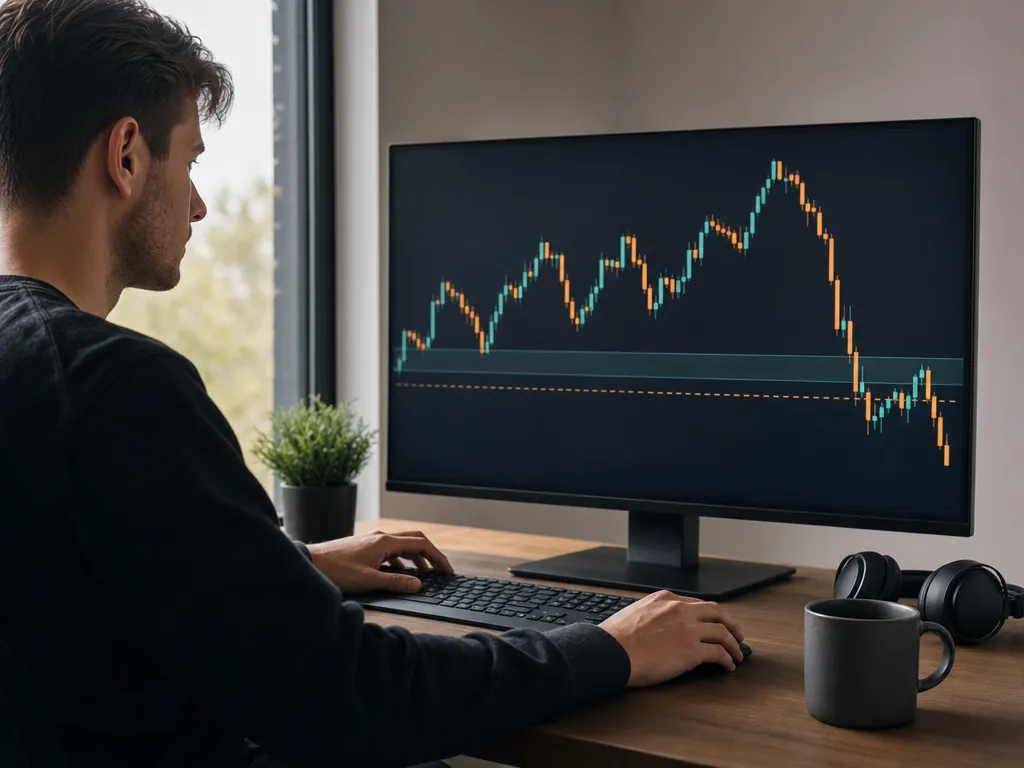
A sustainable process would also need to survive different market conditions. A strategy that performs well during a strong trend may struggle during low-volatility or range-bound periods. That is why a trader’s average result can hide meaningful instability.
For example, several profitable months and one large losing month may produce a positive average while still creating a cash-flow shortfall. This sequence-of-returns problem matters when rent, food and other bills are due every month. Trading results do not arrive on a household’s preferred schedule.
Useful evidence includes exported account statements, payout records, fee records and a detailed trading journal. Screenshots, testimonials and isolated payout certificates provide less context because they may omit failed evaluations, breached accounts or other expenses.
Calculate the Full-Time Income You Need
A planning worksheet can expose whether the numbers are robust enough to consider a transition. It is not a return forecast.
- Calculate essential annual spending. Include housing, food, insurance, healthcare, debt payments and recurring family obligations.
- Add irregular costs. Account for repairs, annual bills, equipment replacement and other expenses that do not occur monthly.
- Estimate taxes separately. Tax treatment depends on location and personal circumstances, so consult a qualified local professional rather than assuming payouts are taxed like wages.
- Add trading-business expenses. Include evaluation or reset purchases, market data, software and recordkeeping costs that actually apply to you.
- Use the contractual payout share. Gross account profit is not the same as cash received. Verify the current agreement instead of assuming a standard split.
- Model losing and zero-payout months. Test whether the household remains solvent during an extended period without withdrawals.
- Add a safety margin. A plan that works only when every assumption is favorable is not resilient.
Keep gross trading results, eligible payout amounts and cash received as separate figures. A dashboard balance is not spendable income, and even an approved withdrawal may not arrive when expected.
Why Prop Firm Trading Income Can Be Unstable
How Drawdowns Can End a Trading Account
Funded programs commonly impose loss limits, but calculation methods vary. A trailing threshold can behave differently from a static threshold, while daily limits may depend on a specified time zone or balance measure. A strategy can be profitable over a long sample and still breach an account during an unfavorable sequence. Review the exact prop-firm drawdown rules before sizing positions.
How Prop Firm Trading Rules Limit Strategies
A program may restrict particular tactics, holding periods, instruments, news-related activity or account-management methods. The relevant terms must be checked directly with the provider. A strategy that works in a personal account may not fit a funded program’s operational constraints.
How Prop Firm Dependence Threatens Income
Full-time funded traders depend on more than their own decisions. Platform interruptions, account reviews, changed terms, payout disputes or a firm closing could interrupt income. Diversifying across providers might reduce dependence on one company, but it can also create extra fees, inconsistent rules and potential violations involving copying or coordinated trading. It is not an automatic solution.
How Full-Time Trading Pressure Affects Decisions
When trading pays the bills, ordinary variance can feel like an emergency. That pressure may encourage oversizing, revenge trading or forcing setups near a payout date. A written risk plan and clear stop conditions can reduce discretionary mistakes, although neither can eliminate losses.
Are You Ready to Rely on Trading Income?
There is no universal number of months or payouts that proves readiness. Any threshold should reflect personal expenses, dependants, benefits, debt and the variability of the strategy. Before considering full-time funded trading, ask:
- Do I have complete records covering more than one set of market conditions?
- Are my results positive after all evaluation attempts and business expenses?
- Have I received payouts rather than merely showing unrealized dashboard gains?
- Can essential expenses be covered through a prolonged no-payout period?
- Have I planned for healthcare, retirement contributions and benefits formerly supplied by employment?
- Do I understand the current contract and prohibited practices?
- Would one breached account threaten my household finances?
- Do I have another income source or a practical route back to employment?
- Have I obtained appropriate tax or legal advice for my jurisdiction?
A “no” does not mean someone can never trade full time. It identifies a vulnerability that should be addressed before relying on variable payouts.
How to Vet a Prop Firm
Commercial articles tend to emphasize opportunity, while forum discussions often emphasize failures or disputes. Neither is a substitute for primary documents. Comments in the Reddit discussion about making a living through prop accounts show that traders are skeptical about treating payouts as stable income, but those comments are qualitative anecdotes, not verified outcome data.
For each provider under consideration, save and review the current:
- Customer agreement and program description.
- Evaluation, reset and recurring cost disclosures.
- Drawdown definitions and examples.
- Payout eligibility, review and timing provisions.
- Rules covering automation, copying, news and overnight positions.
- Account closure and refund provisions.
- Complaint or dispute process and governing jurisdiction.
Confirm material questions in writing and retain copies of the terms that applied when an account was purchased. Use the prop-firm rules comparison to organize that review. Reviews can flag questions, but they cannot replace the contract.
A Lower-Risk Plan for Full-Time Trading
A staged transition is generally more resilient than resigning after an evaluation pass. First, trade part time and track every cost. Next, test whether the strategy follows the program’s rules across changing conditions. Withdraw according to the applicable terms rather than treating account equity as income.
Keep personal emergency savings separate from evaluation fees and trading reserves. Define business stop conditions in advance, such as pausing after a specified drawdown, repeated rule breaches or total spending limit. The exact thresholds are personal planning decisions, not universal recommendations.
It may also be prudent to preserve employment, freelance work or another dependable income source until funded payouts have demonstrated sufficient consistency for the trader’s circumstances. This reduces the pressure to manufacture returns during unfavorable markets.
Prop Firm Trading Versus Personal Capital
Retail funded programs can provide access to a larger notional account while limiting the participant’s initial outlay to program-related costs. In exchange, the trader accepts contractual restrictions, a payout share and dependence on the provider.
A personal account offers greater control over strategy and withdrawals, but losses directly reduce the trader’s own capital. Neither route is inherently sustainable. The relevant comparison includes actual capital at risk, usable drawdown, expenses, liquidity needs and counterparty exposure, not just the headline account balance.
Prop Firm Trading FAQs
Can You Make a Living From Prop Firm Trading?
It is possible for some traders to receive meaningful payouts, but published testimonials and payout certificates do not provide a reliable industry-wide success-rate estimate. Individual examples do not establish that the model will produce stable income for another trader.
What Happens If You Lose a Funded Trading Account?
The result depends on the provider’s current agreement. The trader may lose access to the account and may need to stop, qualify again or purchase another evaluation. Repeated attempts must be counted as expenses when calculating net income.
How Long Should Your Trading Track Record Be?
No period guarantees future results. A useful record should be long enough to include losing sequences and different market conditions, with all fees and withdrawals documented. A financial professional can help relate that evidence to household obligations.
Is Trading With Several Prop Firms Safer?
It may reduce reliance on one provider, but it also increases operational complexity and exposure to multiple contracts. Traders must verify whether account-copying or related practices are allowed by every provider involved.
Can Prop Firm Trading Be a Sustainable Career?
Potentially, but only when net results remain viable through losing periods and the trader can withstand rule, payout and provider risks. For most people evaluating the idea, the prudent question is not “How large is the funded account?” It is “Can my household remain secure if payouts stop?”