Key takeaways
ICT generally excludes monthly Nonfarm Payroll Fridays from his currency trading plan because he finds price action less precise, more erratic and incompatible with his algorithmic framework, though he separates currency trading from indices and does not claim NFP is universally untradeable.
Read the full summary
ICT generally excludes monthly Nonfarm Payroll Fridays from his currency trading plan because he finds price action less precise, more erratic and incompatible with his algorithmic framework, though he separates currency trading from indices and does not claim NFP is universally untradeable. Using USD/CAD daily, hourly and 15-minute charts, he illustrates market structure shifts, a dealing range, bullish order blocks, breakers, liquidity, displacement and optimal trade entry, while treating Fibonacci levels as relative premium or discount rather than exact signals. He formed a short-term bullish bias around a Thursday appearance by Federal Reserve Chair Powell, studied the likely NFP liquidity destination and time window, and narrated scaling out of a pre-release long above nearby highs before a small remainder was stopped out, but captions do not verify fills or results. At 15 minutes 25 seconds he describes NFP trading as sloppy and less precise, and at 16 minutes 32 seconds calls it low probability for his methods because price may approach an anticipated area without offering the desired level. His broader rule is to distinguish forecasting from live participation, use stop losses, define event-based exclusions in advance, journal outcomes and avoid applying a model under conditions for which it was not designed.
How we researched this article
BestProps used document-based research from primary firm sources, checked September 25, 2026. The complete source list, scope, limitations, and commercial-state record appear near the end of this article.
In Why ICT Doesn’t Trade NonFarm Payroll, ICT explains a personal rule for currency trading: he generally does not trade Nonfarm Payroll (NFP) Fridays. His reason is not that no market analysis can be performed around the release. Rather, he believes the price action on that day is less precise, more erratic and less compatible with the framework he ordinarily applies.
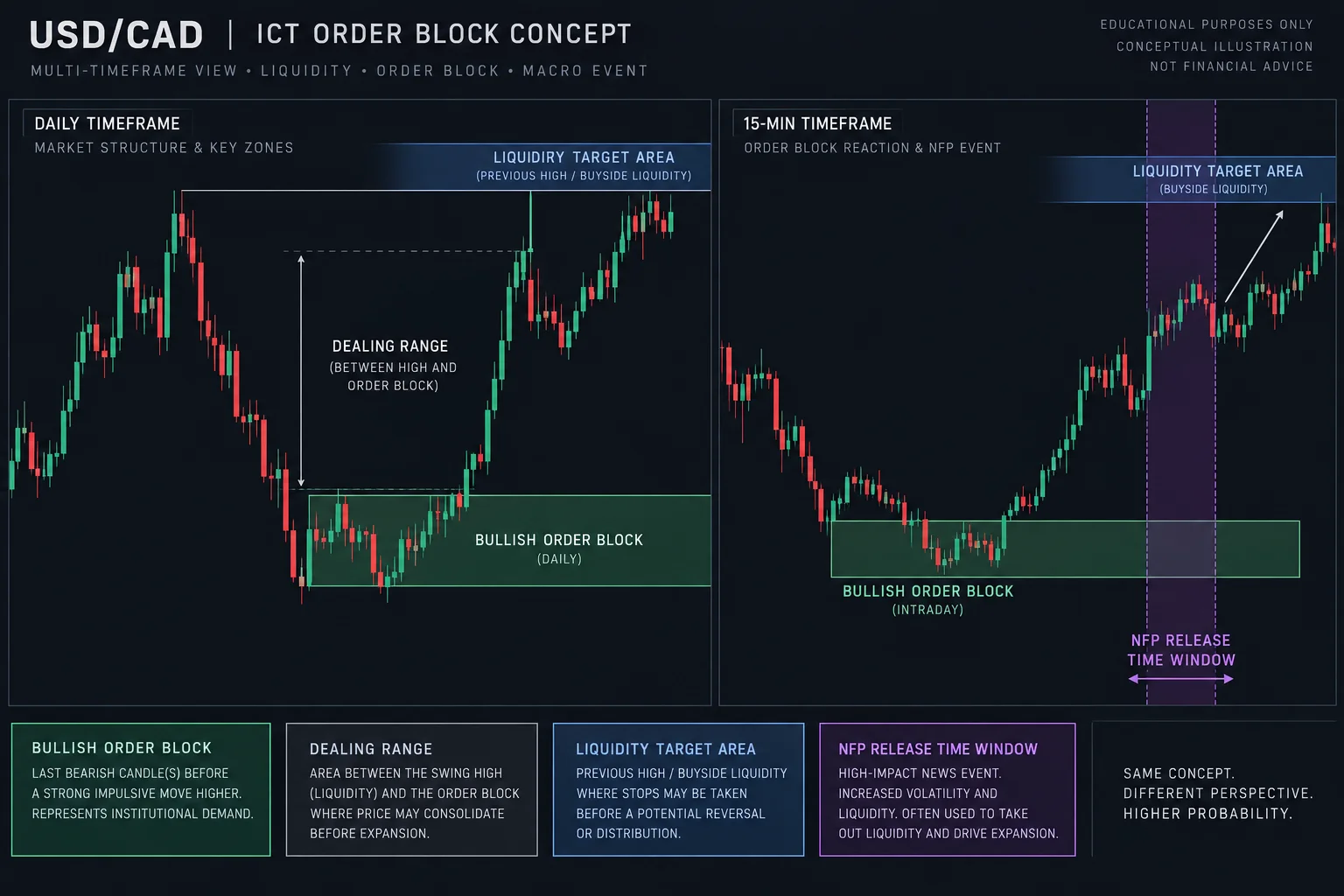
This is a summary of ICT’s interpretation and risk filter, not proof that NFP is inherently untradeable or that his methods provide a trading edge.
Why ICT Avoids Nonfarm Payroll Currency Trades
ICT introduces the lesson by limiting its scope. At 0:40, he says the discussion concerns monthly NFP Fridays in the currency market and separates it from index trading. He also characterizes the restriction as one of his own rules developed through experience, not a universal law.
That qualification matters. The video is not a general claim that every instrument must be avoided whenever the employment report is released. It documents why ICT excludes a particular recurring condition from his own currency-trading routine.
ICT's Nonfarm Payroll Trade Setup on USD/CAD
ICT illustrates the point with USD/CAD across daily, hourly and 15-minute charts. On the daily view, he identifies what he calls a shift in market structure after a prior high is exceeded. He then defines a dealing range between that high and a candle he labels a bullish order block. Within his terminology, he focuses on the candle’s opening price rather than treating the entire region as a conventional supply-and-demand zone.
Beginning around 2:56, he connects that range to his “optimal trade entry” concept, described in the video as a retracement framework. He later stresses that Fibonacci levels are an illustration of relative premium or discount for him, not a signal that price must touch an exact retracement level.
On the hourly chart, ICT associates a Thursday move with a scheduled appearance by Federal Reserve Chair Powell and interprets the reaction through his order-block and “breaker” vocabulary. At 8:59, he explains that he combines the surrounding structure, the calendar event and the subsequent displacement to form a short-term bullish bias.
He is explicit that this remains uncertain. At 9:23, ICT says he cannot know with complete certainty that a trade will work and points to stop-loss use as recognition of possible error.
Why ICT Studies Nonfarm Payroll but Doesn't Trade It
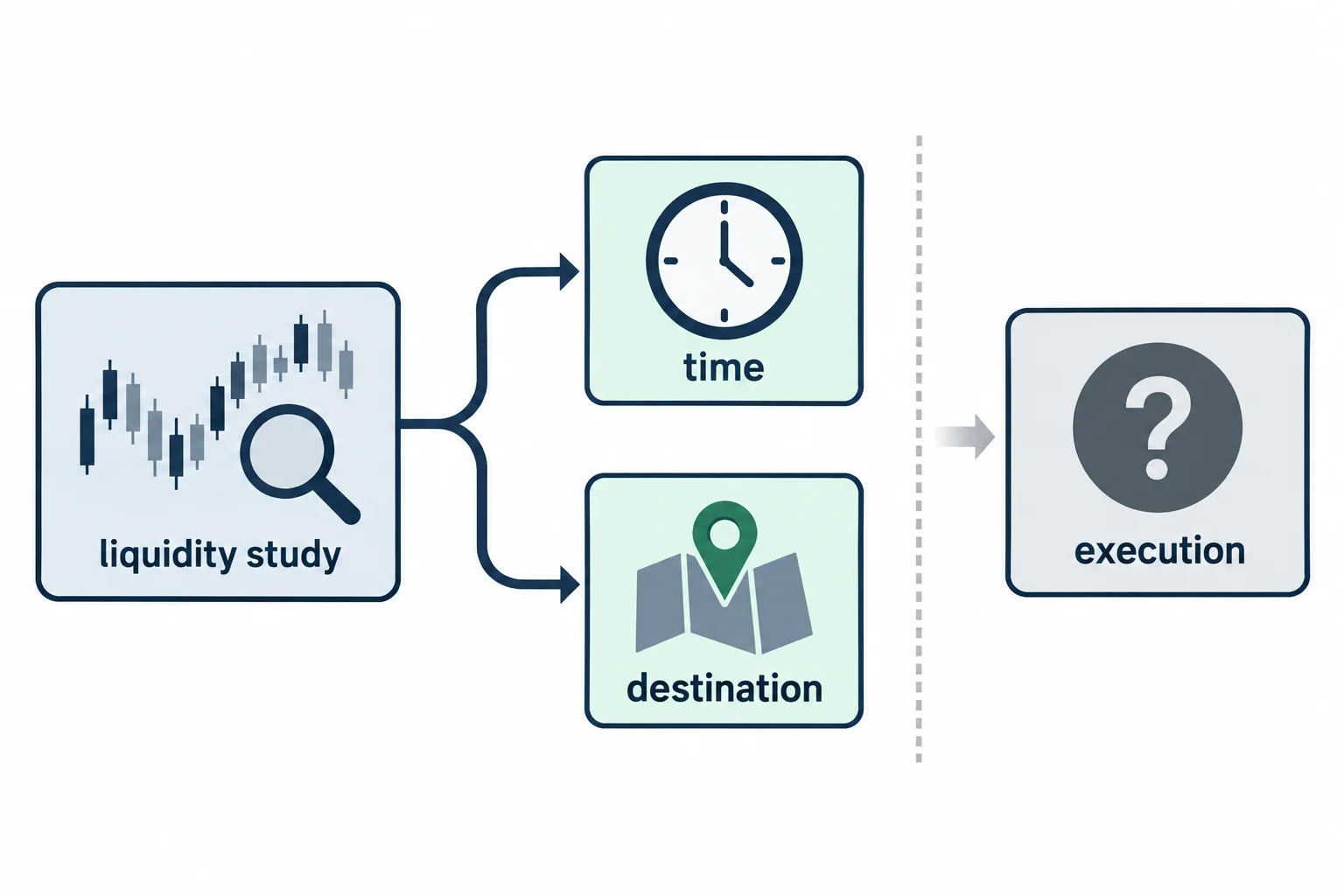
The central distinction appears at 13:48. ICT says he had been developing an idea about where price might be drawn for liquidity around the NFP release. He calls this a liquidity study and says that, although he does not normally trade NFP Fridays, he may practice forecasting the likely time and destination when he can devote attention to it.
In the example, he discusses a long position initiated before the Friday release and describes reducing it in stages. The transcript says that he took off most of the position after price moved above nearby highs, reduced it further later and was eventually stopped out on a small remaining portion. Those are ICT’s narrated claims; generated captions alone do not independently establish the executions, exact fills or financial result.
Why ICT Avoids Low-Probability Nonfarm Payroll Trades
At 15:25, ICT says he is generally less precise on NFP Fridays than on other days. He describes the session as sloppy and “manipulated,” using that term as part of his own market interpretation. The move in his example approached the anticipated area during the expected time window but, according to his narration, did not reach the exact higher objective.
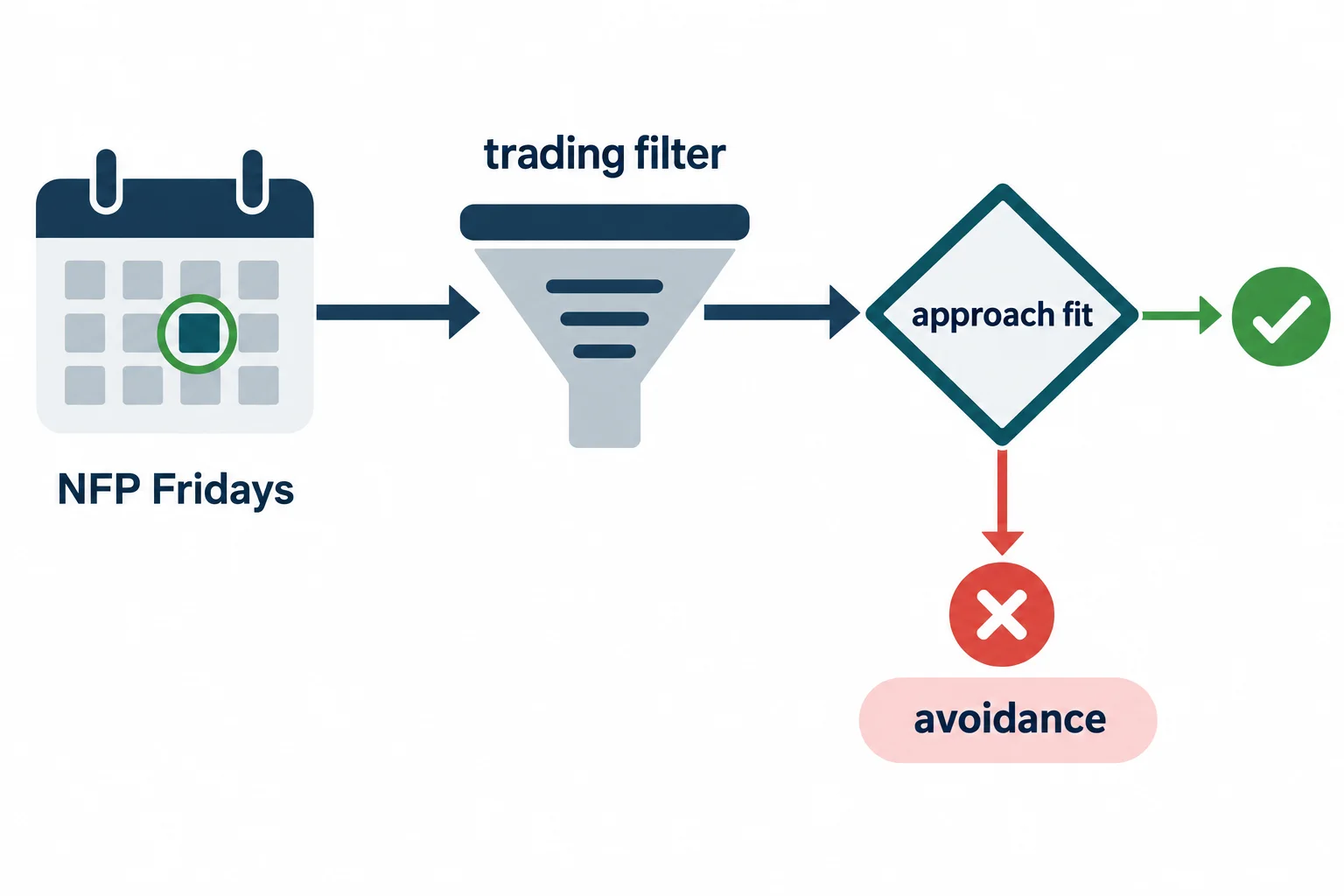
ICT gives his direct answer at 16:32: he avoids the day because he believes its behavior does not fit the algorithmic theories and principles he follows, making it low probability for him. He also tells viewers that the example is not an invitation to trade the announcement.
Near the conclusion, he reframes avoidance as a trading filter. At 19:39, ICT argues that some of his strongest filters come from declining to trade recurring conditions that have not suited his approach. In this case, he believed he had anticipated the relevant time window but says the desired price was not offered.
ICT's Nonfarm Payroll Trade Rule
Separate from ICT’s specialized terminology, the broader lesson is about defining when a strategy will not be used. A trading plan can contain exclusions for scheduled events, unusual volatility or conditions that do not match its assumptions. Avoiding a session can be a deliberate decision rather than a failure to form a directional opinion.
- Distinguish market study from live participation.
- Treat a directional bias as uncertain rather than guaranteed.
- Define event-based exclusions before the event occurs.
- Record observations in a journal and review whether the setup matched the plan.
- Do not infer universal rules from one narrated chart example.
ICT closes by encouraging students to log examples and consider whether losing periods arise from applying a model in conditions where it was not intended to operate. That is the core answer to why he does not trade NFP: in his view, the release introduces enough imprecision that abstaining is more consistent with his personal framework.
Resources
- Primary source: Why ICT Doesn’t Trade NonFarm Payroll — The Inner Circle Trader (YouTube, 21:36)
- Official ICT terminology referenced: Order Block, Optimal Trade Entry (OTE), Liquidity Study, Displacement, Breaker Block, Dealing Range — ICT Market Internals framework (source: video content)
- Disclaimer: The speaker explicitly states at 16:58 that viewers “should not trade non-farm payroll.” The narrated trade example is a paper/study exercise; captions do not independently verify fills, entry prices, or financial results.