Key takeaways
Choose a forex prop firm by testing its current rules against at least 50 to 100 recent trades, including intraday equity decline, closed daily loss, maximum drawdown, position size, simultaneous positions, holding time, sessions, pairs, news exposure, rollover, weekends, EAs, copiers, hedging, and automation, then add a safety margin and reject any firm requiring material…
Read the full summary
Choose a forex prop firm by testing its current rules against at least 50 to 100 recent trades, including intraday equity decline, closed daily loss, maximum drawdown, position size, simultaneous positions, holding time, sessions, pairs, news exposure, rollover, weekends, EAs, copiers, hedging, and automation, then add a safety margin and reject any firm requiring material changes to your tested process. Compare one-step, multi-step, subscription, and immediate-access models by profit targets, minimum days, time limits, inactivity rules, scaling, post-evaluation restrictions, and simulated versus live status. Reproduce static, balance-based, equity-based, and trailing drawdown formulas, including reset time zones, open P&L, commissions, swaps, prior-day positions, and intraday versus end-of-day updates. In the illustrative $100,000 account with a $10,000 loss allowance, static drawdown keeps a $90,000 floor, while a trailing model could raise the floor to $95,000 after equity reaches $105,000. Verify required pairs, instrument-level leverage, spreads during your actual sessions, commissions, swaps, rollover, size limits, slippage, rejected-order handling, and support for MT4, MT5, cTrader, indicators, VPS use, and risk tools. Obtain written rules for scalping, EAs, copy trading, hedging, news, overnight and weekend holding, minimum holding periods, and prohibited methods. Read payout terms covering eligibility delays, frequency, minimums, consistency rules, identity checks, payment methods, processing, drawdown effects, and scaling, then calculate evaluation, subscription, reset, activation, platform, data, payment, conversion, and tax costs across multiple attempts. Eliminate firms with unsupported platforms or pairs, incompatible strategy rules, ambiguous drawdown, inaccessible contracts, contradictory documents, undefined prohibitions, unsupported payout claims, or evasive support. Score survivors using illustrative weights of 30% risk-rule compatibility, 20% strategy and platform fit, 15% trading conditions, 15% payout and contract clarity, 10% total cost, and 10% entity transparency and support, shortlist 3 to 5 candidates, verify the contracting entity and jurisdiction without confusing registration with regulation, and save dated agreements, FAQs, policies, and support clarifications before paying.
How we researched this article
BestProps used document-based research from primary firm sources, checked September 12, 2026. The complete source list, scope, limitations, and commercial-state record appear near the end of this article.
Learning how to choose a forex prop firm starts with a simple shift in perspective: do not begin with the largest advertised account, highest profit split, or lowest challenge fee. Start with your trading history, then determine whether a firm’s current rules allow that strategy to operate normally.
A firm that suits a short-term EUR/USD trader may be unsuitable for someone who holds currency positions over economic announcements or weekends. Rules, costs, platforms, and payout conditions can also change, so every shortlist requires verification against current first-party documents.
How to Choose a Forex Prop Firm Quickly
- Measure your historical drawdown, daily losses, holding periods, and trading frequency.
- Reject firms whose platforms, instruments, or strategy rules are incompatible with your process.
- Model the daily-loss and maximum-drawdown calculations using your own trades.
- Compare execution conditions during the sessions in which you trade.
- Read the complete payout policy and trader agreement, not only the headline split.
- Calculate the total possible cost, including resets, subscriptions, activation charges, and platform expenses.
- Verify the operating entity, contract terms, support quality, and rule-change process before paying.
The best candidate is not necessarily the firm with the most attractive headline offer. It is the one whose documented rules are compatible with your tested behavior and acceptable risk limits.
Choose a Forex Prop Firm Using Your Trading Data
Review at least 50 to 100 recent trades if you have enough reliable records. This does not predict future results, but it can reveal whether an evaluation’s restrictions conflict with your normal behavior.
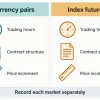
Record the following:
- Largest intraday equity decline and largest closed daily loss
- Maximum historical drawdown
- Average and maximum position size
- Number of simultaneous positions
- Typical trade duration and trading session
- Currency pairs traded
- Exposure to news, rollover, overnight periods, and weekends
- Use of expert advisors, trade copiers, hedging, or automated risk tools
Add a margin of safety rather than assuming your worst historical period cannot be exceeded. If ordinary variation would place you close to a firm’s limit, the account may be structurally unsuitable even when its other features look attractive.
Compare Forex Prop Firm Evaluation Models
Forex prop offers may use one-step, multi-step, subscription, or immediate-access structures. Labels are not standardized, so compare the underlying mechanics rather than the product name.
Check profit targets, minimum trading days, time limits, inactivity rules, scaling conditions, and whether a new set of restrictions applies after evaluation. Confirm whether the trading setup is simulated or live and how any reward is contractually calculated. Do not infer the account model from words such as funded alone. For example, FTMO currently states that its FTMO Account is a demo account with fictitious capital; that describes FTMO’s model as checked on August 4, 2026, not every firm.
A shorter evaluation is not automatically easier. A target combined with a tight loss limit or minimum-day condition may encourage behavior that differs from your established plan.
Check Forex Prop Firm Drawdown Rules
Drawdown wording is one of the most important parts of a prop firm comparison. Identify both the measurement basis and when the threshold updates.

Forex Prop Firm Drawdown Example
Consider a hypothetical $100,000 account with a $10,000 maximum-loss allowance. These figures are examples only, not the terms of any firm.
| Drawdown model | How the floor is set and moved |
|---|---|
| Static drawdown: | If the floor remains fixed at $90,000, profits generally do not move it upward. |
| Balance-based drawdown: | The calculation may refer to closed balance, but the agreement must state how open losses are treated elsewhere. |
| Equity-based drawdown: | Open profit and loss can affect compliance. Equity falling below the applicable floor may trigger a breach even before a trade closes. |
| Trailing drawdown: | The floor can rise as the account reaches new highs. If the high-water mark becomes $105,000 and the allowance remains $10,000, the illustrative floor could move to $95,000. |
Also establish whether trailing thresholds update intraday or at the end of the trading day, whether they stop trailing at a specified point, and whether unrealized gains raise the high-water mark. These details can materially change the risk of holding volatile positions.
For daily-loss rules, verify the reset time zone and whether the calculation includes open losses, commissions, swaps, or prior-day positions. Recreate the formula in a spreadsheet and apply it to your worst historical days.
Check Forex Prop Firm Trading Conditions
A list of supported currency pairs is only the beginning. Trading costs and execution can vary by instrument, session, market conditions, platform, and the firm’s underlying setup.
- Confirm that all required major, minor, or other currency pairs are available.
- Observe spreads during the hours you actually trade, not only during a liquid session.
- Check commissions, swaps, rollover treatment, and any position-size limits.
- Review leverage by instrument rather than relying on a single headline figure.
- Ask how slippage, rejected orders, and platform interruptions are handled.
If a demo or trial platform is available, use it to inspect workflow and indicative conditions. A test platform may not reproduce every live or simulated-funded condition, so treat it as one data point rather than proof of future execution quality.
Choose a Forex Prop Firm That Fits Your Strategy
Platform access is a pass-or-fail requirement. Verify the currently supported platform directly rather than assuming MT4, MT5, cTrader, or another interface is available. Check whether your indicators, operating system, virtual private server, and risk-management tools work with that platform.
Obtain written answers for any rule affecting:
- Scalping or very short holding periods
- Expert advisors and automated strategies
- Copy trading across your own accounts
- Hedging or correlated positions
- Trading around scheduled economic news
- Overnight and weekend holding
- Minimum holding periods or prohibited execution methods
Broad terms such as “abusive,” “toxic,” or “unrealistic” trading need context. Read the definitions and examples in the agreement. If support clarifies an ambiguous rule, save the dated response.
Compare Forex Prop Firm Payout Terms
A profit split does not explain when a trader becomes eligible for a reward or what can invalidate it. Review the complete payout policy for waiting periods, withdrawal frequency, minimum amounts, consistency conditions, processing requirements, identity checks, and permitted payment methods.

Determine whether requesting a payout changes the account balance, drawdown buffer, or scaling status. Check which rule version controls if the website, FAQ, dashboard, and trader agreement conflict. No payout claim from a directory, promoter, or community post should replace the current contract.
Calculate Total Forex Prop Firm Costs
Compare realistic total cost instead of the initial evaluation price. Depending on the provider’s model, possible expenses may include:
- Evaluation or recurring subscription fees
- Reset or retry charges
- Activation fees
- Platform or market-data costs
- Payment and currency-conversion charges
- Taxes applicable to your circumstances
Model more than one attempt without assuming that you will pass or receive a payout. Treat advertised refunds or discounts as conditional until you verify their eligibility requirements, expiration terms, and treatment after a rule breach.
Check Forex Prop Firm Credibility and Contracts
Identify the legal entity named in the agreement, its jurisdiction, contact information, and the entity receiving payment. Corporate registration is not the same as financial-services regulation, and neither should be inferred from a brand name or website badge. Determine what activity, if any, a regulator or registration authority actually covers.
Review independent feedback for recurring themes, but remember that anonymous reviews and Reddit comments are qualitative audience evidence, not verified proof. Look for detailed descriptions, dates, and documented resolutions rather than isolated praise or complaints.
Before purchasing, save dated copies of the trader agreement, FAQs, drawdown rules, prohibited-strategy policy, payout policy, and relevant support answers. Check whether the contract allows unilateral changes and how existing accounts are treated after an update.
Score Your Forex Prop Firm Shortlist
First eliminate any firm that fails a non-negotiable requirement. Typical disqualifiers include an unsupported platform, unavailable currency pair, incompatible news rule, ambiguous drawdown calculation, or prohibited automation.
Then score the remaining candidates using weights based on your strategy. One possible framework is:
| Factor | Illustrative weight |
|---|---|
| Risk-rule compatibility: | 30% |
| Strategy and platform compatibility: | 20% |
| Trading conditions: | 15% |
| Payout and contract clarity: | 15% |
| Total cost: | 10% |
| Entity transparency and support: | 10% |
These weights are illustrative. A scalper may give execution conditions more weight, while a swing trader may prioritize overnight, news, swap, and weekend rules.
Spot Forex Prop Firm Red Flags
- Drawdown formulas that cannot be reproduced from the written terms
- Contradictory information across the agreement, FAQ, and checkout page
- No accessible trader agreement before purchase
- Undefined prohibited-strategy language
- Pressure-based promotions that discourage due diligence
- Unsupported claims about payouts, performance, or legal protections
- Support that will not answer rule questions in writing
Use This Forex Prop Firm Checklist
Before making a decision, confirm that you can answer yes to each item:
- I tested the firm’s loss formulas against my historical trades.
- I understand how open positions affect daily and maximum drawdown.
- My pairs, platform, tools, and trading methods are permitted.
- I checked costs and trading conditions during my normal session.
- I read the evaluation, funded-account, and payout rules.
- I identified the contracting entity without confusing registration with regulation.
- I saved dated copies of the applicable terms and support clarifications.
- I can follow the rules without materially changing my tested process.
Forex Prop Firm FAQs
What Is the Most Important Rule When Comparing Firms?
The loss-limit mechanism is often the first rule to model because it determines how much room a strategy actually has. Platform and strategy compatibility are equally capable of disqualifying a firm.
Is Static or Trailing Drawdown Better?
Static drawdown is generally easier to model because its floor does not rise, but suitability depends on the complete rule set. A trailing model may still be workable if its update method and available buffer fit your historical results.
Should Beginners Choose a One-Step or Multi-Step Evaluation?
Neither structure is automatically suitable for every beginner. Compare targets, loss limits, time conditions, total cost, and post-evaluation rules rather than choosing by the number of steps.
How Can I Verify Payout Claims?
Begin with the current agreement and payout policy. Use independent reports only as supporting evidence, and do not treat screenshots, testimonials, or community comments as conclusive verification.
Are Forex Prop Firms Regulated?
Status depends on the entity, jurisdiction, and activities involved. Company registration does not by itself establish financial regulation or trader protection. Verify any regulatory claim with the named authority and review what it actually covers.
Can I Use an EA or Trade During News?
Only if the current rules explicitly permit your specific workflow. Restrictions may differ between evaluation and later account stages, so confirm both in writing.
How Many Firms Should I Shortlist?
Three to five compatible candidates are usually enough for a focused comparison. The objective is not to collect the most options, but to investigate a manageable set that passes every non-negotiable filter.