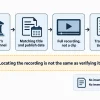
Key takeaways
Becoming a prop trader follows two distinct routes, either institutional employment trading company capital under firm supervision with possible salary and performance compensation, or a retail funded-trader program requiring paid evaluations, defined profit and loss rules, and contractual payout eligibility without guaranteed funding, withdrawals, benefits, or income.
Read the full summary
Becoming a prop trader follows two distinct routes, either institutional employment trading company capital under firm supervision with possible salary and performance compensation, or a retail funded-trader program requiring paid evaluations, defined profit and loss rules, and contractual payout eligibility without guaranteed funding, withdrawals, benefits, or income. Institutional candidates should build probability, statistics, mental math, market mechanics, risk management, communication, and role-specific Python, algorithms, or data skills, then prepare for market-making, coding, probability, scenario, and behavioral interviews. Funded candidates should define one repeatable process, paper trade under exact daily and overall loss limits, track drawdown and rule breaches, and compare evaluation, reset, recurring, data, and withdrawal charges before paying. Due diligence should confirm the legal entity, jurisdiction, employment or participant status, payout calculation, refundable fees, static or trailing drawdown, instrument and holding restrictions, news, automation, copying and device rules, suspension rights, dispute procedures, and applicable regulation. The 90-day preparation plan uses Days 1 to 30 to choose a route and assess skills, Days 31 to 60 to complete a focused project or constrained paper-trading test, and Days 61 to 90 to conduct mock interviews and applications or audit compliance, contracts, entities, and total costs before deciding whether to apply, keep practicing, or pursue quantitative research, risk, execution, trading technology, or market-data analysis.
How we researched this article
BestProps used document-based research from primary firm sources, checked August 23, 2026. The complete source list, scope, limitations, and commercial-state record appear near the end of this article.
Learning how to become a prop trader starts with an important distinction: proprietary trading can describe two materially different paths. One is an institutional career in which a firm hires you to trade or support trading with company capital. The other is a retail funded-trader program in which you usually pay for an evaluation and must follow defined rules before receiving access to a funded or simulated-funded account.
These routes involve different selection processes, costs, contracts and working relationships. Choosing the right one will determine whether you should prioritize university recruiting and technical interviews or trading practice and evaluation-rule discipline.
Important: Prop-firm requirements, evaluation fees, account structures, risk limits and payout terms change frequently. Verify every material term in the current contract and official firm documentation before applying or paying.
What Does a Prop Trader Do?
A proprietary trader takes market risk using capital allocated by a business rather than managing a conventional client portfolio. The objective is to execute a defined strategy while staying within the firm’s risk controls.
The job varies considerably by firm. A discretionary trader may interpret market information and place trades manually. A quantitative trader may use probability, statistics and code to identify opportunities. Market-making teams may quote prices and manage inventory, while developers and quantitative researchers build the systems, models and infrastructure traders use.
Institutional firms may recruit for separate trader, researcher and software-engineering roles. Retail funded programs generally focus on an individual’s ability to meet an evaluation’s trading objectives without breaching its restrictions. Neither route guarantees employment, funding, withdrawals or profits.
Choose Between Two Prop Trader Routes
Institutional Prop Trader Jobs
This is a conventional career route, although compensation may include a performance-linked component. Candidates apply for internships or full-time positions, complete interviews and, if hired, work under the firm’s supervision and risk framework.
The work can involve market making, systematic trading, options, futures or other instruments. Employers may value mathematical reasoning, programming and fast decision-making, but expectations depend on the desk and role.
Funded Prop Trader Programs
In this model, a participant typically attempts an evaluation under specified targets and loss limits. Passing may lead to another assessment stage or an account governed by a separate agreement. The legal and economic nature of that account can differ between providers, so do not assume that “funded” always means identical access to live company capital.
Participants may bear evaluation or subscription costs rather than receive a salary. They should review how drawdown is calculated, what trading conduct is restricted, when an account can be closed and what conditions apply to withdrawals.
Skills and Qualifications to Become a Prop Trader
No single background guarantees entry. Strong candidates usually develop evidence across several areas:
- Probability and quantitative reasoning: Expected value, conditional probability, estimation and basic statistics commonly underpin trading decisions.
- Mental math: Rapid arithmetic can matter during interviews and in roles requiring quick risk assessment.
- Risk management: Traders need to understand position sizing, exposure, drawdown and the difference between a plausible idea and an acceptable trade.
- Market knowledge: Learn how the instruments you want to trade are priced, what drives liquidity and how orders are executed.
- Programming: Python or another relevant language can support data analysis, research and systematic strategies. Its importance varies by role.
- Communication: A trader must explain assumptions, respond to feedback and disclose mistakes promptly.
- Composure: Firms may assess whether a candidate can make disciplined decisions with incomplete information.
A polished profit screenshot is not a substitute for a repeatable process. Projects, research notebooks, competitions, internships and carefully documented paper trading can provide more useful evidence of how you think. Historical or simulated results do not establish future performance.
Steps to Become an Institutional Prop Trader

- Select a role type. Compare discretionary trading, quantitative trading, research and development. Read current job descriptions to identify recurring requirements.
- Build the foundations. Study probability, statistics, market mechanics and risk. For technical roles, add data structures, algorithms and programming practice.
- Create relevant work. Analyze a market dataset, test a clearly defined hypothesis or build a basic execution simulator. Document assumptions, transaction-cost limitations and failure cases rather than presenting an optimized chart alone.
- Seek practical exposure. Internships, university trading societies, coding competitions and research projects can provide interview examples. Career changers can draw on analytical work from engineering, science, technology or finance.
- Apply deliberately. Tailor applications to the desk. A market-making role and a quantitative research position may evaluate very different abilities.
- Prepare for interviews. Practice mental math, probability, market scenarios, coding where relevant and behavioral questions. Explain your reasoning aloud instead of focusing only on the final answer.
- Review the offer. Clarify responsibilities, supervision, compensation structure, restrictive clauses and any required examinations or registrations with the employer and an appropriately qualified adviser.
Steps to Become a Funded Prop Trader

- Define one trading process. Specify the markets, setup, entry conditions, exit logic and maximum acceptable risk before buying an evaluation.
- Practice under exact constraints. Use paper trading to test whether your process is compatible with the program’s current loss limits, trading windows and other rules.
- Measure rule compliance. Track breaches, position size, concentration and drawdown alongside gains and losses. A strategy that ignores the evaluation rules is not suitable for that evaluation.
- Compare total costs. Consider evaluation, reset, recurring, data and withdrawal-related charges where applicable. Confirm all amounts directly with the provider.
- Read every agreement. Marketing summaries may omit conditions. Save the version of the rules and contract that applies when you enroll.
- Start only with an affordable cost. Treat fees as money that may not be recovered. Passing an evaluation does not ensure future payouts or profitable trading.
How Prop Traders Prepare for Interviews
Interview formats vary, but a balanced preparation plan can include:
- Timed arithmetic drills involving fractions, percentages and estimation.
- Probability questions using cards, dice, conditional events and expected value.
- Market-making exercises that require you to quote a range and adjust it as information arrives.
- Trading scenarios that test position sizing and reactions to adverse movement.
- Coding exercises and data analysis for quantitative or development roles.
- Behavioral examples covering mistakes, disagreement, pressure and feedback.
During a mock interview, state your assumptions and update them when new information appears. Interviewers may care more about a structured decision process than memorized market predictions. If you do not know an answer, explain how you would investigate it.
How Prop Traders Evaluate a Prop Firm
Due diligence matters for both employment and funded-account routes. Use this checklist before signing or paying:
- Identify the contracting legal entity and the jurisdiction governing the agreement.
- Determine whether you would be an employee, contractor, customer or program participant.
- Read the complete compensation or payout calculation, including eligibility conditions.
- List every fee and establish whether any payment is refundable.
- Confirm daily and overall loss limits, including whether drawdown is static, trailing or calculated another way.
- Check restrictions involving instruments, holding periods, news events, automation, copying, devices or account activity.
- Understand when the firm may suspend an account, change terms or deny a withdrawal.
- Assess training, risk oversight and the process for resolving disputes.
- Verify any regulatory claim through the relevant official registry rather than relying on a logo or marketing statement.
Regulatory treatment is not uniform. It depends on the country, products, activities and business relationship involved. The absence or presence of a registration should not be interpreted without understanding which rules apply.
Prop Trader Degree, License, and Trade Record Requirements
A degree is not a universal legal requirement for every prop-trading route. However, some institutional employers recruit heavily from universities or seek candidates with quantitative, computing, economics or related training. Equivalent technical ability and professional experience may be relevant for other openings.
Licensing and examination requirements cannot be answered globally. They depend on jurisdiction, instruments, activities, employer structure and whether the trader performs a regulated function. Ask the prospective employer and consult the relevant official authority when necessary.
A personal trading record may help demonstrate process, but it needs context. Be ready to discuss data quality, risk, costs, sample size and market conditions. For an entry-level candidate, a rigorous project may be more credible than unsupported performance claims.
Prop Trader Pay, Costs, and Career Risks
Institutional employment and funded programs should not be compared as though they offer the same economics. An employee may receive salary and variable compensation, subject to the employer’s terms. A funded-program participant may pay fees and become eligible for a share of qualifying results under a contract, without employee benefits or guaranteed income.
Both routes involve risk. Institutional traders face demanding recruitment, performance pressure and potentially specialized career paths. Funded participants can lose fees, breach rules or find that a strategy behaves differently under evaluation constraints. Trading itself can produce rapid losses, and leverage can magnify them.
Adjacent careers include quantitative research, risk management, execution, trading technology and market-data analysis. These may suit candidates who enjoy markets but prefer a different balance of technical work and direct risk-taking.
90-Day Prop Trader Preparation Plan
Days 1 to 30 Choose Your Prop Trader Route
Select the institutional or funded route, then assess your current probability, market, coding and risk skills. Study market mechanics and begin a decision journal. Institutional candidates should collect representative job descriptions; funded candidates should compare current rule documents without purchasing immediately.
Days 31 to 60 Build and Test Prop Trading Skills
Complete one focused project or run a paper-trading process under realistic constraints. Record assumptions, errors and risk decisions. Start timed interview drills or evaluation-rule simulations based on your chosen route.
Days 61 to 90 Demonstrate and Review Trade Skills
Institutional candidates can conduct mock interviews, refine applications and contact relevant alumni or professionals respectfully. Funded-route candidates can audit their rule compliance and perform legal-entity, contract and cost checks. At day 90, decide whether the evidence supports applying, continuing to practice or choosing an adjacent role.
Prop Trader Frequently Asked Questions
How Long Does It Take to Become a Prop Trader?
There is no reliable fixed timeline. It depends on your starting skills, the role, recruiting cycles and the assessment process. A 90-day plan can organize preparation, but it does not promise employment or funding.
Can I Become a Prop Trader Without Coding?
Some discretionary roles may place less emphasis on programming, while quantitative research and systematic trading generally demand stronger coding ability. Basic data-analysis skills can still be useful in almost any route.
Do I Need My Own Trading Capital?
An institutional employee generally trades capital allocated under the firm’s framework, although personal financial requirements may differ by role or jurisdiction. A funded program may require fees. Confirm the exact arrangement rather than assuming all prop firms operate alike.
Can Prop Traders Work Remotely?
Some opportunities may be remote, while others require on-site work because of collaboration, infrastructure, supervision or compliance needs. Check the current job listing or program agreement.
What Is the Best First Step?
Choose which version of prop trading you mean. Then spend several weeks building evidence of quantitative reasoning, market understanding and disciplined risk management before applying or paying for an evaluation.