Key takeaways
Choose a futures prop firm by usable risk, stage-specific rules, payout access, total cost, strategy fit, platform compatibility, and documentation quality rather than advertised account size or headline price.
Read the full summary
Choose a futures prop firm by usable risk, stage-specific rules, payout access, total cost, strategy fit, platform compatibility, and documentation quality rather than advertised account size or headline price. Record profit target, initial drawdown, daily loss limit, maximum position size, target-to-drawdown ratio, minimum or profitable days, consistency rules, resets, subscriptions, activation, data, platform, commission, transaction, and withdrawal charges across evaluation, simulated funded, and possible live-capital stages. Distinguish static, end-of-day trailing, and intraday trailing drawdown by whether they follow balance or equity, include unrealized gains and commissions, stop at a floor, and trigger on a touch or close. A $3,000 target against $2,000 of loss allowance is materially harder than the same target against $3,000, while a hypothetical $50,000 account with a $2,000 trail can behave very differently if equity reaches $52,000 intraday. Verify contract and micro-contract limits, scaling, news, overnight, weekend, automation, copier, multi-account, session, and holding restrictions, then model payout-day requirements, safety buffers, consistency tests, request minimums, maximums, frequency, review rights, and post-withdrawal drawdown room. Use a 100-point scorecard weighted 30 for drawdown and risk, 20 for payout accessibility and post-payout risk, 15 for realistic total cost, 15 for strategy and restriction fit, 10 for platform, market, and workflow fit, and 10 for documentation and support clarity, scoring each category from 1 to 5 and marking undocumented answers unverified. Recheck official pricing, rulebooks, agreements, supported products, platforms, data connections, revision dates, and written support answers on purchase day, save dated terms, and treat promotions, affiliate rankings, community payout reports, and progression claims as nonauthoritative because rules and fees can change.
Comparing futures prop firms by advertised account size or headline price can produce a misleading shortlist. The more useful question is how much trading flexibility a program provides after its drawdown mechanics, loss limits, restrictions, costs, and payout conditions are considered.
The right choice also depends on trading style. A firm that fits a patient micro-contract trader may not suit a scalper, news trader, or someone who holds positions across sessions. Rather than naming a universal winner, this guide provides repeatable futures prop firm comparison criteria you can apply to current program documents.
Verification warning: Prop-firm rules, fees, supported platforms, and payout terms can change. Confirm every material detail in the firm’s current rulebook, agreement, pricing page, and support documentation before purchasing an evaluation.
Futures Prop Firm Comparison Checklist
Start with these questions before examining promotions or account-size labels:
- What phase is being offered: evaluation, simulated funded, or a possible live-capital stage?
- What is the profit target in each applicable phase?
- How is drawdown calculated, updated, and enforced?
- Is there a separate daily loss limit?
- Do consistency, minimum-day, or profitable-day requirements apply?
- Which products, sessions, strategies, and position sizes are permitted?
- What conditions must be satisfied before requesting a payout?
- What is the expected total cost, not just the initial evaluation price?
- Does the program support the trader’s required platform, data connection, and workflow?
- Are the rules easy to locate, internally consistent, and dated?
A firm should not receive a high score simply because one term looks attractive. Evaluate how the rules interact under realistic trading conditions.
Compare Futures Prop Firm Usable Risk
An advertised account balance is generally not the same as spendable capital or maximum acceptable loss. For comparison purposes, the more meaningful number is the loss allowance created by the drawdown and other risk limits.
For example, imagine two hypothetical programs carrying the same account-size label. Program A permits a $2,500 maximum loss, while Program B permits $3,000 but also imposes a restrictive daily loss limit. Program B appears to offer more room, yet the daily rule could make it less suitable for a strategy with uneven intraday results.
Record at least four numbers for each account: profit target, initial drawdown allowance, daily loss limit, and maximum position size. Then express the target as a multiple of the available drawdown. A $3,000 target against a $2,000 loss allowance creates a different challenge from a $3,000 target against a $3,000 allowance.
Compare Each Futures Prop Firm Account Stage
Do not assume that passing an evaluation immediately produces a conventional live brokerage account. Review each stage separately and use the firm’s own terminology.
Futures Prop Firm Evaluation Phase
Document the target, drawdown, permitted size, minimum trading days, time limits, consistency requirements, and reset policy. Check whether a subscription continues until the account is passed, canceled, or failed.
Futures Prop Firm Funded Phase
Determine whether the next stage is simulated, live, or subject to another classification described in the agreement. Recheck all rules instead of assuming evaluation terms carry over. Position limits, payout eligibility, and drawdown behavior may differ by phase.
Futures Prop Firm Progression Options
If a firm describes a pathway to another account type, identify whether progression is automatic, discretionary, or conditional. Avoid treating promotional language as a guarantee. The controlling agreement and current program rules should take priority over summaries from comparison sites or community posts.
Compare Futures Prop Firm Drawdown Rules
“Trailing drawdown” alone is not a complete description. A useful comparison captures the reference value, update schedule, stopping point, and breach timing.

- Static drawdown: The threshold generally remains at a fixed level, although exact implementation must be checked.
- End-of-day trailing drawdown: The threshold may update using an end-of-session value rather than every intraday fluctuation.
- Intraday trailing drawdown: The threshold may follow account equity or another reference during the session.
- Drawdown floor or lock: Some structures may stop trailing at a specified level, but the precise trigger matters.
Suppose a hypothetical account starts at $50,000 with a $2,000 trailing threshold. If open equity reaches $52,000 and then falls before the trade closes, an equity-based intraday model could behave differently from an end-of-day model. The label does not reveal whether unrealized gains move the threshold, whether it retreats after losses, or when a violation is recorded.
Ask support to point to written answers for these questions: Does the threshold follow balance or equity? When does it update? Does it stop trailing? Are commissions included in breach calculations? Is a touch a violation, or must the account close below the threshold?
Compare Futures Prop Firm Loss Limits and Restrictions
Next, examine the rules that affect daily execution:
- Daily loss limits and when they reset
- Maximum contracts, including treatment of micro contracts
- Scaling plans or size increases tied to profit
- News-trading, overnight, weekend, or session restrictions
- Rules for automated systems, trade copiers, or multiple accounts
- Prohibited conduct definitions
- Consistency or concentration requirements
A consistency rule can affect both passing and payout eligibility. Consider a hypothetical requirement that no single day’s profit exceed a specified share of total profit. One unusually strong day could require additional profitable trading before the account qualifies, even if the nominal target has been reached. Calculate this interaction using several profit paths rather than relying on a verbal summary.
Restrictions also need to match the strategy. A news trader should prioritize event restrictions and slippage-sensitive risk rules. A scalper may care more about commissions, platform stability, and intraday drawdown. A swing-style trader should first verify permitted holding periods and session requirements.
Compare Futures Prop Firm Payout Criteria
A headline profit split does not explain when or how a trader can withdraw. Compare the entire sequence:
- How many trading or profitable days are required?
- Is there a minimum account balance or safety buffer?
- Does a consistency calculation apply at withdrawal?
- Are requests subject to minimums, maximums, or frequency limits?
- What happens to drawdown room after a withdrawal?
- Which verification or documentation steps are required?
- What does the agreement say about review, denial, or account closure?
Model the post-withdrawal account, not only the payout amount. A request that sharply reduces the remaining buffer may materially change how the next trade must be sized. Processing-time statements and community payout reports should be treated as qualitative evidence unless independently documented; they do not guarantee another trader’s experience.
Compare Total Futures Prop Firm Costs
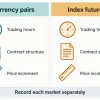
The advertised evaluation fee may be only one component. Build a worksheet that includes:
- Initial evaluation or subscription charges
- Likely renewal costs based on a chosen testing period
- Reset or retry charges
- Activation or setup charges after passing
- Market-data and exchange-related charges
- Platform or connection costs
- Commissions and transaction fees
- Withdrawal-related charges disclosed by the program
Use scenarios rather than assuming a first-attempt pass. Calculate the cost of one attempt, two attempts, and a longer evaluation period. Promotional discounts should be recorded separately because they may expire or apply only to selected products.
Low entry pricing is not automatically low total cost. Conversely, a higher initial fee is not automatically poor value if the complete rule set better fits the trader’s process. Cost should be scored alongside risk structure and operational fit.
Compare Futures Prop Firm Markets and Platforms
Confirm that the required futures products are available and that contract-month, session, and rollover handling match the intended workflow. Platform compatibility should be verified on the firm’s current support pages rather than inferred from a third-party list.
Also review order types, mobile or browser needs, charting integrations, data-feed requirements, and any rules affecting trade copying or automation. If a setup depends on a specific platform feature, test it in an appropriate simulated setting before relying on it during an evaluation.
Compare Futures Prop Firm Credibility and Rule Changes
Credibility is not established by review volume alone. Use a documented due-diligence process:
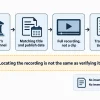
- Locate the complete rules and governing agreement.
- Check whether pages show revision or effective dates.
- Save the terms that applied when the purchase was made.
- Compare marketing claims with the detailed rulebook.
- Ask precise support questions and retain written responses.
- Look for unexplained contradictions between help pages.
- Treat affiliate rankings, firm-authored comparisons, and anonymous posts as potentially biased.
Community discussions can reveal recurring questions, unclear terminology, or operational concerns worth investigating. They should not be treated as proof of payout reliability, misconduct, legal status, or future treatment.
Build a Futures Prop Firm Comparison Scorecard
A simple 100-point framework keeps attractive promotions from dominating the decision:
- Drawdown and risk rules: 30 points
- Payout accessibility and post-payout risk: 20 points
- Total cost under realistic scenarios: 15 points
- Strategy and restriction fit: 15 points
- Platform, market, and workflow fit: 10 points
- Documentation and support clarity: 10 points
Score each category from one to five, multiply by its weight, and add notes with a verification date. Any undocumented answer should be marked “unverified” rather than awarded an average score. Traders can adjust the weights: for example, a platform-dependent scalper might give workflow fit more importance, while a less frequent trader may emphasize recurring costs.
Verify Futures Prop Firm Criteria Before Buying
- Reopen the official pricing page and rulebook on the day of purchase.
- Confirm the exact account type and phase being selected.
- Recalculate target-to-drawdown and post-payout buffer scenarios.
- Verify every strategy-specific restriction in writing.
- Review recurring, reset, activation, data, and transaction costs.
- Save dated copies or screenshots of applicable terms.
- Do not rely on a comparison article as the final authority.
The best futures prop firm comparison is not a universal ranking. It is a documented match between current rules and a trader’s tested process. Applying the same scorecard to every candidate makes hidden trade-offs easier to identify while reducing dependence on account-size marketing and temporary discounts.
Futures trading involves substantial risk. Prop evaluations and funded-style programs can result in fees and account loss or closure under their rules. This article is general educational information, not individualized financial, legal, or tax advice, and it does not promise eligibility, payouts, or trading results.