Buyer-first futures comparison · reviewed July 25, 2026
Apex Trader Funding vs Earn2Trade Buyer’s Scorecard
Compare the same account size and evaluation type. The decision is the complete route to an eligible payout: purchase price, resets or rebilling, activation, loss-limit math, funded rules, platform fit, and trust history. Product names only identify the plans.
| Decision point | Apex Trader Funding | Earn2Trade |
|---|---|---|
| Matched product | 50K EOD evaluation | TCP50 |
| Current attempt cost | $49 promo Standard + PA fee, or $119 promo No Activation Fee | $190/month; free reset after rebill |
| Profit target | $3,000 | $3,000 |
| Drawdown | $2,000 EOD; $1,000 daily loss limit | EOD drawdown; confirm TCP50 daily limit at checkout |
| Minimum days to pass | None; may pass in one day | None on new evaluations |
| Funded payout economics | 100% approved payout; five qualifying days, consistency and balance gates | Tiered 50%/80% split; weekly payouts |
| Data/activation | L1 included; Standard path adds PA activation | Non-pro eval data included; $139 LiveSim activation |
Advanced checks before paying
- Model your normal losing streak against the actual daily and maximum-loss calculation, not the nominal account balance.
- Add evaluation, reset, rebill, activation, data, platform and withdrawal fees to get the real attempt cost.
- Check qualifying days, consistency, buffers, payout caps, number of payouts and any move-to-live rules.
- Confirm the contracting entity, country eligibility, platform, recent support record and a small first payout before scaling purchases.
Figures are tied to the products named in each row and were reviewed against linked official sources. Promotions and rules can change; recheck checkout before purchasing.
Rules and checkout prices were rechecked July 25, 2026. Promotions and account agreements can change; confirm the exact account before paying.
Earn2Trade vs Apex Trader Funding is not a simple better or worse choice. It is a choice between two different prop firm models for futures traders.
Earn2Trade presents the Trader Career Path as a step-by-step route. You pass an evaluation, receive a funding offer described by Earn2Trade as coming from a proprietary trading partner, and then work through account growth by hitting profit goals and withdrawing profits. Apex Trader Funding presents current EOD and Intraday evaluations as 30-day assessments that can lead to a simulated funded Performance Account, with payout eligibility governed by account type, qualifying days, consistency, and balance thresholds.
For a trader comparing both firms, the practical question is not which brand has the most aggressive marketing. It is which rule set matches how you actually trade when real pressure shows up.

Quick verdict for Earn2Trade vs Apex Trader Funding
Choose Earn2Trade if you want a slower, more structured path. Its Trader Career Path requires a minimum of 10 trading days, includes daily loss, progression ladder, approved time, consistency, and drawdown rules, and is designed around account growth after withdrawals. The official Earn2Trade TCP page showed TCP25 starting at $150 per month when checked on June 5, 2026, but the full current subscription table, reset fees, data fees, platform costs, and promotions should still be checked in the live checkout before publication. The live Earn2Trade checkout displayed TCP25 at $150/month, TCP50 at $190/month, and TCP100 at $350/month on July 25, 2026 (official checkout) Earn2Trade’s current TCP page displays an 80% headline split; on the selected TCP25 funded path it specifies 50% below $1,500 and 80% above $1,500 (official TCP page) Apex includes Level 1 data in the new evaluation fee; optional depth-of-market feeds cost extra. Earn2Trade covers non-professional data during evaluation, charges non-professional LiveSim accounts a one-time $139 activation, and lists professional data at $140/month per exchange ($156 on NinjaTrader Live) (Apex fees; Earn2Trade fees)
Choose Apex Trader Funding if you want speed and a current evaluation model with no minimum trading day requirement. Apex says both current EOD and Intraday evaluations can be passed as soon as the profit target is reached, provided the rules are followed, within a 30 calendar day access period. That speed comes with different pressure. Apex Performance Accounts add rules that matter after the evaluation, including daily loss limits, scaling, consistency, payout thresholds, and account closure consequences if key rules are breached. Current Apex EOD evaluations have no minimum trading-day requirement and can be passed in one day, but expire after 30 calendar days (official EOD rules). At the official selector on July 25, the 50K EOD Standard evaluation displayed $49 with a separate PA activation payment; the 50K EOD No Activation Fee route displayed $119, so compare the all-in path rather than the eval sticker (live Apex selector)
The short version is this: Earn2Trade favors traders who want measured development and a formal growth ladder. Apex favors traders who want a faster evaluation and are comfortable managing a tighter payout eligibility system after passing.
Earn2Trade and Apex account path compared
| Category | Earn2Trade Trader Career Path | Apex Trader Funding current evaluations |
|---|---|---|
| Main market | Futures only, including CME, COMEX, NYMEX, and CBOT products | Futures evaluation model on Apex current EOD and Intraday account structures |
| Evaluation pace | Minimum 10 trading days | No minimum trading days on current EOD and Intraday evaluations |
| Access model | Monthly subscription model for TCP and Gauntlet Mini programs | One-time evaluation fee for a 30 calendar day access period |
| Drawdown style | TCP evaluation uses EOD drawdown, while funded Live and LiveSim account drawdown treatment differs by account type | Current EOD evaluation uses EOD drawdown, while Intraday evaluation uses real-time intraday trailing drawdown |
| Payout split | Funded trading accounts are subject to an 80% trader profit split that needs pre-publication recheck | Approved current Intraday PA payouts are described as a 100% payout split subject to payout-tier and eligibility recheck |
| Best fit | Traders who want a defined career ladder and minimum-day discipline | Traders who want a faster pass path and can manage PA payout rules |
This table uses official public help center and program pages. It does not treat competitor reviews, Reddit posts, or SERP snippets as sources for payout rules, pricing, drawdown mechanics, or eligibility terms.
Earn2Trade rules that shape the decision
Earn2Trade’s official Trader Career Path rules emphasize discipline. The help center lists the core TCP requirements as at least 10 trading days, avoiding the daily loss, staying within the progression ladder, staying above the minimum account balance tied to EOD drawdown, trading only during approved times, and maintaining consistency. It also says copytrading is not allowed and that rules, including drawdown, use closed and open equity intraday.
That creates a more deliberate evaluation. A trader who wants to pass in one strong session will probably find the 10-day requirement restrictive. A trader who wants forced pacing may see that as a useful filter.
The official TCP page lists three evaluation starting balances: TCP25 at $25,000, TCP50 at $50,000, and TCP100 at $100,000. It shows TCP25 with a $1,750 profit goal, $1,500 EOD drawdown, $550 daily loss limit, up to 3 contracts, and 10 minimum trading days. The same page shows the growth plan extending from the starting evaluation through LiveSim or Live accounts and then into larger Live accounts when profit targets and withdrawals are completed.
That growth path is the main Earn2Trade differentiator. The firm is not just selling a one-step pass attempt. It is packaging the evaluation as the beginning of a sequence where account size can grow after withdrawal milestones.
Apex Trader Funding rules that shape the decision
Apex’s current public help center separates EOD and Intraday evaluation structures.
The EOD Evaluation page says there is no intraday trailing drawdown, the EOD drawdown is calculated once per day at market close, a daily loss limit is fixed during the session, position size is fixed during evaluation, and there is no minimum trading day requirement. The listed account parameters show 25K, 50K, 100K, and 150K evaluations with profit targets of $1,500, $3,000, $6,000, and $9,000, and max EOD drawdowns of $1,000, $2,000, $3,000, and $4,000.
The Intraday Trailing Drawdown Evaluation page says the trailing threshold follows peak balance in real time, includes unrealized gains, and never moves down. It also says there is no daily loss limit in the Intraday evaluation, fixed position size during evaluation, no minimum trading days, and 7 calendar days to activate the Performance Account after passing.
That creates a faster but more technical evaluation. A strong intraday trader may like the absence of minimum trading days. A trader who lets unrealized profit swing around may dislike how an intraday trailing threshold can tighten during a winning session.
Payout paths for Earn2Trade and Apex
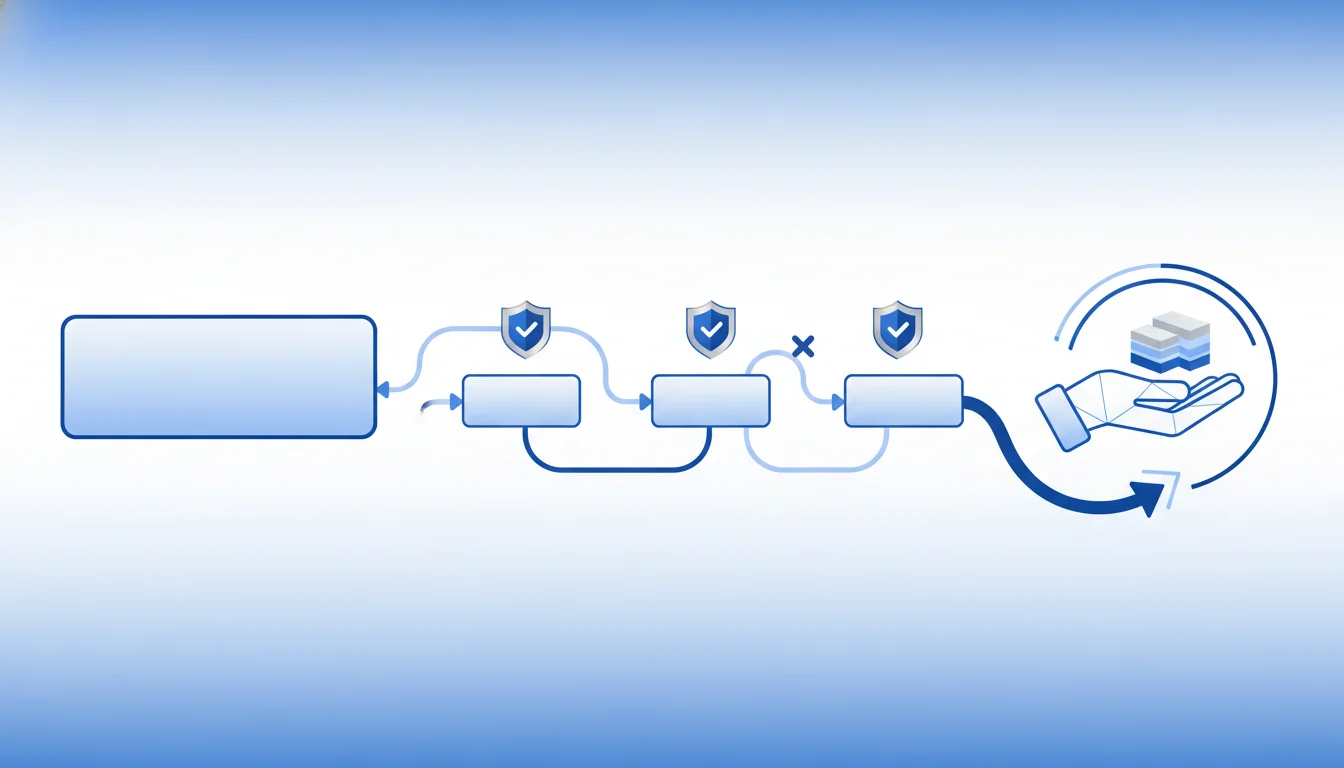
Earn2Trade says candidates who complete the Trader Career Path receive a funding offer from a proprietary trading partner matching the selected evaluation size. Funded trading accounts are subject to an 80% trader profit split according to the official help center page checked during this draft, but the exact current conditions should be rechecked before publication. Earn2Trade also says approved times, progression ladder, and daily loss rules still apply after funding, monthly data fees may apply unless the trader has their own data feed, and five consecutive unscheduled trading day absences can terminate the account. Earn2Trade’s current TCP page displays an 80% headline split; on the selected TCP25 funded path it specifies 50% below $1,500 and 80% above $1,500 (official TCP page) Apex includes Level 1 data in the new evaluation fee; optional depth-of-market feeds cost extra. Earn2Trade covers non-professional data during evaluation, charges non-professional LiveSim accounts a one-time $139 activation, and lists professional data at $140/month per exchange ($156 on NinjaTrader Live) (Apex fees; Earn2Trade fees)
Apex’s current Intraday PA payout page says approved payouts are issued at a 100% payout split after eligibility requirements are met. Because payout tiers and limits are high-risk claims, this draft keeps the split as a verification blocker rather than a publication-ready fact. The same page lists a minimum of 5 qualifying trading days, account-specific minimum daily profit requirements, a $500 minimum payout amount, 50% consistency, safety net requirements, minimum balance thresholds, and a maximum of 6 payouts per Performance Account. New Apex EOD and Intraday PAs advertise a 100% approved-payout split, subject to five qualifying days, 50% consistency, the account-size safety net and minimum balance, a $500 request minimum, and six payouts per PA (official payout rules) The six-payout cap applies to Apex’s current new-product PAs under the payout rules reviewed July 25, 2026 (official table).
These are very different payout mindsets. Earn2Trade’s language focuses on a growth plan and an 80% split. Apex’s Intraday PA language focuses on qualifying days, consistency, thresholds, and a 100% approved payout split. A trader should compare the full account path, not just the headline split.
Drawdown and daily loss differences for traders
Drawdown rules are often where prop firm comparisons become misleading. The same phrase can behave differently across firms and account types.
Earn2Trade’s Trader Career Path uses EOD drawdown in the evaluation, daily loss limits, and progression ladder rules. The official TCP page shows different drawdown and daily loss amounts by account size, and the help center states the minimum account balance is calculated from the end-of-day balance.
Apex currently offers both EOD and Intraday evaluation structures. The EOD evaluation uses an EOD threshold calculated once per trading day at market close and enforced the following session. The Intraday evaluation uses a real-time trailing threshold based on peak balance, including unrealized gains.
If your trading style creates large open profit swings before closing trades, this difference matters. Earn2Trade’s TCP structure may feel more stable for traders who prefer end-of-day evaluation logic. Apex’s Intraday account may feel more demanding because unrealized highs can move the threshold during the session.
Fees and checkout details to verify
Pricing is the highest-risk part of this comparison because prop firm checkout offers, promotions, access fees, activation fees, and discounts can change quickly.
Earn2Trade’s public TCP page showed TCP25 starting at $150 per month on June 5, 2026 and describes the program as subscription-based. It also says there is no upfront activation fee on the displayed TCP section. This draft does not verify every current TCP tier price, reset fee, data fee, platform cost, agreement term, or active promotion in checkout. The live Earn2Trade checkout displayed TCP25 at $150/month, TCP50 at $190/month, and TCP100 at $350/month on July 25, 2026 (official checkout) Apex includes Level 1 data in the new evaluation fee; optional depth-of-market feeds cost extra. Earn2Trade covers non-professional data during evaluation, charges non-professional LiveSim accounts a one-time $139 activation, and lists professional data at $140/month per exchange ($156 on NinjaTrader Live) (Apex fees; Earn2Trade fees)
Apex’s official evaluation fee article says current evaluations use a one-time fee for the selected account size and type, that the fee is not a subscription, and that the evaluation provides 30 calendar days of access. It also says a trader has 7 calendar days to activate the Performance Account by completing the PA activation fee after passing. This draft does not verify the current live checkout fee table, active discount, PA activation fee amount, data fees, platform costs, payout timing, or payout review conditions. At the official selector on July 25, the 50K EOD Standard evaluation displayed $49 with a separate PA activation payment; the 50K EOD No Activation Fee route displayed $119, so compare the all-in path rather than the eval sticker (live Apex selector) New Apex EOD and Intraday PAs advertise a 100% approved-payout split, subject to five qualifying days, 50% consistency, the account-size safety net and minimum balance, a $500 request minimum, and six payouts per PA (official payout rules) Apex includes Level 1 data in the new evaluation fee; optional depth-of-market feeds cost extra. Earn2Trade covers non-professional data during evaluation, charges non-professional LiveSim accounts a one-time $139 activation, and lists professional data at $140/month per exchange ($156 on NinjaTrader Live) (Apex fees; Earn2Trade fees)
For publication, verify both live checkout flows on the same day the article goes live. Do not rely on old coupon screenshots or third-party comparison tables.
Who should choose Earn2Trade
Earn2Trade is the better fit if you want structure. The 10-day requirement means you cannot treat the evaluation as a single-day sprint. The progression ladder and daily loss rules force position sizing discipline. The growth plan gives you a clear next step after the first funded offer.
Earn2Trade may also fit traders who want an education-oriented path. The public TCP page includes references to free platforms, video library access, study guides, and a community path. Those extras do not replace trading skill, but they do signal a program aimed at traders who want process and development alongside evaluation rules.
The tradeoff is speed. If you only care about passing as quickly as possible, the minimum-day requirement and structured ladder can feel restrictive.
Who should choose Apex Trader Funding
Apex Trader Funding is the better fit if your top priority is a faster evaluation route. Current EOD and Intraday evaluations have no minimum trading days. If you reach the profit target and follow the rules, Apex says you may pass without waiting for a required number of trading days.
Apex may also fit traders who are comfortable reading payout rules closely. Its Intraday PA payout framework gives clear thresholds for qualifying days, minimum daily profits, safety net, minimum payout amount, consistency, and maximum payout count. That can be attractive if you like defined rules and can trade within them.
The tradeoff is post-pass complexity. Passing quickly does not mean payouts are automatic. A trader still has to manage the Performance Account rules, payout eligibility, balance thresholds, and consistency requirements.
BestProps decision checklist
Use this checklist before choosing either firm:
- Choose Earn2Trade if you want a 10-day minimum evaluation and a structured growth path.
- Choose Earn2Trade if you prefer EOD drawdown logic in the TCP evaluation.
- Choose Earn2Trade if an 80% funded account profit split is acceptable in exchange for the account path.
- Choose Apex if you want no minimum trading day requirement in the current EOD or Intraday evaluation.
- Choose Apex if you are comfortable with 30 calendar day evaluation access.
- Choose Apex if you can manage qualifying days, consistency, safety net, and payout thresholds after passing.
- Do not choose either firm until you verify current checkout fees, activation fees, and any current promotion terms.
For more context on futures-focused choices, compare this article with BestProps guides to the best prop firm for futures day traders, Topstep vs Apex Trader Funding, and prop firm drawdown rules.
Page-one comparison check · US desktop results reviewed August 6, 2026
What to verify before choosing Apex Trader Funding or Earn2Trade
Decision summary: The headline account size and profit split do not identify the better fit on their own. Compare the complete cost, loss calculation, first-payout path, platform route, and restrictions for two specific programs before paying.
| Decision point | How to compare it |
|---|---|
| Strategy restrictions | Check news, weekend holding, copy trading, automated systems, scalping, HFT, hedging, and account-sharing rules for both the evaluation and funded stage. |
| Trust and operating-history checks | Treat review scores and testimonials as sentiment, then verify company identity, current agreements, support routes, rule-change notices, and documented payout terms independently. |
| Payment, refund, and tax details | Check accepted payment methods, refund eligibility, taxes, currency conversion, chargeback restrictions, and whether a promotion changes any refund term. |
| Country and identity access | Confirm eligibility for your residence and citizenship, accepted identity documents, payment method, platform availability, and payout provider before checkout. |
Promotions and program rules can change independently. Use this page to narrow the choice, then confirm every decision-critical term in each firm’s current official program document, checkout, and trader agreement. Screenshots or saved copies help if a rule changes after purchase.
FAQ about Earn2Trade vs Apex Trader Funding
Is Earn2Trade or Apex Trader Funding better for fast evaluations?
Apex is usually the faster fit based on current public rules. Apex says its current EOD and Intraday evaluations have no minimum trading day requirement and may be passed once the profit target is reached and rules are followed. Earn2Trade’s Trader Career Path requires at least 10 trading days.
Is Earn2Trade or Apex better for a structured career path?
Earn2Trade is the stronger fit for structure. Its Trader Career Path is built around a minimum-day evaluation, progression ladder, funded offer, and account growth after withdrawal milestones.
Which firm has the simpler drawdown model?
It depends on the account type. Earn2Trade’s TCP evaluation uses EOD drawdown. Apex current EOD evaluations use EOD drawdown, while Apex Intraday evaluations use a real-time intraday trailing threshold that includes unrealized gains. Read the exact account type before buying.
Which firm has better payouts?
Do not compare only the headline split. Earn2Trade describes funded account profits as subject to an 80% trader split. Apex describes approved current Intraday PA payouts as a 100% payout split, but payout eligibility depends on qualifying days, minimum daily profits, safety net, consistency, minimum payout amounts, and max payout count.
Are Earn2Trade and Apex Trader Funding for forex traders?
Earn2Trade’s Trader Career Path page says exam participants are permitted to trade futures products only on CME, COMEX, NYMEX, and CBOT, and that stocks, options, forex, cryptocurrency, and CFDs are not available in its program or platforms. This article is written for futures traders, not forex challenge buyers.
What should I verify before choosing either firm?
Verify current checkout prices, active discounts, reset or repurchase terms, PA activation fees, payout request windows, account type, and all rule pages on the same day you buy. Prop firm terms change often enough that old screenshots and competitor summaries can be stale.
Final take on Earn2Trade vs Apex Trader Funding
Earn2Trade vs Apex Trader Funding comes down to pacing and rule tolerance.
Pick Earn2Trade if you want a more deliberate futures path with a 10-day minimum, a progression ladder, daily loss controls, and account growth after funded withdrawals. Pick Apex if you want a faster evaluation option with no minimum trading days and you are prepared to manage Performance Account payout requirements after passing.
Neither choice removes trading risk. The right firm is the one whose rules you can follow on an ordinary trading day, not just on a perfect day.
Educational disclaimer: This article is for informational purposes only and is not financial, investment, tax, legal, or trading advice. Futures trading and prop firm evaluations involve substantial risk. Always read the latest official terms, risk disclosures, fee pages, and payout rules before buying any evaluation or funded account program.
Research and disclosure
How this comparison was reviewed
- Basis
- Document-based comparison of official product pages, trading objectives, and help-center material cited in this page.
- Scope
- Apex Trader Funding and Earn2Trade programs and the exact account comparisons stated on this page. Other firms and changing checkout promotions are outside this comparison.
- Limitations
- BestProps did not purchase an account or perform first-hand trading, support, identity-check, or payout testing for this comparison. Recheck current terms before purchase.
- Commercial state
- BestProps currently has no active affiliate or sponsor relationship with Apex Trader Funding, Earn2Trade, or any firm named on this page. Any future relationship will be disclosed next to affected links and in this record.