Key takeaways
Tradeify is positioned for exchange-traded futures strategies, while FTMO is positioned for forex and CFD trading, so market fit matters more than headline account size, fees, profit share, or payout speed.
Read the full summary
Tradeify is positioned for exchange-traded futures strategies, while FTMO is positioned for forex and CFD trading, so market fit matters more than headline account size, fees, profit share, or payout speed. Futures traders should verify contracts, exchange sessions, contract limits, data feeds, platform access, and overnight rules, while forex and CFD traders should confirm pairs, indices, commodities, lot sizing, spreads, swaps, and jurisdictional availability. Compare each exact program by evaluation stages, profit targets relative to usable loss allowance, minimum trading days, deadlines, daily and overall loss limits, static or trailing drawdown mechanics, total evaluation, subscription, reset, activation, data, and withdrawal costs, payout eligibility, consistency rules, and whether withdrawals reduce the drawdown buffer. The article provides no verified current prices, payout splits, schedules, or platform lists because available claims are conflicting, promotional, or future-dated. Its educational drawdown examples use a 50,000 starting balance with a static 47,000 floor that remains unchanged after reaching 52,000, and a hypothetical 3,000 trailing drawdown that could rise to 49,000 at a 52,000 high-water mark. Scalpers should prioritize execution, commissions or spreads, and intraday loss calculations, swing traders should prioritize news, overnight, and weekend policies, automation users should confirm software, VPS, and copier permissions in writing, and all traders should verify whether evaluation and post-evaluation accounts are simulated and whether any documented path to live capital exists.
How we researched this article
BestProps used document-based research from primary firm sources, checked September 12, 2026. The complete source list, scope, limitations, and commercial-state record appear near the end of this article.
Choosing between Tradeify and FTMO is not simply a matter of finding the lower fee or the larger advertised account. The more important question is what you want to trade. Available comparison pages generally position Tradeify around futures trading and FTMO around forex and CFD trading. That distinction can make the decision before payout schedules, evaluation targets or platform preferences become relevant.
This Tradeify vs FTMO comparison focuses on the decision framework funded traders can use without treating volatile marketing claims as settled facts. Program prices, account types, drawdown calculations, payout conditions and platform availability can change. Verify every commercial term in the firms’ current official documentation before purchasing an evaluation.
Tradeify vs FTMO Prop Firm Verdict
Tradeify may be the more relevant firm to investigate if your strategy is built for exchange-traded futures. FTMO may be the more relevant option if you trade forex or CFDs offered through its current program. These are not interchangeable market environments, so there is no universal winner.
- Start with Tradeify if you need futures contracts, futures-oriented trading software and rules designed around a futures session.
- Start with FTMO if you need forex or CFD instruments and prefer an evaluation structured for those markets.
- Choose neither yet if you have not reviewed the exact drawdown method, prohibited practices and complete cost of your intended account.
The search results BestProps reviewed contain promotional, third-party and future-dated claims about fees, profit shares and withdrawal timing. Those claims are not reliable enough to reproduce as current program terms without confirmation from each firm.
Tradeify vs FTMO Markets and Instruments
Futures and forex or CFD programs differ in more than instrument names. Contract sizing, session hours, market data, margin conventions, price increments and platform workflows can all affect how a strategy behaves.
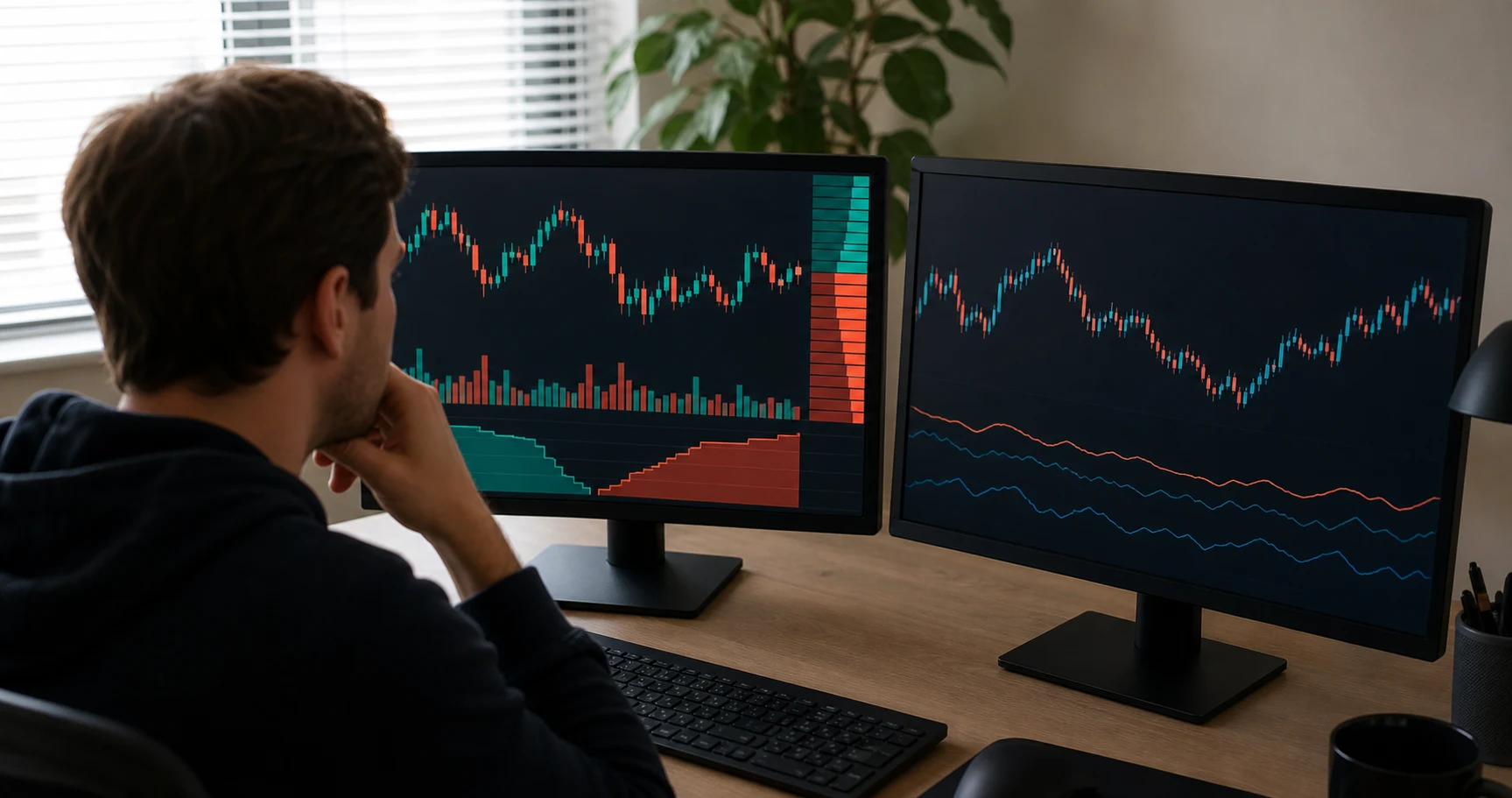
A futures trader may care about contract limits, exchange sessions, data-feed compatibility and whether positions can remain open through a session boundary. A forex or CFD trader may focus more on lot sizing, spreads, swap or overnight conditions, and access to specific currency pairs, indices or commodities.
Do not assume that a profitable strategy can be transferred unchanged from one trading setting to another. A stop measured in futures ticks is not equivalent to a forex stop measured in pips, and costs or execution conditions may differ. Confirm the actual instruments available in the account you intend to buy.
Tradeify vs FTMO Prop Firm Checklist
Because current official terms were not included in the sources BestProps reviewed, a fixed numerical comparison would risk presenting outdated information. Use this checklist to compare the two programs on equal terms:
| Checklist item | What to confirm and record |
|---|---|
| Primary market: | Confirm whether the program offers the futures contracts, currency pairs or CFDs your strategy requires. |
| Evaluation structure: | Record the number of stages, target for each stage, minimum trading days and any time limit. |
| Loss limits: | Identify the daily loss rule, overall loss rule and whether either threshold moves. |
| Account costs: | Include initial, recurring, reset, activation, data and withdrawal-related charges where applicable. |
| Payout conditions: | Check eligibility dates, minimum profitable days, consistency requirements, withdrawal thresholds and how a withdrawal affects the account balance. |
| Platforms: | Verify current software, data-feed and device support directly with the firm. |
| Position restrictions: | Review news, overnight, weekend, automation and copy-trading policies. |
| Account status: | Determine whether each phase is simulated and whether any documented route to live capital exists. |
This approach is slower than comparing two headline prices, but it reveals which account is realistically compatible with your trading plan.
Tradeify vs FTMO Evaluation Strategies and Targets
A profit target only has meaning when considered alongside the loss allowance and time constraints. For example, an evaluation with a seemingly modest target may still be difficult for a low-frequency trader if it imposes a short deadline or minimum-day requirement. A larger target could be more manageable if the trader has more time and a loss rule that remains predictable.
Before choosing Tradeify or FTMO, write down the target as a percentage of the usable loss allowance rather than the advertised account size. Prop accounts often use a notional balance that is much larger than the amount a trader can lose. The practical risk budget is therefore the distance between the starting balance and the account’s breach threshold.
Also review what happens after passing. Evaluation completion may not automatically mean unrestricted withdrawals or access to live capital. Identity checks, agreements and additional eligibility conditions may apply.
Tradeify vs FTMO Drawdown and Loss Rules
Drawdown mechanics are among the most important parts of a Tradeify vs FTMO decision. Third-party pages characterize the firms’ rules differently, but the exact method must be verified for each current product and phase.

Tradeify Static Drawdown Rules
A static threshold generally remains at its original level. As a simplified example, suppose an account starts at 50,000 units with a hypothetical static floor of 47,000. If the balance rises to 52,000, the original 47,000 floor does not move. This is an educational example, not a Tradeify or FTMO rule.
Tradeify Trailing Drawdown Rules
A trailing threshold generally rises as the account reaches new balance or equity highs. In a hypothetical account with a 3,000-unit trail, a high-water mark of 52,000 could move the threshold to 49,000. The precise result depends on whether the calculation uses balance, intraday equity or an end-of-day value.
That distinction matters. An unrealized gain can potentially move an equity-based threshold even if the position later gives back the gain. An end-of-day calculation may behave differently. Ask these questions before paying:
- Does the threshold follow balance, equity or an end-of-day snapshot?
- Does it stop trailing at a specified point?
- Are open profits included in the high-water mark?
- Does requesting a payout reduce the remaining cushion?
- Is the daily loss calculated from the previous close, current balance or current equity?
For a deeper review, see our guide to trailing drawdown vs static drawdown.
Tradeify vs FTMO Prop Firm Costs
Search snippets cite starting prices for both firms, but prices can vary by account size, program, billing model and promotion. A headline fee is therefore not a dependable total-cost comparison.
Calculate at least three scenarios: passing on the first attempt, requiring one reset or retry, and remaining in a recurring program for several billing periods. Include any evaluation, subscription, reset, activation and required market-data costs disclosed by the firm. Note whether a fee is refundable and list the conditions separately instead of assuming that it will be returned.
A cheaper entry can become more expensive if the billing model does not suit your trading frequency. Conversely, a higher initial price is not automatically better value. Use a prop firm fee calculator and avoid including temporary discount codes unless they are available at checkout.
Tradeify vs FTMO Profit Shares and Payouts
Third-party results make conflicting claims about Tradeify and FTMO payout frequency and profit shares. Treat those figures as unverified until they match the current official agreement for the exact account type.
The advertised percentage is only one part of payout value. Review when the first request becomes available, how later requests are scheduled, whether profitable-day or consistency conditions apply, and whether withdrawals change the account’s drawdown buffer. Also determine what documentation or payment processing steps are required.
A frequent payout schedule may sound attractive, but it provides little practical benefit if your strategy does not satisfy the eligibility rules. Read our overview of prop firm payout rules before comparing headline percentages.
Tradeify vs FTMO Platforms and Strategy Rules
Platform compatibility should be confirmed before purchase, particularly if your strategy relies on custom indicators, automated execution or a specific data feed. A third-party result associates Tradeify with common futures platforms, but platform support is time-sensitive and may differ by account. The sources BestProps reviewed do not establish a current platform list for either firm.
Review whether automated strategies, virtual private servers and trade copiers are permitted. Copy trading can involve separate rules for accounts owned by the same trader, accounts owned by other people and external signal services. Do not rely on a broad statement that copy trading is allowed. Read the exact policy and see our guide to copy trading rules for funded accounts.
The same caution applies to holding positions during news, overnight or across weekends. Policies can differ by phase, instrument and account type. A strategy that depends on holding through an economic release should not be purchased until that use case is explicitly addressed.
Which Prop Firm Fits Your Trading Strategy?
| Trader profile | What to compare first |
|---|---|
| Dedicated futures trader: | Investigate Tradeify first, subject to confirmation of its current instruments, platform access and drawdown model. |
| Forex or CFD trader: | Investigate FTMO first, subject to its current instrument list and jurisdictional availability. |
| Scalper: | Compare execution conditions, permitted practices, commissions or spreads, and intraday loss calculations. |
| Swing trader: | Prioritize overnight, weekend and news-holding policies over payout frequency. |
| Automation user: | Obtain written confirmation that the strategy, software and hosting arrangement comply with current rules. |
| Payout-focused trader: | Compare the complete eligibility process, not only the advertised profit share or schedule. |
Tradeify vs FTMO Prop Firm Risks
Prop-firm evaluations involve a substantial risk of losing fees. Account balances may be simulated, and passing an evaluation does not guarantee payouts, continued account access or progression to live capital.
FTMO’s current official FAQ states that its Free Trial, Evaluation Process, and FTMO Account trading is simulated with fictitious capital; it also says FTMO may separately use account data for its own live trading. Tradeify’s current agreement distinguishes evaluation accounts, Simulated Funded Accounts, and Tradeify Elite Live accounts. That distinction is program- and stage-specific and does not guarantee a Tradeify live transition, payout, or access to live capital.
Rules can change, and a breach may result from mechanics that differ from those used in a personal brokerage account. Save the applicable terms at checkout and contact support if any material condition is unclear. This comparison is general educational information, not individualized financial, legal or tax advice.
Tradeify and FTMO Prop Firm FAQs
Is Tradeify Better Than FTMO?
Not universally. Available comparison material positions them toward different markets. The better fit depends first on whether you trade futures or forex and CFDs, followed by the rules and costs of the specific account.
Can You Compare Tradeify and FTMO by Account Size?
Advertised account size alone can be misleading. Compare the usable loss allowance, drawdown method, position limits and total fees instead.
Which Firm Has the Better Payout Policy?
The sources BestProps reviewed contain conflicting or promotional claims, so no current winner can be established from them. Compare official eligibility rules, withdrawal effects and processing terms for the intended program.
Are Tradeify and FTMO Accounts Live?
Do not assume that an advertised funded account uses live capital. Verify whether evaluation and post-evaluation stages are simulated and whether the firm documents any separate path to live trading.
How We Compare Tradeify and FTMO
This comparison was checked against current official Tradeify and FTMO documentation on August 26, 2026. Tradeify’s current agreement and Help Center support the futures-program scope and distinguish evaluation, Simulated Funded, and Elite Live accounts. FTMO’s Challenge guide and simulation FAQ support the virtual forex and CFD scope and its simulated-account disclosure. This is document-based research, not first-hand checkout, trading, platform, support or payout testing. Terms can change after the check date. Read the BestProps editorial methodology or report a correction.