
For Traders vs FTMO for Forex Traders

Home » Compare Prop Firms » Best Forex Prop Firms Compared » For Traders vs FTMO for Forex Traders
  • 34+ Verified Top Prop Firms
  • 14+ Active Offers
  • 600+ Challenges
  • 3M+ Monthly Website Views

Matched-account buyer comparison · prices and rules checked July 25, 2026

For Traders vs FTMO: Matched 100K One-Step Scorecard

This compares the current 100K For Traders Forex Fast one-step path with FTMO’s 100K 1-Step Challenge. Their daily loss percentages match, but maximum-loss movement, profitable-day/Best Day rules, reward share, and fee treatment do not.

100K decision pointFor TradersFTMO
Current price$399 official 100K Forex One-Step example€499 one-time, non-refundable 100K 1-Step fee
Profit target9% or 11%, depending on the selected Fast order10%
Daily loss3% fixed amount, recalculated from the applicable daily baseline3% maximum daily loss
Maximum loss6% trailing from the highest account balance; continues on Master Account10% high-water/EOD-style maximum-loss rule on 1-Step
Pace / distribution3 profitable days; each requires at least 0.5% of starting balanceNo fixed minimum-day row; Best Day must be no more than 50% of positive-days profit
Reward80% · every 14 days · $100 minimum · 3 profitable days · $15,000 cycle cap90% on 1-Step · reward request subject to Best Day and current eligibility
Trading-style traps40% margin rule and funded high-impact-news entry restriction; trailing loss continues after passing1-Step has no Swing option; check funded news/holding restrictions and Best Day interaction
Best fitTrader prioritizing lower price and bi-weekly cadence whose strategy can protect a 6% trailing floorTrader willing to pay more for wider total loss room, 90% starting reward, and a longer operating record
Advanced way to shop this comparison
  1. Calculate cost to first eligible payout: use total path cost, likely attempts, resets, activation, add-ons, and refund timing—not the entry price alone.
  2. Translate drawdown into trades: account for spread, commission, swap, slippage, correlated positions, and whether the floor is static or trails balance/equity.
  3. Replay the funded stage: test your daily P&L against consistency, profitable days, risk-per-idea, news, buffers, minimums, caps, and payout timing together.
  4. Verify trust operationally: identify the contracting entity, review rule-change history and complaint themes, get written strategy approval, and complete a small payout before buying multiple accounts.
Official sources used for this snapshot

Prices and terms change. Reconfirm the exact product, add-ons, platform, country eligibility, and agreement at checkout.

TL;DR: For Traders’ official site gives $399 as its current 100K Forex One-Step example; FTMO 100K 1-Step is €499 and non-refundable. Both use a 3% daily loss limit. For Traders Fast uses a 9% or 11% target depending on the selected order, 6% trailing maximum drawdown, and three profitable days of at least 0.5%. FTMO uses a 10% target, 10% high-water-style maximum loss, and a 50% Best Day rule instead of a fixed day count. For Traders is cheaper; FTMO provides materially more total-loss room and starts funded rewards at 90% rather than 80%. A strategy with volatile equity peaks must model For Traders’ trailing floor before choosing on price.

For Traders and FTMO both sell simulated trading evaluations, not brokerage accounts or investor capital deposits. The better fit depends on how you trade: whether you want a simple one-step path, a two-step evaluation, a static drawdown, platform choice, reward cadence, or a firm with a longer track record.

Searchers comparing For Traders vs FTMO usually want a direct answer, not a generic prop firm explainer. The short version is that For Traders appears better suited to traders who want more preset account paths and a faster-feeling evaluation menu. FTMO appears better suited to traders who want a long-running brand, a transparent official comparison table, and a more standardized 1-Step or 2-Step decision.

Terms in this draft were checked against official pages on June 6, 2026. Because prop firm rules change often, confirm the current plan page and help center before buying any challenge.
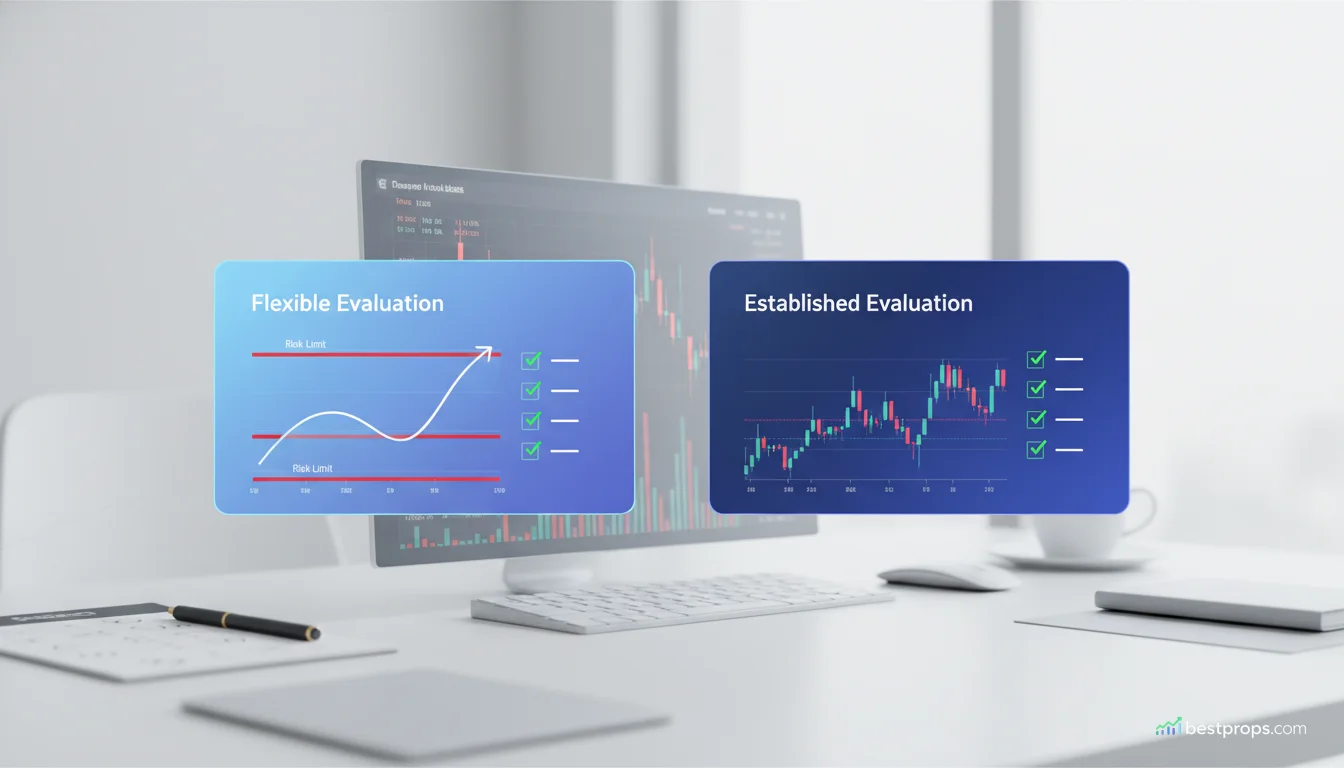
For Traders vs FTMO editorial comparison image

For Traders vs FTMO quick comparison

CategoryFor TradersFTMO
Best fitTraders who want several preset challenge styles and account pathsTraders who want a more established evaluation brand and a simple 1-Step or 2-Step choice
Evaluation menuFast, Fast Static, Classic, Strike, Instant, Instant Pro, plus asset-specific paths shown on official pagesFTMO Challenge 1-Step and FTMO Challenge 2-Step
Official account type languageTrading Challenge and Master Account in a simulated demo settingFTMO Challenge and FTMO Account in simulated trading
Reward shareOfficial pages reference 70% to 90% ranges, with some help center pages listing 80% or order-based termsOfficial comparison table lists up to 90% on 2-Step and 90% on 1-Step
Reward cadenceOfficial pages describe bi-weekly rewards and a 48-hour reward guarantee on the homepageOfficial materials describe rewards and withdrawals, but the comparison decision should be checked against the current challenge page
Trading periodOfficial pages list unlimited maximum trading days for key challenge pathsOfficial comparison table lists unlimited trading period for both 1-Step and 2-Step
Drawdown styleVaries by plan, including static and order-dependent rules2-Step uses static max loss; 1-Step uses end-of-day-trailing max loss
PlatformsFor Traders homepage presents MetaTrader 5, cTrader, and TradeLockerFTMO trading platform page presents MT5, MT4, and cTrader
Brand maturityEstablished in 2023 according to the For Traders homepageFTMO describes itself as active since 2015

How For Traders works

For Traders positions its product as a trading challenge for demo accounts with virtual capital. Its official help center says the For Traders Challenge is an evaluation program and trading course designed to help traders demonstrate skill on demo accounts. The For Traders How It Works page describes a path from evaluation to a Master Account in a simulated demo setting, where virtual funds are used and some rules continue after the challenge is complete.

The important point is that For Traders is not one fixed challenge. The homepage shows multiple paths, including Fast, Fast Static, Classic, Strike, Instant, and Instant Pro. That gives traders more preset account types to compare, but it also means buyers need to check the specific plan they are selecting rather than assuming every rule applies across the whole firm.

For Traders publishes several official rule pages. For the Classic forex account, the official Classic account help page describes a two-step challenge with an 8% Phase 1 profit target and a 5% Phase 2 profit target. It also lists possible max drawdown limits of 8% or 10% depending on order, possible daily drawdown limits of 4% or 3% depending on order, three minimum profitable days in each phase, no time limit, an 80% fixed profit split, and bi-weekly rewards on the Master Account.

For the Fast Static forex account, the official Fast Static help page lists a one-step setup with a 10% profit target, 6% static max drawdown, 3% daily drawdown, three minimum profitable days, no time limit, profit split of 80% or based on the selected order, and bi-weekly rewards once the trader qualifies. The same page says holding overnight and over the weekend is allowed on both Challenge and Master Accounts, while high-impact news entries are restricted on the Master Account.

That mix makes For Traders worth reviewing if you want to match a preset challenge type to your risk profile. The tradeoff is that you need to be careful: a For Traders rule from Classic may not be the same as a rule from Fast Static, Instant, Futures, or Crypto.

How FTMO works

FTMO is the older and more widely recognized name in this comparison. Its official comparison table currently presents two main choices: the FTMO Challenge 2-Step and the FTMO Challenge 1-Step. FTMO also emphasizes that its accounts are demo accounts with fictitious funds and that its services are simulated trading and educational tools.

FTMO’s official comparison table lists the 2-Step product as a two-phase evaluation process and the 1-Step product as a single step toward an FTMO Account. For 2-Step, the table lists Phase 1 and Phase 2 profit targets of 10% and 5%, 5% max daily loss, 10% max loss, static max loss type, four minimum trading days, unlimited trading period, up to 90% rewards, and a 100% refund. For 1-Step, the table lists a 10% profit target, 3% max daily loss, 10% max loss, end-of-day-trailing max loss type, unlimited trading period, 90% rewards, a 50% Best Day Rule, and Standard account type.

FTMO’s trading platform page lists MT5, MT4, and cTrader. It also says the Free Trial is designed for practice purposes, and the comparison table says traders can use as many Free Trials as they need.

Compared with For Traders, FTMO has fewer preset paths and is easier to map. You mostly decide between 1-Step and 2-Step, then evaluate account size, account type, trading objectives, and platform. For traders who dislike sprawling product menus, that simplicity matters.

Prop firm rules checklist for comparing For Traders and FTMO
For Traders vs FTMO Style Fit Map A visual summary of article text comparing For Traders multi-path flexibility with FTMO’s simpler one-step or two-step evaluation choice. For Traders vs FTMO Style Fit Map Use this as a rule-fit summary of the article, not a replacement for current checkout terms. For Traders multiple preset account formats FTMO simple 1-Step or 2-Step choice 1 Choice is the differentiator Several challenge styles to compare 2 Static drawdown options Useful if that rule style fits your edge ! Read plan-specific rules Plan, asset class, size, and add-ons matter 1 Simpler official structure A clearer 1-Step versus 2-Step decision 2 Process discipline fit Familiar evaluation path and rule tables ! Do not assume products match 1-Step and 2-Step behave differently The article frames this as rule fit first: drawdown, days, restrictions, and payout checks.

Rules that matter most in this prop firm comparison

The biggest mistake in a For Traders vs FTMO comparison is focusing only on price or headline reward share. Most failed evaluations come from rule fit, not from choosing the cheapest entry fee.

Start with profit target. For Traders has paths where official pages list targets such as 8% plus 5% for Classic or 10% for Fast Static. FTMO’s official comparison table lists 10% plus 5% for 2-Step and 10% for 1-Step. On paper, those numbers look similar. In practice, they interact with drawdown type, profitable day rules, best day rules, account type, and news restrictions.

Next, study drawdown. For Traders publishes different drawdown structures by plan. Its Fast Static page explicitly uses static max drawdown. Its Classic page describes max drawdown from the initial balance and daily drawdown as a fixed percentage of the initial account balance. FTMO’s official table separates static max loss on 2-Step from end-of-day-trailing max loss on 1-Step. If your strategy has deep but recoverable intraday pullbacks, these differences matter more than the reward split.

Minimum trading days also matter. FTMO’s table lists four minimum trading days for 2-Step and no minimum trading day entry for 1-Step. For Traders Classic and Fast Static official help pages list three profitable days. A profitable-day requirement is not the same as a minimum-day requirement, because it may require a minimum profit threshold for that day to count.

Finally, look at what happens after the challenge. For Traders pages repeatedly say some rules continue on the Master Account, including drawdown rules, inactivity rules, and some news restrictions. FTMO’s official FAQ excerpts also distinguish between evaluation restrictions and restrictions on the FTMO Account, especially for Standard versus Swing account behavior.

BestProps has separate deeper guides if you want to inspect FTMO drawdown rules or read the broader FTMO review.

What stands out for For Traders

For Traders’ main differentiator is choice. Its official homepage lets traders compare multiple preset paths across Forex, Crypto, and Futures. That is useful if you know you want a specific drawdown style, a faster challenge format, or an instant-style account rather than a traditional two-step evaluation.

For Traders also emphasizes reward speed and flexibility. The official homepage references a 48 Hours Reward Guarantee, and its How It Works page says rewards can be sent through Rise or crypto transfer. Help center pages for Classic and Fast Static also reference bi-weekly reward requests once the trader qualifies.

For Traders may fit you if:

  • You want several challenge styles to choose from.
  • You prefer static drawdown options.
  • You like the idea of bi-weekly reward requests.
  • You want platform choices that include MetaTrader 5, cTrader, and TradeLocker.
  • You are comfortable reading plan-specific rules before buying.

The caution is that For Traders has a broader and more changeable product menu. Do not rely on a single rule summary unless it matches the exact plan, asset class, account size, and add-ons you are buying.

What stands out for FTMO

FTMO’s main differentiator is a simpler official structure and a longer operating history. It has operated since 2015, its official comparison table is easy to scan, and the 1-Step versus 2-Step choice is simpler than a large challenge menu.

FTMO also has useful practice infrastructure. The official comparison table mentions unlimited Free Trials, and the platform page lists MT4, MT5, and cTrader, which covers the core platforms many Forex and CFD-style prop traders already know.

FTMO may fit you if:

  • You want a more established brand history.
  • You want a simple 1-Step or 2-Step decision.
  • You prefer official rule tables that are easy to compare.
  • You want MT4, MT5, or cTrader access.
  • You care about Free Trial practice before paying.

The caution is that FTMO’s newer 1-Step product has a different drawdown structure and Best Day Rule from its 2-Step product. A trader who likes FTMO because of the classic two-step model should not assume the 1-Step account behaves the same way.

Which prop firm fits your trading style

Review For Traders first if your edge depends on choosing among several preset account formats. For example, a trader who wants static drawdown, bi-weekly rewards, and several account formats to compare may find For Traders more practical. It may also appeal to traders who want to compare Forex, Crypto, and Futures under one brand.

Review FTMO first if your edge depends on process discipline and a familiar evaluation path. FTMO’s 2-Step model gives traders a standard two-phase format with a lower Phase 2 target. FTMO’s 1-Step model gives traders a faster path, but with its own Best Day Rule and end-of-day-trailing max loss.

For Traders and FTMO rules to double check

The following terms were checked on official pages on June 6, 2026. Treat them as a fact-check starting point, not a substitute for the checkout terms shown when you buy.

Rule areaFor Traders detail to checkFTMO detail to check
Account-path scopeClassic and Fast Static have separate official help pages, so do not apply one plan’s rules to another plan1-Step and 2-Step use different rule sets
Reward ceilingFor Traders Classic help lists a maximum single requested performance reward of $15,000 in each reward cycleConfirm current reward and withdrawal terms on FTMO’s official account pages
Margin useFor Traders Classic help lists a 40% margin rule for one trade or same-direction trades on the same instrumentConfirm forbidden trading practices and account-type limits directly with FTMO
News tradingFor Traders Classic and Fast Static pages restrict opening new Master Account trades within five minutes before or after high-impact newsFTMO’s restrictions vary by Standard and Swing account behavior
InactivityFor Traders official help pages reference 30 days without meaningful trading activityConfirm current FTMO inactivity and account management rules before purchase
Drawdown and Rule Scope Check A visual checklist summarizing article text on drawdown type, minimum days, rule continuation, news trading, inactivity, and verification before buying a For Traders or FTMO challenge. Drawdown and Rule Scope Check The article emphasizes rule fit before price or headline reward share. Rule area For Traders check FTMO check 1 Drawdown typeRule fit driver Varies by planFast Static uses static max drawdown 2-Step: static max loss1-Step: end-of-day-trailing max loss 2 Day rulesMinimum vs profitable Classic and Fast Static pageslist three profitable days 2-Step lists four minimum days1-Step lists no minimum-day entry 3 Rule scopeAfter challenge Some rules continueon the Master Account Restrictions differfor Standard vs Swing behavior 4 Double-checkBefore buying News trading and inactivitydepend on current plan pages Confirm current account rulesand account-management terms Save screenshots of the official checkout and rules you agreed to.

What this comparison does not verify

This article does not verify payout proof, customer support quality, withdrawal speed, individual trader complaints, Trustpilot review authenticity, KYC outcomes, tax treatment, or whether either firm is available in your country. It also does not verify whether BestProps has a current commercial relationship with either firm. Use official pages, current terms, and your own due diligence before purchasing.

If you are new to prop firms, FTMO may be easier to understand at first because the product menu is narrower. If you are more experienced and know the exact drawdown mechanics you prefer, For Traders may offer more ways to tune the account to your style.

If account cost is your main constraint, compare this guide with BestProps’ article on the best prop firm for traders with small starting capital. If payout verification is your main concern, read the prop firm payout proof verification guide before treating any online payout claim as evidence.

Prop firm decision flow for choosing between For Traders and FTMO

Practical checklist before buying either challenge

Use this checklist before choosing either firm:

  • Confirm the exact plan name and account size.
  • Read the current official rule page for that plan.
  • Check whether the drawdown is static, balance-based, equity-based, trailing, or end-of-day-trailing.
  • Confirm whether minimum days are minimum trading days or minimum profitable days.
  • Review news trading, overnight holding, and weekend holding rules.
  • Check whether the reward share is fixed or depends on the selected order.
  • Confirm reward request timing, minimum reward amount, and any maximum reward cycle limit.
  • Verify platform availability for your country and strategy.
  • Read prohibited strategy rules before using EAs, copy trading, hedging, or high-frequency tactics.
  • Save screenshots of the official checkout and rules you agreed to.

That last step is practical, not paranoid. Prop firm rules can change quickly, and your purchased account may be governed by the version of terms that applied when you bought it.

Verdict

For Traders vs FTMO is not a clean winner-takes-all comparison. For Traders is the broader preset-account choice for traders who want several challenge formats and bi-weekly reward mechanics. FTMO is the more established choice for traders who want a simpler official comparison table, Free Trial practice, and a long-running brand.

The best decision is to match the firm to your trading behavior. If your strategy needs a static drawdown and you are comfortable comparing plan-specific terms, start your research with For Traders. If your strategy benefits from a classic two-step framework and you want a more familiar prop firm name, start your research with FTMO.

Either way, treat the official rule page as the source of truth before purchase. A lower fee or higher advertised reward split is not worth much if the drawdown, consistency, news, or payout rules do not match how you actually trade.

For Traders vs FTMO FAQ

Is For Traders better than FTMO

For Traders may be better if you want more challenge types and preset account paths. FTMO may be better if you want a more established brand and a simpler 1-Step or 2-Step structure. The better choice depends on your drawdown tolerance, platform needs, and reward preferences.

Is FTMO safer than For Traders

Safety is not just brand age. FTMO has a longer operating history and clearer official comparison documentation, while For Traders publishes plan-specific help center rules and offers several account paths. Before buying either challenge, read the current terms, prohibited strategy rules, and payout or reward policies.

Which firm has better payout terms

For Traders official pages reference bi-weekly rewards and, on its How It Works page, up to 90% of simulated profits as a reward. FTMO’s official comparison table lists up to 90% rewards for 2-Step and 90% for 1-Step. Do not compare reward share alone. Check minimum reward requirements, cycle timing, account rules, and whether the terms apply to your selected plan.

Which firm has easier drawdown rules

Neither firm is automatically easier. For Traders offers different drawdown setups by plan, including static drawdown on Fast Static. FTMO’s 2-Step uses static max loss, while its 1-Step uses end-of-day-trailing max loss. The easiest structure depends on whether your strategy has smooth equity curves or larger temporary pullbacks.

Can United States traders use For Traders or FTMO

Availability can change by jurisdiction and product. Do not rely on old reviews or Reddit comments for eligibility. Check each firm’s current country restrictions and account terms before buying.

Does FTMO offer a free trial

Yes. FTMO’s official comparison table says traders can use as many Free Trials as they need, and FTMO describes the Free Trial as a simplified practice version of the challenge experience.

Should beginners choose For Traders or FTMO

Beginners may find FTMO easier to understand because the official choice is mostly 1-Step versus 2-Step. More experienced traders may prefer For Traders because it offers more account formats and rule combinations. Beginners should prioritize clear rules, practice, and drawdown fit over headline reward split.

Educational disclaimer

This article is for educational purposes only and is not financial, investment, legal, tax, or trading advice. Prop firm evaluations involve rules, fees, restrictions, and simulated trading conditions that can change. Always verify current terms directly with the firm before purchasing a challenge or making trading decisions.

Top Prop Firms
Platforms include Tradovate, NinjaTrader, TradingView, Quantower, Jigsaw, and TradeDayX with payouts via free US bank wires or crypto through RiseWorks.
Supercharge your futures trading with $750k in funding
Multiple tracks span One Phase, Two Phase, and Instant; explicit rules set 90/10 at 20 percent profit and 100 percent withdrawals at 30 percent.
Futures-only, 1-Step evaluations with frequent payouts.
Buy, trade, and hold
Trade futures across desktop, web, and mobile with NinjaTrader’s low margins, low commissions, free simulation, and modern brokerage built for active traders.