Buyer-first forex comparison · reviewed July 25, 2026
FTMO vs FXIFY Buyer’s Scorecard
Start with the same account size and evaluation structure. Compare the complete cost to an eligible payout, how losses are calculated, the rules that continue after passing, platform and country fit, and the evidence behind each firm—not the branded plan name.
| Decision point | FTMO | FXIFY |
|---|---|---|
| Matched product | $100K FTMO Challenge: 2-Step | $100K Two Phase Classic |
| Current price | €439 promotional / €540 reference | $549 list; HOT20 displayed 20% off ($439.20) |
| Profit target | 10% then 5% | Selected Classic card displays 5%; confirm both phase targets at checkout |
| Daily / maximum loss | 5% daily / 10% static max | 4% daily from prior-day 5 PM balance / 10% static max |
| Minimum days | 4 per phase | 4 |
| Funded payout | Request day 14+; 80%, up to 90%; fee refunded with first 2-Step reward | First request after 5 minimum trading days; 30-day 100% or 14-day 80% cadence in current checkout |
| Platform / eligibility | MT4, MT5, cTrader; U.S. product is through FTMO/OANDA | MT5, DXTrade, TradingView; current site lists the U.S. as restricted |
Advanced checks before paying
- Convert the loss limits into your normal per-trade risk and losing-streak budget.
- Include resets, rebills, activation, data, platform and withdrawal costs in the attempt price.
- Check consistency, qualifying days, buffers, payout caps, account lifecycle and scaling rules after passing.
- Verify the contracting entity, country eligibility, recent complaint themes, support answer for your strategy, and a small first payout before scaling.
Prices and rules are tied to the named products and were reviewed against linked official pages on July 25, 2026. Promotions and terms can change.
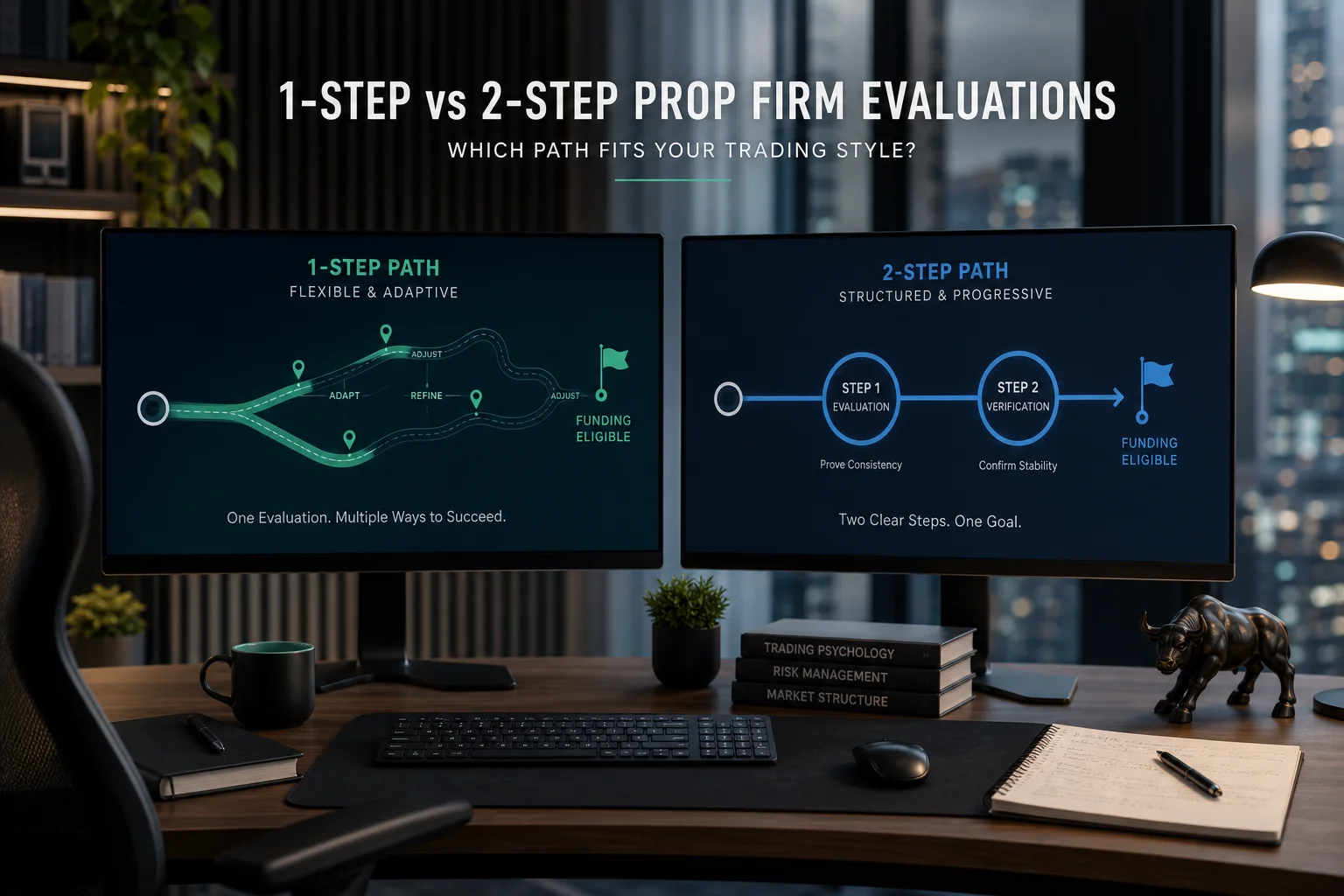
FXIFY and FTMO both attract traders who want a funded-account path without committing personal capital to a full live account. The difference is not as simple as saying one firm is better. The better fit depends on how you trade, where you live, how much rule complexity you can manage, and whether you value optional program types or a more established challenge format.
The first screening question is eligibility. FXIFY’s official site says FXIFY Markets Ltd does not establish accounts for residents of restricted jurisdictions, including the United States. FTMO’s official FAQ says clients in the United States can use FTMO services through its affiliated entity at ftmo.oanda.com. That does not make either route automatically right or wrong, but it means US-based readers should verify region access before comparing fees, account sizes, or payout schedules.
This comparison focuses on official public information and avoids unverified coupon, fee, payout-proof, or complaint claims. Program terms can change, so use this as a decision framework and confirm the current checkout, rules, and agreement before buying any evaluation.
Rules and checkout figures last checked July 25, 2026 from official FXIFY and FTMO pages linked in this article. Recheck the claim map before you buy because prop firm rules and regional access can change.
FXIFY vs FTMO at a glance
| Comparison point | FXIFY | FTMO |
|---|---|---|
| Main fit | Traders who want multiple program routes, including faster or instant-access options where available | Traders who want a widely known prop firm with a structured challenge model |
| Official program menu | One Phase, Two Phase, Three Phase, Instant Funding, and Lightning | FTMO Challenge 1-Step and FTMO Challenge 2-Step |
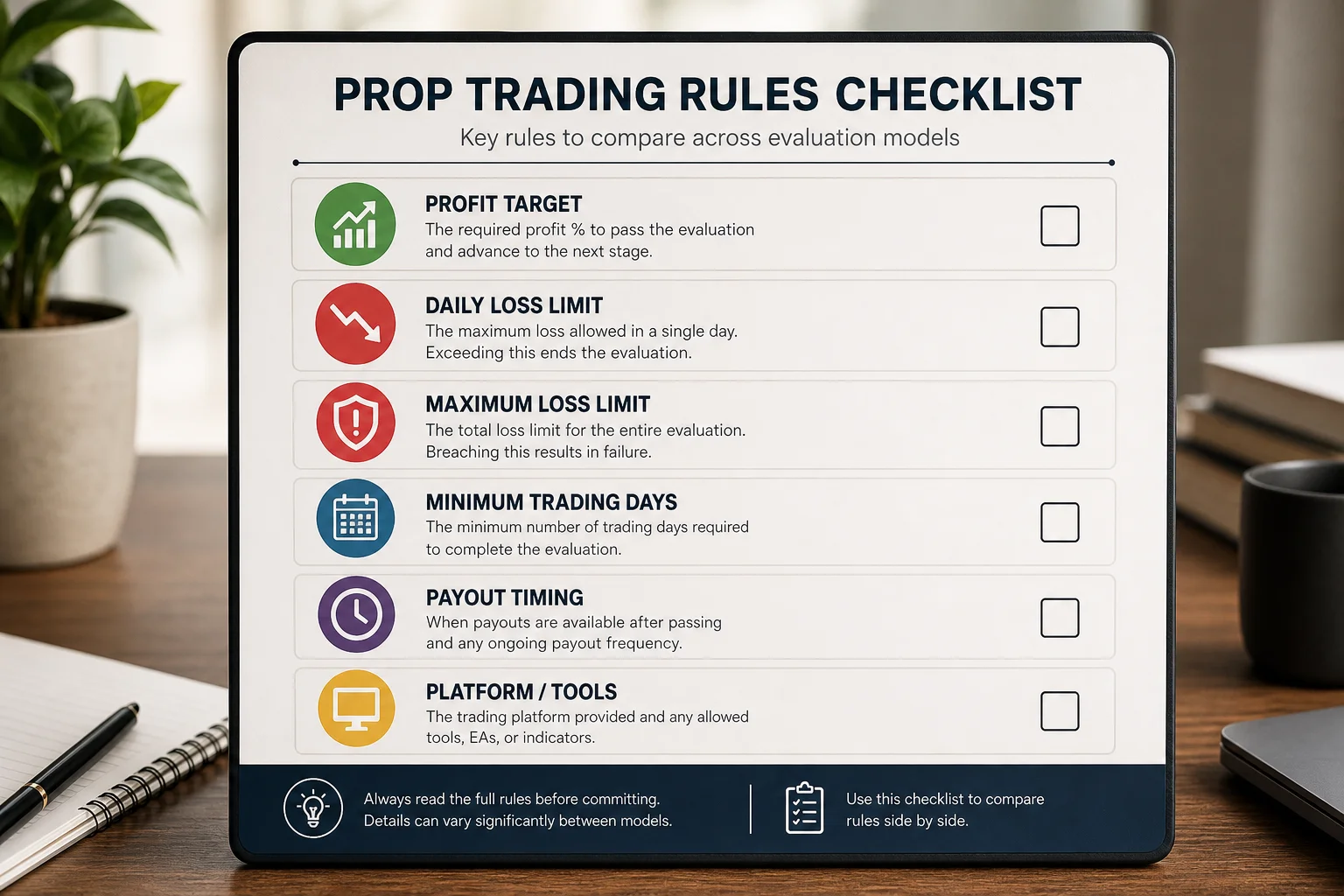
| Rules to inspect first | Program type, drawdown type, payout cycle, performance split, platform, and region restrictions | Challenge type, daily loss, maximum loss, minimum trading days, Best Day Rule, platform, and region route |
| Platform angle | Official FXIFY pages mention MT5, DXTrade, and TradingView in plan details | Official FTMO platform pages list MT4, MT5, and cTrader |
| US reader note | FXIFY’s site lists the United States in restricted jurisdictions for FXIFY Markets Ltd | FTMO says US clients can use services through its OANDA affiliate |
For more BestProps context, compare this post with the FTMO review for funded traders and the Funding Pips vs FTMO rule comparison.
Can US traders use FXIFY or FTMO
US access should be checked before account size, fees, or payouts. FXIFY’s official site says FXIFY Markets Ltd does not establish accounts for residents of restricted jurisdictions, and its list includes the United States. FXIFY also displays regional links on its site, so US readers should verify any current region-specific route directly with FXIFY before creating an account.
FTMO’s official FAQ uses more specific wording for US clients. It says clients in the United States of America can use FTMO services facilitated through its affiliated entity at ftmo.oanda.com. That should not be read as a guarantee that every FTMO Global rule, fee, payout term, platform, or product is available to every US reader. Use the OANDA route and read the terms that apply to that entity.
FXIFY rules and program fit
FXIFY’s main advantage is its broad program menu. The official FXIFY programs page lists One Phase, Two Phase, Three Phase, Instant Funding, and Lightning accounts. That range matters because many traders are not only comparing two brands. They are comparing the type of test they want to take.
FXIFY describes One Phase as a faster route for traders who want access after one assessment, Two Phase as a more disciplined route with a second assessment before funding, Three Phase as a lower-fee and lower-target path, Instant Funding as immediate access to capital, and Lightning as a faster route for confident traders. Those labels are helpful, but the details still matter. A trader should check the current account size, target, daily loss rule, maximum drawdown rule, payout cycle, and add-ons for the exact program selected.
On its How It Works page, FXIFY describes a Two Phase path with a 10% return objective in the first assessment and a 5% objective in the second assessment, while staying within the stated trailing drawdown and daily drawdown limits. The same page says certified FXIFY traders can earn up to a 90% performance split, subject to the program and account terms. FXIFY’s Instant Funding FAQ says the first Instant Funding payout request can be placed 14 days after the first trade, with later requests on a 14-day cycle.
FXIFY can make sense when a specific account type gives your strategy a better combination of price, drawdown, and payout timing. The number of programs is not an advantage by itself; every add-on and rule variant changes the account you are actually buying.
FXIFY cons to check before buying
The main FXIFY downside is not one single public rule. It is the number of choices a trader must compare. One Phase, Two Phase, Three Phase, Instant Funding, and Lightning accounts can differ in targets, drawdown type, payout timing, trading days, platforms, and add-ons. A reader who scans only the broad marketing claim may miss the account-specific rule that matters most to their strategy.
The second issue is payout expectation. FXIFY’s official materials use strong fast-payout messaging, and its Instant Funding FAQ describes a 14-day first payout request period for Instant Funding accounts. That does not mean every FXIFY account has the same payout cycle or that payout eligibility is automatic. Read the program page and agreement for the exact account before treating a performance split or payout schedule as final.
The third issue is region access. For US readers, FXIFY’s restricted-jurisdiction language should be treated as a gating item. If you cannot clearly verify that your region is supported by the relevant FXIFY entity, do not move on to comparing targets or payouts.
Static and trailing drawdown risk
Drawdown type is one of the easiest rules to misunderstand. A static maximum loss limit is tied to a fixed threshold based on the initial account balance. A trailing maximum loss limit can move after gains, which may leave less room after a strong winning period. The official FXIFY and FTMO pages use different drawdown language across program types, so do not compare only the headline target.
Before buying either firm, write down whether the account uses static drawdown, trailing drawdown, end-of-day trailing drawdown, or another calculation. Then check whether the rule is based on balance, equity, closed profit, open trades, or a daily reset. This matters because a strategy can be profitable and still fail an evaluation if open equity crosses the wrong threshold.
FTMO rules and challenge fit
FTMO’s appeal is a more standardized comparison path. The official FTMO Trading Objectives page lays out 1-Step and 2-Step rules in detail. For the 2-Step Challenge, FTMO lists a 10% profit target for the Challenge phase and a 5% target for Verification. FTMO also lists a 5% Maximum Daily Loss amount, a 10% Maximum Loss amount, and at least 4 trading days for the 2-Step route.
FTMO’s newer 1-Step model is different. Its official Trading Objectives page lists a 10% profit target, a 3% Maximum Daily Loss amount, a 10% end-of-day trailing Maximum Loss amount, and a Best Day Rule that requires the best day to be no more than 50% of positive days’ profit. That Best Day Rule is worth reading carefully because it is not the same as a simple profit target. FTMO says exceeding the limit is not treated as a breach, but the trader must continue trading until the requirement is met.
Platform preference also matters. FTMO’s official Trading Platforms page lists MetaTrader 5, MetaTrader 4, and cTrader. If your system depends on a specific platform, order type, indicator workflow, or automation setup, confirm it before paying for a challenge.
FTMO can be a better fit for traders who want a familiar process with detailed public rule pages. It may be less attractive for traders who want instant funding or a wider program menu.
FTMO cons to check before buying
FTMO’s main downside is that a structured rule set can still be strict. The 2-Step route includes both Challenge and Verification targets, plus daily loss, maximum loss, and minimum trading day rules. The 1-Step route has its own rule mix, including a Best Day Rule and an end-of-day trailing Maximum Loss calculation. If your returns tend to come from a small number of large winning days, the 1-Step Best Day Rule deserves special attention.
FTMO may also be less attractive if you want a broad menu of instant-access or faster account routes. A trader who wants to compare several plan styles inside one firm may find FXIFY easier to screen. A trader who wants MT4 or cTrader support may start with FTMO, but platform fit still needs to be checked against the exact product and region route.
FXIFY or FTMO for different trading styles
Choose FXIFY first if you want to compare several funding routes before you buy. A trader who wants a one-step test, a two-step test, a three-step route, or an instant-access model may find FXIFY’s menu useful. That choice comes with responsibility. Do not rely on the firm name alone. Read the exact account page, the drawdown type, the payout cycle, and any add-ons.
Choose FTMO first if you value a narrower, rule-documented challenge process. FTMO’s official materials are detailed enough that a trader can map the account against a trade journal before buying. If your strategy has uneven profits, pay special attention to the 1-Step Best Day Rule. If your strategy carries open trades, read how equity, daily loss, and maximum loss are calculated.
Scalpers should compare platform execution, commissions, spread model, and news rules directly on the current plan pages. Swing traders should focus on weekend holding, overnight exposure, daily reset timing, and whether the drawdown model can conflict with open trades. News traders should verify news restrictions on the exact account type, not on a general review page. Beginners should favor the firm whose rules they can explain in plain language before buying.
BestProps readers who are still choosing a general route may also want to compare instant funding vs challenge models and the best prop firm for beginners who want simple rules.
FXIFY vs FTMO risk checklist
Use this checklist before deciding:
| Question | Why it matters |
|---|---|
| Are you eligible in your country or state? | Region restrictions can make the rest of the comparison irrelevant. |
| Can your strategy handle the daily loss rule? | Daily limits can be breached by open equity, not only closed losses. |
| Is maximum loss static or trailing? | A trailing limit can tighten after gains and change your risk room. |
| Are profit targets realistic for your average trade frequency? | A target that looks simple may push poor position sizing if your system is slow. |
| Does the payout cycle match your expectations? | A fast first payout claim is different from a recurring payout cycle. |
| Is your preferred platform supported? | Platform gaps can break an otherwise strong fit. |
| Are complaints relevant to your exact plan? | User reports can reveal concerns, but official terms decide the rule set. |
The SERP for this keyword includes Reddit threads and YouTube complaints, which shows that readers care about trust and denial risk. Treat those as prompts for due diligence, not as proof that a firm did or did not act correctly in a specific case. For payout and breach questions, the official agreement, help center, and account dashboard are the primary sources.
How to choose between FXIFY and FTMO
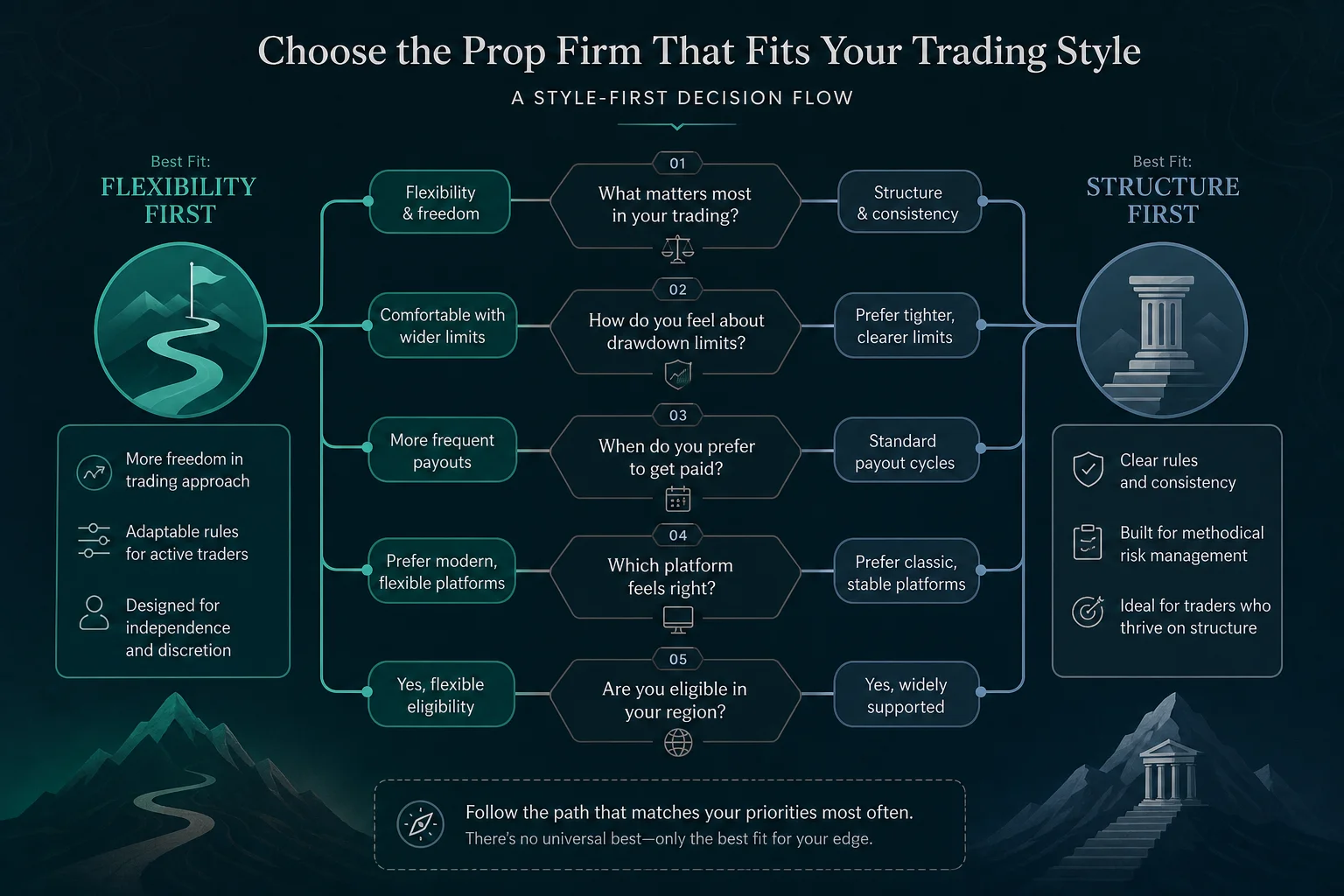
FXIFY fits traders who want more routes to compare and are willing to read each program’s rules before buying. Its public materials emphasize program variety, instant access options where available, and performance split potential. The tradeoff is that the buyer has to be precise about which program page, payout rule, drawdown type, and region rule applies.
FTMO fits traders who want a more established rule set with detailed public challenge objectives. Its 2-Step and 1-Step rules differ, so the right FTMO choice still depends on the strategy. The 2-Step route may suit traders who prefer a classic challenge and verification process. The 1-Step route may suit traders who want one assessment but can manage the Best Day Rule and trailing maximum loss mechanics.
For many US readers, eligibility may decide the short list before trading style does. FXIFY’s official site lists the United States among restricted jurisdictions for FXIFY Markets Ltd, while FTMO’s FAQ points US clients to services facilitated through an affiliated OANDA route. Confirm the current region-specific route directly with each firm before creating an account.
Educational disclaimer
Prop firm evaluations involve simulated trading, strict rules, fees, and the risk of losing the evaluation fee. This article is for education only and is not financial, investment, tax, legal, or trading advice. Always read the current firm terms and consider independent advice before buying any evaluation or funded-account program.
Page-one comparison check · US desktop results reviewed August 6, 2026
What to verify before choosing FTMO or FXIFY
Decision summary: The headline account size and profit split do not identify the better fit on their own. Compare the complete cost, loss calculation, first-payout path, platform route, and restrictions for two specific programs before paying.
| Decision point | How to compare it |
|---|---|
| Strategy restrictions | Check news, weekend holding, copy trading, automated systems, scalping, HFT, hedging, and account-sharing rules for both the evaluation and funded stage. |
| Simulated versus live status | Read the agreement for each stage and distinguish a simulated funded account from any later live-capital route; the word funded does not settle that question. |
Promotions and program rules can change independently. Use this page to narrow the choice, then confirm every decision-critical term in each firm’s current official program document, checkout, and trader agreement. Screenshots or saved copies help if a rule changes after purchase.
FXIFY vs FTMO FAQ
Is FXIFY better than FTMO
FXIFY may be better if you want several program types to compare, including instant-access and faster evaluation routes where available. FTMO may be better if you want a more standardized challenge process with detailed public trading objectives. The better choice depends on your region, platform, risk style, and rule tolerance.
Is FTMO available in the United States
FTMO’s official FAQ says clients in the United States can use FTMO services through its affiliated entity at ftmo.oanda.com. US readers should use that route and verify the terms that apply there.
Is FXIFY available in the United States
FXIFY’s official website says FXIFY Markets Ltd does not establish accounts for residents of restricted jurisdictions, including the United States. Because FXIFY also shows region links on its site, US readers should verify the current route directly before comparing plans.
Which firm has simpler rules
FTMO may feel simpler if you want to study one official Trading Objectives page and compare 1-Step against 2-Step. FXIFY may feel simpler only after you choose one specific program. Before buying, write down the profit target, daily loss rule, maximum drawdown rule, payout timing, and platform for the exact account.
Which payout timing should I verify
FXIFY’s public materials emphasize fast and on-demand payout messaging, and its Instant Funding FAQ describes a 14-day first payout request period for Instant Funding accounts. FTMO’s official reward FAQ says a reward claim can be requested in Account MetriX on the 14th or any following day after the first placed trade on the specific account, with open positions and pending orders closed. Do not assume payout timing from marketing copy alone. Check the exact plan and agreement.
Which firm is better for MT4 or MT5 traders
FTMO lists MT4, MT5, and cTrader on its official platform page. FXIFY plan pages mention MT5, DXTrade, and TradingView in account details. If MT4 is required, FTMO may be the first place to check. If TradingView or DXTrade matters more, inspect the current FXIFY plan details.
What should I verify before buying either challenge
Verify region eligibility, exact account type, current fee, refund policy if any, profit target, daily loss rule, maximum loss rule, drawdown type, trading days, news and weekend rules, payout cycle, platform access, and the agreement that controls disputes.
Research and disclosure
How this comparison was reviewed
- Basis
- Document-based comparison of official product pages, trading objectives, and help-center material cited in this page.
- Scope
- FTMO and FXIFY programs and the exact account comparisons stated on this page. Other firms and changing checkout promotions are outside this comparison.
- Limitations
- BestProps did not purchase an account or perform first-hand trading, support, identity-check, or payout testing for this comparison. Recheck current terms before purchase.
- Commercial state
- BestProps currently has no active affiliate or sponsor relationship with FTMO, FXIFY, or any firm named on this page. Any future relationship will be disclosed next to affected links and in this record.