Key takeaways
The best prop firm for scalpers in 2026 depends on the market.
Read the full summary
The best prop firm for scalpers in 2026 depends on the market. Futures scalpers gravitate to Apex Trader Funding ($25K-$300K accounts, $167 for $50K, $3,000 target on $50K, $2,500 trailing drawdown, 100% of first $25K then 90%, copy trading up to 20 accounts), TopOne Futures (8% Phase 1 / 5% Phase 2, end-of-day drawdown, news trading allowed, no minimum hold for manual scalpers), FundingTicks (built for scalpers, no minimum hold, NinjaTrader and Quantower native), My Funded Futures (1-5 second holds permitted on CME), Bulenox (low-fee evaluations, scalp tool support), Alpha Futures (raw CME execution), and Earn2Trade (Gauntlet evaluation). Forex scalpers favor FTMO ($10K-$200K, ~€155 for $10K refunded on first payout, 5% daily / 10% static drawdown, 80%-90% split, MT5 and cTrader), Funding Pips ($444 for $100K, 60%-100% split based on payout cadence, 35% consistency on on-demand payouts), and The5ers High Stakes ($495 for $100K, scales to $500K, 80%-100% split). Critical scalper rules include no minimum hold time, raw spreads with $3-$7 commission per lot round turn, end-of-day drawdowns over intraday trailing, news trading allowed (Atlas Funded and TopOne are permissive, most legacy firms restrict 2 minutes either side of NFP), platforms NinjaTrader and Quantower for futures, MT5 and cTrader for forex, VPS in Chicago for futures and New York or London for forex, and a 35%-50% consistency rule that caps single-day profit share. Proprietary trading firms charge an evaluation fee that is typically refunded on the first payout.
Key Points for Prop Firm Scalpers

- Finding the best prop firm for scalpers depends primarily on the market traded. Futures scalpers and forex scalpers face different technological and rule-based challenges.
- The most important factors for scalpers are execution speed, raw spreads, commission structures, and the absence of minimum trade duration rules.
- Drawdown types significantly impact scalping success. End-of-day drawdowns are generally safer for scalpers than intraday trailing drawdowns.
- Firms like Apex Trader Funding, TopOne Futures, FundingTicks, Bulenox, and Alpha Futures rank well for futures scalping, while FTMO, Funding Pips, and The5ers are common choices for forex scalpers.
- Proprietary trading involves strict risk management rules. Traders must carefully review consistency rules, maximum daily loss limits, and payout policies before paying evaluation fees.
The proprietary trading industry offers a path for skilled traders to access large amounts of capital without risking their own funds. However, the industry is complex, and rules vary widely between firms. While many firms claim to support all trading styles, their hidden rules regarding trade durations, consistency metrics, and news trading can limit high-frequency strategies.
Scalping relies heavily on technology. A delay of just one second can turn a profitable trade into a loss. Therefore, evaluating the broker partnerships, server locations, and platform options (such as NinjaTrader for futures or MetaTrader 5 for forex) is just as important as evaluating the firm’s profit split. Traders should prefer firms that provide transparent fee structures and low-latency execution with zero slippage on major instruments.
Most traders who fail prop firm challenges do so not because their strategy is flawed, but because their risk management does not align with the firm’s specific drawdown calculations. Understanding the mathematical difference between a static drawdown and a trailing drawdown is a critical requirement for any scalper entering the prop firm space.
Understanding Scalping in Proprietary Trading
Scalping is a fast-paced trading strategy that aims to capture small price movements in the market over very short periods. Unlike swing trading, where positions are held for days or weeks, or standard day trading, where trades might last for several hours, scalping requires entering and exiting the market rapidly. Scalping trades are often held for just a few seconds to a few minutes. Because the profit per trade is small, usually between 5 to 10 pips in the forex market or a few ticks in the futures market, scalpers rely on executing a high volume of trades and using high leverage to amplify their returns.
To succeed with this strategy, a trader must have highly accurate market analysis, quick decision-making skills, and strict discipline. A single large loss can easily erase the profits from dozens of successful small trades. This is why scalpers use predefined, minimal risk parameters for every trade they take. When combining this high-frequency trading style with proprietary trading firms, traders face unique challenges. Prop firms provide the capital, but they also impose strict rules designed to protect that capital. Finding the best prop firm for scalpers requires matching the firm’s rules with the specific needs of a high-frequency strategy.
The Difference Between Futures and Forex Scalping
Scalping strategies generally fall into two distinct market categories. The first is futures scalping, and the second is forex and Contract for Difference (CFD) scalping.
The futures market is highly centralized. All traders see the same order book and the same depth of market data. Because of this transparency, futures markets are well suited for fast scalping. Instruments like the S&P 500 E-mini (ES), Nasdaq 100 (NQ), and Crude Oil (CL) offer deep liquidity and tight spreads during regular trading hours. Futures scalpers often use advanced platforms like NinjaTrader or Quantower to read the order flow and execute rapid-fire trades. Futures scalpers typically rely on manual stop-losses and adjust their positions based on real-time market depth, often targeting the volatile market open at 9:30 AM EST.
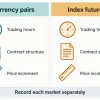
In contrast, the forex market is decentralized. Liquidity and spreads depend heavily on the specific broker or liquidity provider that the prop firm uses. Forex scalpers tend to use platforms like MetaTrader 4 (MT4), MetaTrader 5 (MT5), or cTrader. Rather than reading a centralized order book, forex scalpers often rely on technical indicators and automated Expert Advisors (EAs) to execute their strategies. They program automated risk controls into their software, including position-sizing algorithms and daily loss limits. Because forex scalpers aim to capture 1 to 2 pip movements on currency pairs like EUR/USD and GBP/USD, they require accounts with raw spreads and fast execution speeds.
Setup details summarized from the article’s futures and forex scalping sections.
Evaluating the Best Prop Firm for Scalpers
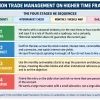
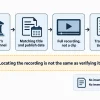
Not every prop firm provides conditions where scalping can be profitable. Many older, legacy prop firms originally built their risk management systems around swing traders and standard day traders. As a result, they implemented rules that actively punish fast trading. When evaluating different options, scalpers must look past the marketing material and analyze four specific areas as part of a careful due diligence process.
Checklist labels summarize the evaluation factors discussed in the article.
Spread and Commission Costs for Scalpers
The primary enemy of a scalper is the cost of doing business. Because scalpers target very small price movements, the spread and the commission on each trade take up a much larger percentage of their gross profit compared to a swing trader. In the forex market, the best prop firm for scalpers will offer a raw spread account. In a raw spread account, the firm provides the actual market spread, which can be as low as 0.0 pips on major pairs like EUR/USD.
Instead of marking up the spread, the firm charges a fixed commission per lot traded. Competitive firms typically charge between $3.00 and $7.00 per standard lot round turn. If a prop firm adds a markup to the raw spread, it effectively doubles the trading cost, making it nearly impossible for a scalper to achieve long-term profitability. For example, DNA Funded charges a $5.00 commission per lot with spreads starting at 0.0 pips, while Think Capital offers MT5 trading with a $4.00 commission per lot.
Execution Speed and Platform Technology for Scalpers
Execution speed is the amount of time it takes for a platform to process an order once the trader clicks the buy or sell button. For a strategy that holds positions for 1 to 5 seconds, any delay or slippage can turn a winning setup into a losing trade. A prop firm that supports scalping will usually have a strong broker partner acting as a liquidity provider to ensure fast execution speeds and zero slippage on top-of-book fills.
Platform availability is also a critical factor. For futures scalpers, NinjaTrader offers some of the fastest order execution and depth of market capabilities, and many firms also support a scalp tool overlay that simplifies one-click ladder entries. For forex scalpers, MT5 and cTrader are generally considered the standard for fast manual and automated execution. Additionally, traders looking for optimal execution often use Virtual Private Servers (VPS) located close to the exchange servers. For instance, futures traders might use a Chicago-based VPS, while forex traders might use a New York or London-based VPS to reduce latency.
Minimum Hold Times and Scalping Restrictions
Legacy proprietary firms frequently imposed minimum hold times of 10 to 30 seconds. They did this because their older risk management software struggled to monitor ultra-fast trades, and they viewed high-frequency trading as risky or potentially manipulative. Scalpers should always read the user agreement carefully because some firms still apply legacy rules that block short holds.
Modern firms have adapted their rules. Many of the top firms in 2026 now explicitly allow trades to be held for under 5 seconds, provided the trades are based on genuine market analysis rather than exploiting platform delays or latency arbitrage. TopOne Futures, for example, is noted for allowing extremely rapid entries, though some documentation notes a 10-second minimum hold time for specific high-frequency trading algorithms. Most discretionary manual scalpers holding for 15 to 60 seconds will not violate minimum hold time rules at modern firms.
Furthermore, scalpers must check a firm’s policy on news trading. High-impact news events, such as the Non-Farm Payrolls release, create massive volatility that scalpers often want to trade. Some firms strictly prohibit opening or closing trades within two minutes of a major news event, while others, like Atlas Funded and TopOne Futures, allow news trading without restrictions.
Drawdown Rules and Profit Targets for Prop Firm Scalpers
Prop firms require traders to pass an evaluation phase by reaching a specific profit target without breaching maximum loss limits. These limits are called drawdowns. For a scalper, the way a drawdown is calculated is incredibly important.
There are two main types of drawdowns. A static or end-of-day drawdown is calculated based on the account balance at the end of the trading day. A trailing intraday drawdown is calculated based on the highest open equity point during a trade. Trailing drawdowns punish scalpers heavily. If a scalper is in a winning trade that pulls back slightly before they exit, a trailing drawdown will record that pullback as a loss against their limit. Whenever possible, scalpers should choose firms that offer end-of-day or static drawdowns, as these provide a much larger safety buffer for rapid trading.
Top Futures Prop Firms for Scalpers in 2026
The futures prop trading space has grown significantly, and several firms have structured their rules to accommodate fast execution and order flow scalping.
Apex Trader Funding for Scalpers
Apex Trader Funding is widely recognized as one of the most prominent futures prop firms in the industry. The firm offers evaluation accounts ranging from $25,000 to $300,000, allowing traders to select an account size that fits their risk tolerance. The evaluation process is a one-step challenge with no time limits, meaning traders can take as long as they need to hit their profit targets.
For example, on a $50,000 evaluation account, a trader must achieve a profit target of $3,000. The account features a trailing drawdown of $2,500. While trailing drawdowns are generally difficult for scalpers, Apex allows traders to trade up to 20 accounts simultaneously using copy trading software. This allows a scalper to take a small $300 profit on one trade and multiply it across 20 accounts, generating $6,000 in total profit without increasing the risk on any single account.
Apex has specific rules that scalpers must follow. As of 2026, they require mandatory bracket orders to ensure every trade has a predefined stop loss and take profit. They also strictly prohibit dollar-cost averaging into losing positions. If a position is currently showing a negative profit and loss, adding to that position will result in an immediate account failure. Furthermore, Apex enforces a 50% consistency rule, meaning no single trading day can account for more than 50% of the total profit required for a payout. Once funded, traders keep 100% of their first $25,000 in profits per account, and 90% of profits thereafter. Payouts can be requested every five trading days.
TopOne Futures for Scalpers
TopOne Futures is frequently cited as a highly efficient option for futures scalpers. The firm offers an evaluation model with an end-of-day drawdown, which is much more forgiving for scalpers than an intraday trailing drawdown. They also do not enforce a strict consistency rule during the evaluation phase, allowing traders to pass quickly if the market conditions align with their strategy.
The firm allows trading during major macroeconomic news releases without restriction, which is a significant advantage for scalpers who target volatility spikes. While some algorithmic high-frequency trading may be subject to a 10-second minimum hold time, discretionary manual scalpers who enter and exit positions within 15 to 60 seconds are fully permitted.
FundingTicks and My Funded Futures for Scalpers
FundingTicks is a newer entrant built specifically from the ground up to support scalpers. The firm supports direct connections to platforms like NinjaTrader and Quantower. Unlike older firms that struggled to monitor fast trading, FundingTicks has no minimum hold requirements and fully supports automated trading strategies. Their evaluation metrics account for the high win-rate and low risk-to-reward ratio patterns that are typical of order flow scalping.
My Funded Futures is another reliable option for rapid CME execution. The firm openly states that 1 to 5 second hold times are acceptable as long as they are based on logical market analysis and not exploiting software glitches.
Bulenox, Alpha Futures, and Earn2Trade for Scalpers
Three additional futures-focused options round out the scalper-friendly prop firms list for 2026. Bulenox runs frequent promotional pricing on its evaluation challenges and supports scalp tool integrations on NinjaTrader and Tradovate, making it a low-cost entry for new scalpers testing a strategy. Alpha Futures provides direct CME execution with raw fills and a payout cadence that pairs well with scalpers who want to compound funds quickly. Earn2Trade offers the Gauntlet Mini and Trader Career Path evaluations, which include scalper-friendly drawdown structures and allow a wider range of order types than many legacy firms. Each of these has its own quirks, so a scalper should run a small live test before committing to large account sizes.
Top Forex Prop Firms for Scalpers in 2026
For traders operating in the currency and CFD markets, the best prop firm for scalpers will offer low evaluation costs, tight spreads, and simple scaling plans.
FTMO for Forex Scalpers
FTMO is one of the oldest and most respected proprietary trading firms in the world, and it remains a top choice for active forex scalpers. FTMO offers account sizes from $10,000 up to $200,000. Historically, FTMO required a two-phase evaluation process, but they recently introduced a 1-Step Challenge option.
In the traditional 2-Step Challenge for a $100,000 account, a trader must achieve a 10% profit target ($10,000) in Phase 1, and a 5% profit target ($5,000) in Phase 2. The firm uses very favorable drawdown rules. The maximum daily loss is static, set at 5% of the initial account balance ($5,000) and recalculates every day at midnight CE(S)T. The total maximum loss is 10% of the initial balance ($10,000). Because these drawdowns are static and not trailing, scalpers have a precise understanding of their exact risk limits at all times.
Once funded, FTMO traders receive an 80% profit split, which can scale up to 90% as the trader consistently hits targets. The initial evaluation fee, which is approximately €155 for the smallest account, is fully refunded with the first profit withdrawal. FTMO has no minimum trade duration rules and provides highly competitive spreads through MT5 and cTrader, making it ideal for aggressive manual scalpers.
Funding Pips for Forex Scalpers
Funding Pips has gained massive popularity as a budget-friendly option for forex scalpers. The firm offers challenges starting as low as $29 for a small account, and charges approximately $444 for a $100,000 standard account. Funding Pips allows scalpers to trade without minimum holding times, lot size restrictions, or weekend holding bans during the evaluation.
The firm offers multiple challenge types. The standard 2-Step evaluation requires an 8% profit target in Phase 1 and a 5% profit target in Phase 2. The daily loss limit is 5%, and the maximum total loss is 10%. They also offer a 2-Step Pro challenge that is cheaper but features tighter risk parameters, such as a 6% profit target, a 3% daily loss limit, and a 6% maximum loss limit.
One of the standout features of Funding Pips is its flexible payout structure. Traders can choose their profit split based on how frequently they wish to withdraw. A weekly payout offers a 60% profit split, a bi-weekly payout offers an 80% split, an on-demand payout offers 90%, and a monthly payout offers 100%. However, scalpers must be careful: the on-demand payout enforces a 35% consistency rule, meaning no single day can account for more than 35% of the total profit.
The5ers for Forex Scalpers
The5ers is an Israel-based prop firm known for its instant funding and aggressive scaling plans. For scalpers seeking large capital growth, The5ers offers a program called High Stakes.
The High Stakes program costs $495 for a $100,000 account. It is a two-step challenge requiring an 8% profit target in Phase 1 and a 5% profit target in Phase 2. The maximum loss limit is 10%, and the daily loss limit is 5%. To pass the evaluation, traders must record a minimum of 3 profitable trading days.
Once a trader is funded, they begin with an 80% profit split. The true value of The5ers is the scaling plan. Every time a trader hits a 10% profit target on their funded account, The5ers scales the account balance upward. For example, hitting 10% on a $100,000 account will scale the balance to $125,000, and this process can continue until the account reaches $500,000. The profit split also increases as the account grows, eventually reaching 100% for the trader.
Comparison of Scalper Friendly Prop Firms
To assist traders in evaluating their options, the following tables break down the specific rules and costs of the top futures and forex prop firms.
Futures Prop Firms Comparison for Scalpers
| Prop Firm | Account Size | Approx. Cost | Profit Target | Drawdown Limit | Drawdown Type | Minimum Hold Time | Payout Split | Best For |
|---|---|---|---|---|---|---|---|---|
| Apex Trader Funding | $50,000 | $167 (Before discounts) | $3,000 | $2,500 | Intraday Trailing | None | 100% first $25k, then 90% | Copy trading multiple accounts |
| TopOne Futures | $100,000 | Varies | 8% Phase 1 / 5% Phase 2 | 8% | End of Day (EOD) | 10 seconds for HFT / None manual | 80% to 90% | News trading and manual scalping |
| FundingTicks | Varies | Varies | Standard | Standard | End of Day (EOD) | None (1-5 seconds allowed) | Up to 90% | Order flow and DOM scalping |
| Bulenox | $25K-$250K | Frequent promo discounts | Standard | Trailing | Intraday Trailing | None | Up to 90% | Low-cost scalp tool support |
| Alpha Futures | $25K-$150K | Varies | Standard | EOD or Trailing | Both | None | Up to 90% | Raw CME execution |
Forex Prop Firms Comparison for Scalpers
| Prop Firm | Account Size | Approx. Cost | Profit Targets | Daily Loss Limit | Total Loss Limit | Scalping Restrictions | Payout Split |
|---|---|---|---|---|---|---|---|
| FTMO | $100,000 | ~$500 / €155 | 10% Phase 1 / 5% Phase 2 | 5% Static | 10% Static | None | 80% scaling to 90% |
| Funding Pips | $100,000 | $444 | 8% Phase 1 / 5% Phase 2 | 5% Static | 10% Static | None | 60% to 100% based on frequency |
| The5ers (High Stakes) | $100,000 | $495 | 8% Phase 1 / 5% Phase 2 | 5% Static | 10% Static | None | 80% scaling to 100% |
| DNA Funded | $100,000 | Varies | Standard | Standard | Standard | None | Up to 90% (Low spreads starting at 0.0 pips) |
Note: Prices and promotional discounts frequently change in the proprietary trading industry. Always verify current costs on the official firm websites.
Worked Examples of Scalping in Prop Firms
To fully understand the reality of proprietary trading, it is helpful to look at worked mathematical examples of passing an evaluation and scaling an account.
Example One Passing a 100K Futures Challenge as a Scalper
Suppose a futures scalper decides to take an evaluation challenge with Apex Trader Funding. They purchase a $100,000 account. The rules dictate that the profit target is $6,000, and the trailing drawdown limit is $3,000.
The scalper uses a 1-minute chart on the Nasdaq 100 (NQ) futures contract, aiming to capture 10 to 15 ticks per trade while risking 10 ticks. Because the drawdown is an intraday trailing drawdown, the scalper must be highly precise. If the account balance reaches $102,000 during a trade, the trailing drawdown threshold permanently moves up to $99,000 ($102,000 minus the $3,000 limit).
Over the course of 10 trading days, the scalper takes 40 trades. They win 25 trades and lose 15 trades. Their average win is $200, and their average loss is $100.
- Gross Profit: 25 wins * $200 = $5,000
- Gross Loss: 15 losses * $100 = $1,500
- Net Profit: $3,500
At this point, the account balance is $103,500. The scalper has not breached the trailing drawdown. They continue trading until they reach the $106,000 balance ($6,000 profit). Once passed, they transition to a funded Performance Account. As they generate profit in the live account, the first $25,000 they request for payout is 100% theirs. If they withdraw $5,000, they keep the full $5,000.
Example Two Scaling a 100K Forex Account as a Scalper
Suppose a forex trader purchases the $100,000 High Stakes program from The5ers for $495. The trader passes both evaluation phases and receives a fully funded $100,000 live account. The trader uses an automated Expert Advisor (EA) scalping strategy on EUR/USD, capturing small 2-pip movements.
In the first two months, the trader carefully grows the account, ensuring they never lose more than $5,000 in a single day to respect the 5% daily loss limit. Eventually, they reach a net profit of $10,000, hitting the 10% target required for scaling.
Because they hit the 10% target, The5ers pays out the profit split. The trader receives an 80% split of the $10,000, which equals an $8,000 payout directly to their bank account. Next, The5ers scales the account size. The trader is now trading with a $125,000 account. Because the account size is larger, their 5% daily loss limit increases to $6,250, allowing them to take slightly larger lot sizes on their scalps without increasing their relative risk. If they hit 10% profit again ($12,500), they will receive another 80% split ($10,000), and the account will scale again to $150,000.
Managing Risk as a Funded Scalper

The psychology of scalping is already intense due to the high frequency of decisions required. Adding the pressure of prop firm rules can cause traders to make emotional errors. To protect their funded status, scalpers must master two specific risk management concepts.
Understanding the Consistency Rule for Scalpers
Many prop firms enforce a consistency rule to ensure that a trader’s success is not the result of a single, lucky gamble. A standard consistency metric is the 50% rule or the 35% rule.
For example, if a firm enforces a 50% consistency rule, it means no single trading day can make up more than 50% of the total profit generated. If a scalper makes $5,000 in total profit on a funded account, and they want to request a payout, the prop firm will review their daily returns. If the trader made $3,000 of that profit on a single Tuesday by aggressively trading a news event, that day accounts for 60% of the total profit. The payout will be denied, or the trader will be required to continue trading until the $3,000 represents less than 50% of the total account profit. Scalpers must plan their daily targets carefully to avoid having a massive winning day trap their funds.
Trailing Drawdowns versus Static Drawdowns for Scalpers
Drawdown rules act as the firm’s primary defense against reckless trading. For scalpers, static drawdowns are vastly superior.
Assume a trader has a $100,000 account with a 5% static daily drawdown. The daily limit is locked at $95,000 for the entire day. If the trader makes $2,000 in the morning, their balance is $102,000. Because the drawdown is static, their failure point remains at $95,000. They now have $7,000 of breathing room to trade with for the rest of the day.
If the same trader uses an account with a trailing intraday drawdown of $5,000, the math changes completely. When they make $2,000 and reach a $102,000 balance, the trailing drawdown follows them upward. The new failure point is instantly recalculated to $97,000 ($102,000 minus $5,000). If they enter a scalp that momentarily drops $3,000 into negative equity before reversing to a profit, they might hit the $97,000 threshold and fail the account, even though the trade eventually won. Scalpers must use rigid stop losses and avoid holding trades through deep pullbacks when dealing with trailing drawdowns.
Frequently Asked Questions
What is the best prop firm for scalpers in 2026?
The best firm depends on the market. For futures traders, Apex Trader Funding, TopOne Futures, and FundingTicks are leading options due to fast execution, the allowance of copy trading, and no minimum hold times. For forex traders, FTMO and Funding Pips are highly rated because of their static drawdown rules, raw spread offerings, and lack of trading restrictions.
Do prop firms allow scalping?
Yes, the vast majority of top-tier prop firms explicitly allow manual scalping. What prop firms generally prohibit is algorithmic high-frequency trading (HFT) that attempts to exploit latency or software delays. As long as a trader is making genuine market decisions, entering and exiting rapidly is completely acceptable.
Are expert advisors and algorithmic trading allowed?
Yes, many forex prop firms, such as Funding Pips and The5ers, allow the use of EAs on platforms like MT4 and MT5. However, the automated strategies must conform to the firm’s risk rules, and most firms forbid the use of commercial, mass-market EAs designed to guarantee a pass on an evaluation challenge.
What is the difference between a trailing drawdown and a static drawdown?
A trailing drawdown moves up as an account reaches new high equity points during a trade, meaning a trader can fail an account while still being in overall profit if they give back too much from an open high. A static drawdown (or end-of-day drawdown) only calculates the loss limit based on the starting balance at the beginning of the trading day, giving the trader more flexibility.
How much does it cost to start scalping with a prop firm?
Costs vary widely based on the account size and the firm. Smaller evaluation accounts can start as low as $29 or $39. A standard $100,000 challenge typically costs between $400 and $600. Most reputable firms fully refund this evaluation fee when the trader receives their first successful profit payout.
What are the benefits of using a VPS for ultra-fast scalping?
A Virtual Private Server (VPS) sits in a data center physically close to the broker or exchange match engine, which cuts the round-trip time for an order to single-digit milliseconds. For futures scalpers, a Chicago-area VPS reduces latency to the CME by an order of magnitude compared to running NinjaTrader from a home connection. For forex scalpers, a New York or London VPS reduces slippage on EUR/USD and GBP/USD scalps and keeps automated EAs running 24 hours a day without depending on a home internet connection. Most prop firms support VPS use, and several offer their own white-labeled VPS service at a discount.
How do prop firms handle the risks of allowing trades as short as 1 to 5 seconds?
Modern firms rely on three protections. First, daily loss limits and maximum drawdowns close any account that bleeds out, regardless of how the losses accumulated. Second, automated risk monitors flag any account that runs hundreds of sub-second trades per day for manual review. Third, firm rules ban specific exploits like latency arbitrage, tick scalping during data feed glitches, and pre-news quote stuffing. As long as a scalper trades on visible price action and respects the daily loss limit, holding for 1 to 5 seconds is permitted at firms like FundingTicks, My Funded Futures, TopOne Futures, Funding Pips, and The5ers.
What are the key differences between futures scalping and forex scalping in platforms and execution?
Futures scalping happens on a centralized exchange (CME), so every trader sees the same order book and uses platforms like NinjaTrader, Quantower, or Tradovate that display depth of market and time and sales in real time. Execution is direct to the exchange, with predictable round-turn commissions ($3-$5 per micro contract is common at prop firms). Forex scalping happens over the counter through liquidity providers, so spreads, slippage, and execution speed depend on the broker the prop firm has partnered with. Forex scalpers use MT4, MT5, or cTrader, often with raw spread accounts that pay a $3-$7 per lot commission. Futures scalpers benefit from order book transparency and tick-level precision, while forex scalpers benefit from 24-hour markets and lower per-trade costs on micro lots.
Are scalpers allowed to open or close positions around major data releases?
It depends on the firm. Atlas Funded, TopOne Futures, and FundingTicks allow scalpers to trade through high-impact news without restriction. FTMO, Funding Pips, and The5ers allow news trading on their standard challenges but disable it on certain promotional tiers, so the rule needs to be confirmed for the exact account purchased. Many older firms still enforce a two-minute window before and after Tier 1 events (NFP, FOMC, CPI). A scalper who plans to trade news should confirm the policy in writing before paying the evaluation fee.
What hurts scalpers the most when picking a prop firm?
The biggest profit killers for scalpers are markup on the spread (which doubles round-turn costs), intraday trailing drawdowns (which punish open-equity pullbacks), strict consistency rules (which delay payouts on big winning days), minimum hold times (which break the 1 to 5 second strategy entirely), and restrictive news trading rules (which lock scalpers out of the most volatile sessions). Firms that combine raw spreads, end-of-day drawdowns, no minimum hold time, and permissive news trading give scalpers the cleanest path to consistent payouts.
Final Takeaways for Scalpers Choosing a Prop Firm
Selecting the best prop firm for scalpers in 2026 requires looking beyond the marketing hype and carefully examining the mathematical reality of a firm’s rules. Because scalping relies on speed, volume, and tight margins, the ideal proprietary trading conditions must offer low-latency execution and zero spread markups.
Key takeaways for traders evaluating firms include prioritizing static or end-of-day drawdowns over intraday trailing drawdowns to prevent premature account failure. Furthermore, traders must identify whether they prefer the transparency of the futures market through platforms like NinjaTrader, or the decentralized automation capabilities of the forex market via MetaTrader 5. By matching their specific scalping strategy to the correct set of prop firm rules (whether that means using the 100% initial payout of Apex Trader Funding or the static limits of FTMO), skilled scalpers can successfully secure and scale substantial trading capital.