
Cheapest Forex Prop Firms in 2026
Which prop firms give you the lowest total cost of getting funded? We compare challenge fees, activation charges, refund policies, profit splits, and hidden costs to find where the real value sits – not just the lowest sticker price.
TL;DR Summary
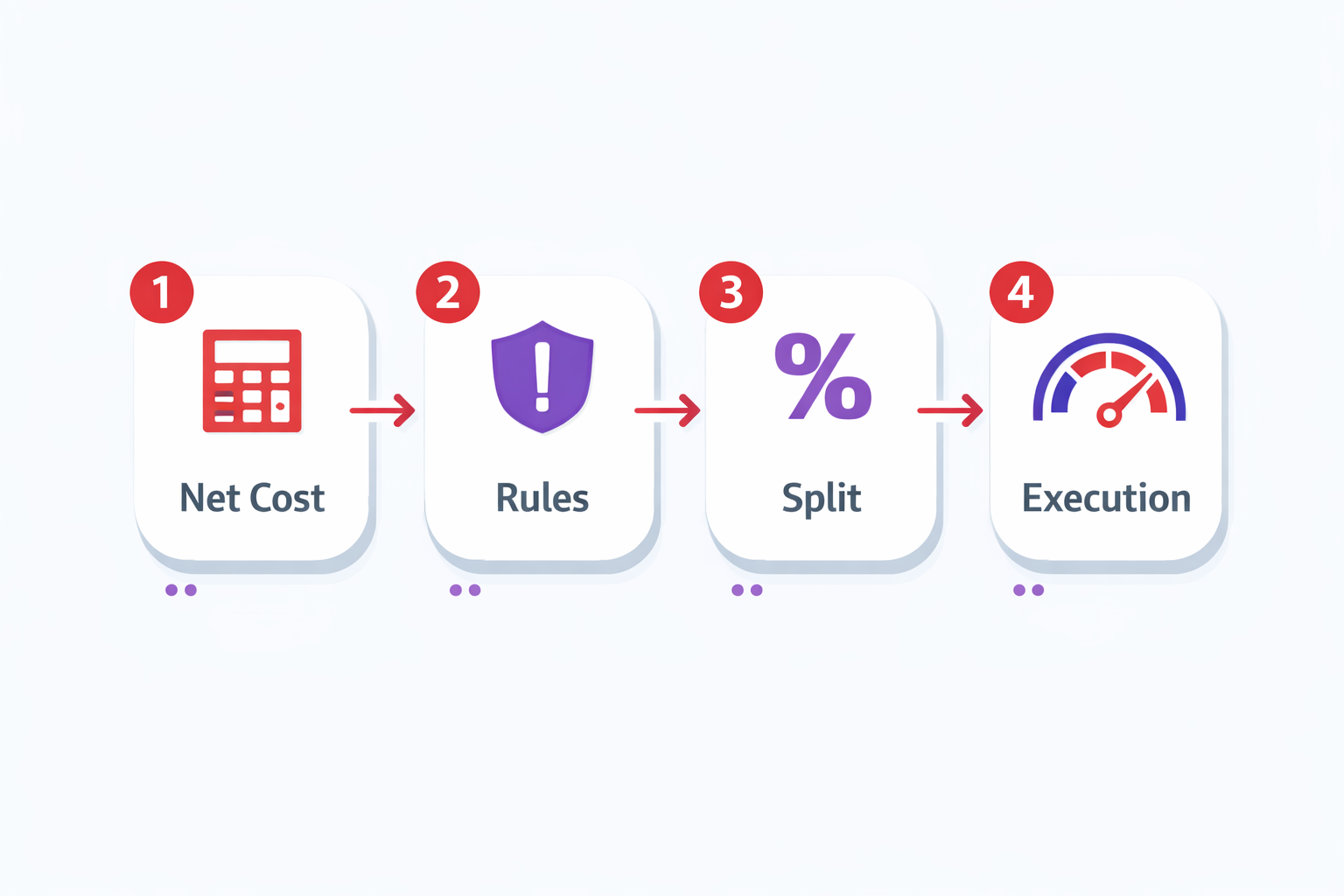
- Cheapest ≠ lowest challenge fee. True cost = challenge fee + activation fee – refund + spread/commission drag + profit split difference over time.
- Lowest Upfront: Funded Next ($199 for 50K, refundable = $0 net cost)
- Best Long-Term Value: FTMO ($299 upfront but scales to 90% split – $9,000/yr difference vs. 75% split at same gross profit)
- Worst Value: SurgeTrader ($349 permanent cost, no refund, trailing drawdown, 75% starting split)
- Hidden Cost to Watch: Spreads. Saving $80 on a challenge fee is meaningless if the firm’s spreads cost you $800/month in execution quality.
What Makes a Prop Firm “Cheap”?
Price matters. That’s not a controversial take – it’s math. Every dollar you spend on a prop firm evaluation is money that needs to be earned back before you’re actually profiting. For traders testing multiple firms, retaking failed challenges, or working with a limited budget, the cost of entry can stack up fast. A $300 evaluation that you need three attempts to pass is a $900 investment before you’ve earned anything.
That’s why cheap prop firms exist – and why the demand for them keeps growing. But “cheap” is a loaded word in this space. The lowest sticker price doesn’t always translate to the lowest actual cost, and some budget-friendly firms deliver surprisingly strong value while others cut corners in ways that cost you more in the long run.
To figure out what’s truly cheap, you need to look at five components:
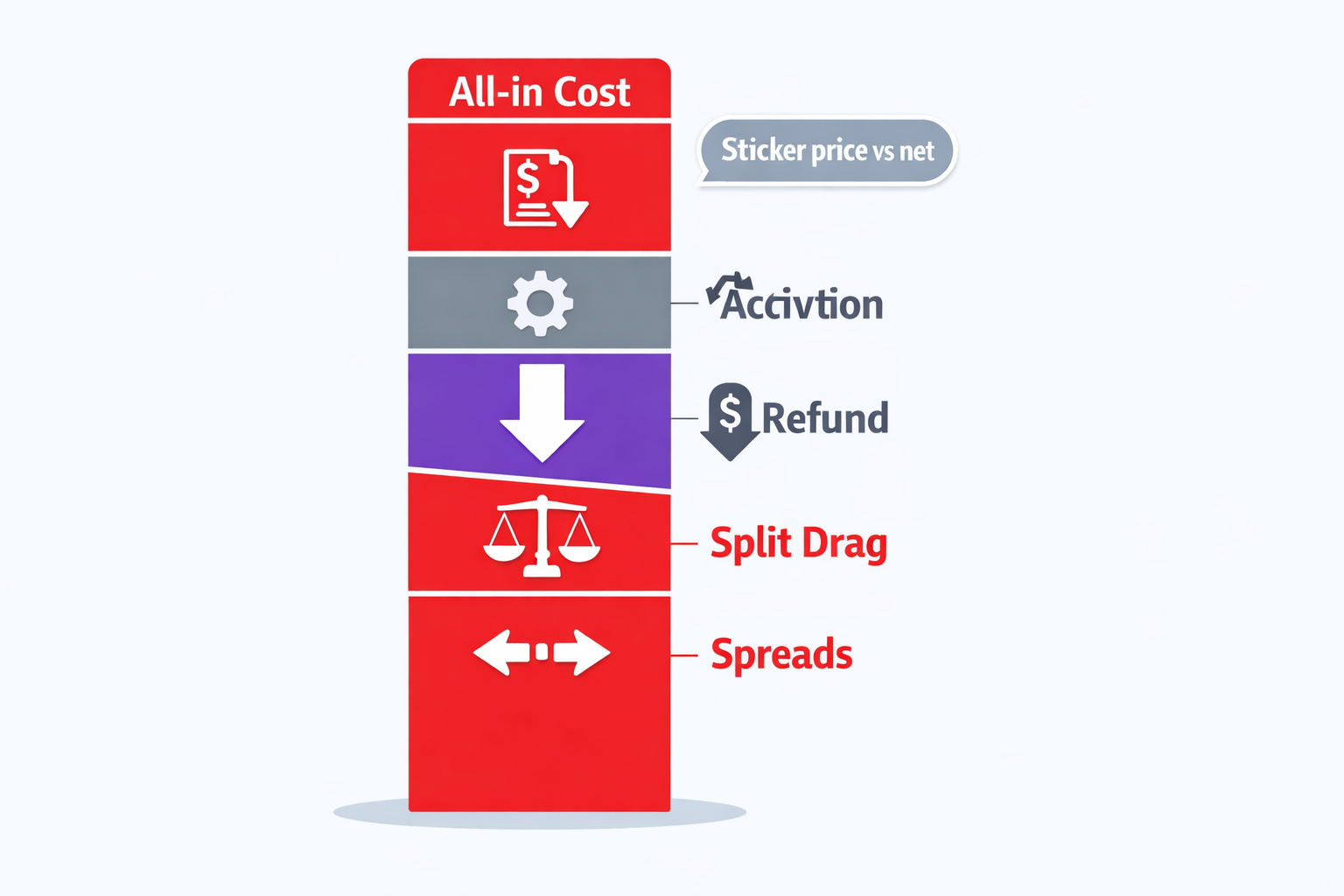
- Challenge fee (what you pay upfront)
- Activation fee (what you pay after passing to receive the funded account)
- Refund policy (do you get the challenge fee back on first payout?)
- Profit split (how much you keep long term)
- Hidden trading costs (spreads, commissions, slippage)
Most traders obsess over the first line item. The firms know this, which is why some advertise “$99 challenges” and quietly charge a $149 activation fee after you pass. Others charge more upfront but refund everything, meaning the true cost is effectively zero if you perform.
A cheap firm is the one where the net cost of getting funded is low and the long-term earning potential is high. Anything else is marketing.
Cheapest Prop Firms – Reviewed
The following firms consistently show up as the lowest-cost options in the forex prop space. But the value differs depending on whether you’re optimizing for lowest upfront spend, lowest true net cost, or the best long-term earning power.
Funded Next
Funded Next is the strongest “cheap” firm on paper because the upfront cost is low and the challenge fee is refunded on first payout. Their $199 50K model has no activation fee, meaning if you pass and withdraw profits, your net cost becomes $0. Profit splits run 80% and scale to 90% through their consistency program. Drawdown is static at 6%, which is easier to manage than trailing models. For traders who want minimal financial risk and the ability to retake challenges without spending a fortune, Funded Next is hard to beat.
FTMO
FTMO isn’t the cheapest upfront – their 50K challenge is typically around $299 – but the value proposition is long-term. First, the fee is refunded on your first payout. Second, FTMO scales profit splits up to 90%. That matters more than most traders realize. If you generate $5,000/month in gross profit, the difference between a 75% split and a 90% split is $750/month. Over a year, that’s $9,000. In other words, the “expensive” firm can be the cheapest over time if you plan to trade consistently.
The5ers
The5ers offers low-cost entry points through their bootcamp and hyper growth models, and their fees are generally competitive. The key benefit is their scaling structure and solid payout reputation. Challenge fees are typically refunded, profit split starts around 80%, and drawdown is static. They aren’t always the cheapest in raw dollars, but the combination of low cost, trust, and scaling makes them one of the best budget-friendly options for serious traders.
E8 Funding
E8 has positioned itself as a “clean pricing” firm: no activation fee, refunded challenge, and relatively low upfront cost. Their 50K evaluations are often priced in the $200 range depending on discounts, and they offer an 80% profit split. The standout advantage is their generous drawdown buffer (commonly 8%), giving more breathing room than most low-cost firms. For traders who want cheap entry with less risk pressure, E8 is one of the better-balanced options.
FundingPips
FundingPips frequently runs aggressive discounts, which can make them one of the lowest upfront-cost firms in the market. Profit splits can scale, drawdown is usually static, and their pricing is designed to attract budget traders. The tradeoff is that they have a shorter track record than the biggest firms, and their platform/spread environment can vary depending on account type. Still, if your priority is the lowest possible entry fee and you’re comfortable verifying execution quality yourself, FundingPips is often near the top of the “cheapest” list.
MyFundedFX
MyFundedFX offers some of the lowest challenge fees in the industry and refunds them on payout. Their profit split is typically 80%, and their static drawdown is tighter (often around 5%). That makes them cheap to enter but slightly less forgiving in risk management terms. For disciplined traders who can operate within a tight buffer, the low entry cost can make this one of the best budget picks.
SurgeTrader
SurgeTrader is a good example of why “cheap” needs context. Their 50K challenge is often priced around $349, and the fee is not refunded. They also charge activation fees in many cases. Profit split starts at 75% and scales, but the combination of trailing drawdown and permanent fees makes the real cost higher than it appears. SurgeTrader is rarely the best “cheap” option unless you strongly prefer their structure and are trading high volume where split scaling matters.
Full Comparison Table
*Net cost assumes you pass and take at least one payout (triggering refund if offered). If you fail the challenge, net cost = upfront fee.
The Cost Nobody Puts in the Table
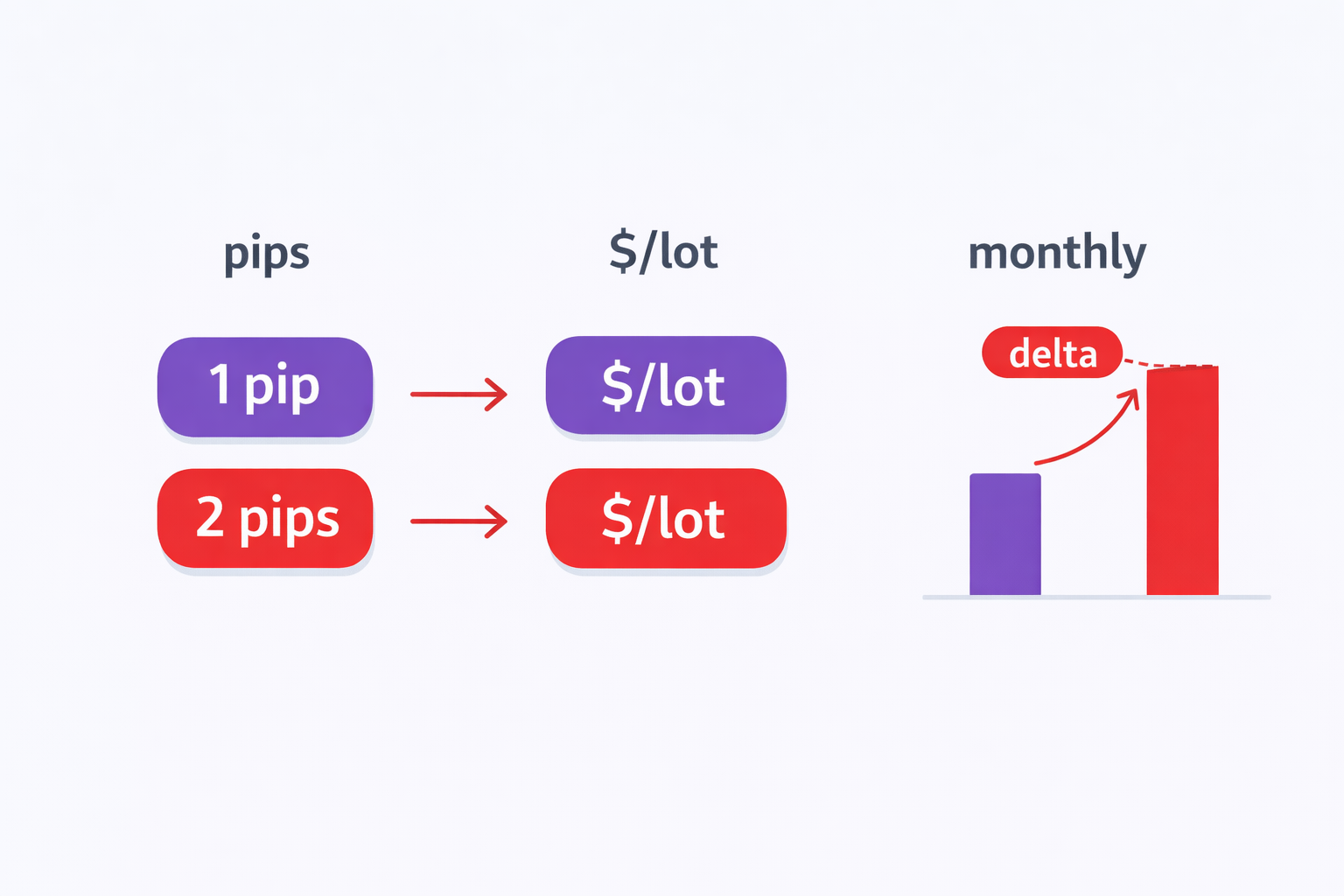
Even if a firm is technically “cheap” on challenge fees, execution costs can wipe out the savings instantly. This usually comes down to spreads and commissions.
Some prop firms run wider spreads than major regulated brokers. Others use markups or less liquid feeds. If you’re trading intraday, that spread drag compounds fast. Most traders underestimate this because it doesn’t show up as a direct fee – it’s baked into every trade.
Here’s the brutal reality: if your strategy trades frequently, spreads matter more than challenge pricing.
This is why the cheapest firm in theory can become one of the most expensive in practice if their trading conditions are poor.
When “Cheap” Actually Becomes Expensive
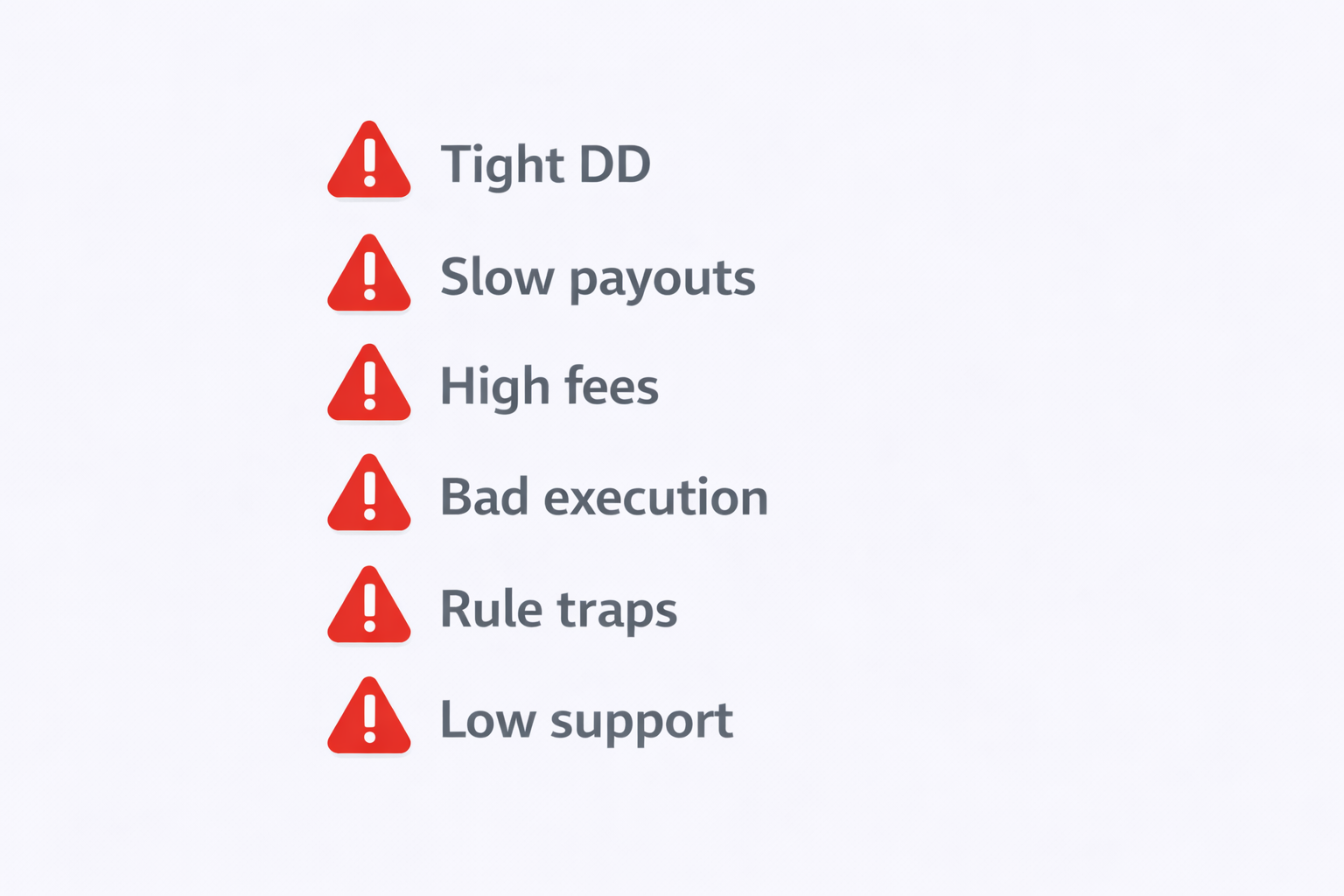
Cheap firms become expensive in three scenarios:
- You fail multiple challenges because the rules are too strict. A $150 challenge that you fail three times is a $450 cost. Passing once at $300 would’ve been cheaper.
- You pay an activation fee after passing, meaning the true cost is higher than advertised.
- You trade in a high-spread environment where execution costs dwarf the upfront fee savings.
The worst budget firms tend to combine all three: low sticker price, hidden activation fee, and mediocre execution. Traders flock to the “cheap” headline and then bleed money through spreads or repeated failures.
Pros and Cons of Budget Prop Firms
Tips for Getting the Best Value
- Always calculate net cost, not sticker price. If a firm refunds the fee on payout, treat the challenge as effectively free if you expect to pass.
- Factor in profit split. A 90% split firm can outperform a 75% split firm even if the upfront cost is higher.
- Watch activation fees. If you see “low challenge fee” + “activation required,” the firm is likely recouping their costs after you pass.
- Test spreads in live conditions. Don’t assume a cheap firm has competitive execution. Run a demo or small test trades and compare to a known broker feed.
- Choose rules you can realistically pass. The cheapest firm is the one you pass on the first attempt.
Final Thought
The cheapest prop firm isn’t always the one with the lowest challenge fee. It’s the one where you can get funded at the lowest net cost and keep the most profits over time.
For most traders, refundable challenge models like Funded Next and E8 are the best budget entry. For long-term earners, firms like FTMO can be “expensive upfront” but cheaper over time because of split scaling and brand reliability.
Frequently Asked Questions
What is the cheapest forex prop firm?
The cheapest in net cost is often a refundable model like Funded Next, where the challenge fee is returned on your first payout. That makes the net cost effectively $0 if you pass and withdraw.
Are cheap prop firms reliable?
Some are. Established firms like FTMO and The5ers have strong track records even if they’re not always the lowest sticker price. The risk is higher with newer ultra-budget firms that lack history.
Do cheap firms have worse spreads?
Sometimes. That’s why spreads are the hidden cost to test. A firm can be cheap to enter but expensive to trade if the execution environment is poor.
Is a refundable challenge always better?
Not always. Refundable models are best if you expect to pass and withdraw. If you fail repeatedly, the cost still stacks. Also compare rules and execution quality, not just refund terms.
Disclaimer
The information provided on this page is for educational and informational purposes only. It does not constitute financial advice, trading recommendations, or endorsement of any specific prop firm. Prop firm terms, payout structures, and fee schedules are subject to change. Always verify current terms directly with the firm and consider your own financial situation before committing capital. Past performance and firm policies described here may not reflect current or future conditions. Trading involves significant risk of loss.